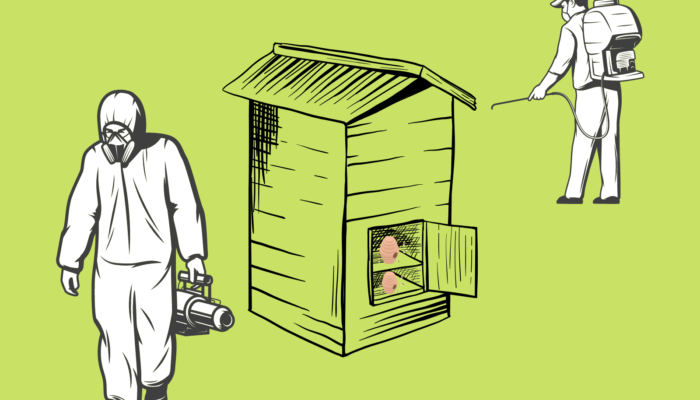
The scoop Pesticides promote large-scale agriculture, yet damage environmental and human health…
Risks for humans
- At least 200,000 deaths each year.
- Cancer, Alzheimer’s, Parkinson’s diseases
- Hormone disruption, developmental disorders, sterility
- Loss of: memory, motor skills, vision and coordination
- Asthma, allergies, hypersensitivity
Environmental risks Traces of pesticides are found in the air, soil, and water (thus spreading far and harming wildlife including: pollinators, amphibians, birds, fish, and invertebrates). Bee colony collapse and reproductive issues are highly concerning.
What can be done? A “systemic denial fueled by the pesticide and agroindustry” keep pesticides on the market. Luckily, the UN proposes international guidelines on regulating pesticides, while promoting agroecology: a practice which combines science and local knowledge to create community-based, agricultural systems.
The UN finds that Agroecology can “feed the entire world population and ensure that they are adequately nourished.” Using agroecology, the world could be fed, and we could drop the risks that pesticides inflict!
What can I do?
- Research your local Congressman’s stance on Pesticide Bans. Vote!
- Grow a garden. You’ll help pollinators and enjoy pesticide-free produce.
- Helpful resources…
- Watch Neonicotinoids: The New DDT? free
- Watch: Circle of Poison
- Read Silent Spring
Dig deeper → 3 min