
There is a common assumption about solar energy that goes something like this: panels need warmth, warmth comes from the sun, and the sun is strongest in the south. It is the kind of logic that sounds reasonable until you start looking at actual electricity bills. Homeowners in places like Calgary, Alberta are quietly generating impressive returns from their rooftop systems, even through winters that regularly dip below minus 30 degrees Celsius.
The reality of residential solar is more interesting than the popular image suggests. For Canadian homeowners thinking about making the switch, understanding why cold climates can actually work in their favor is the first step toward making a genuinely informed decision.
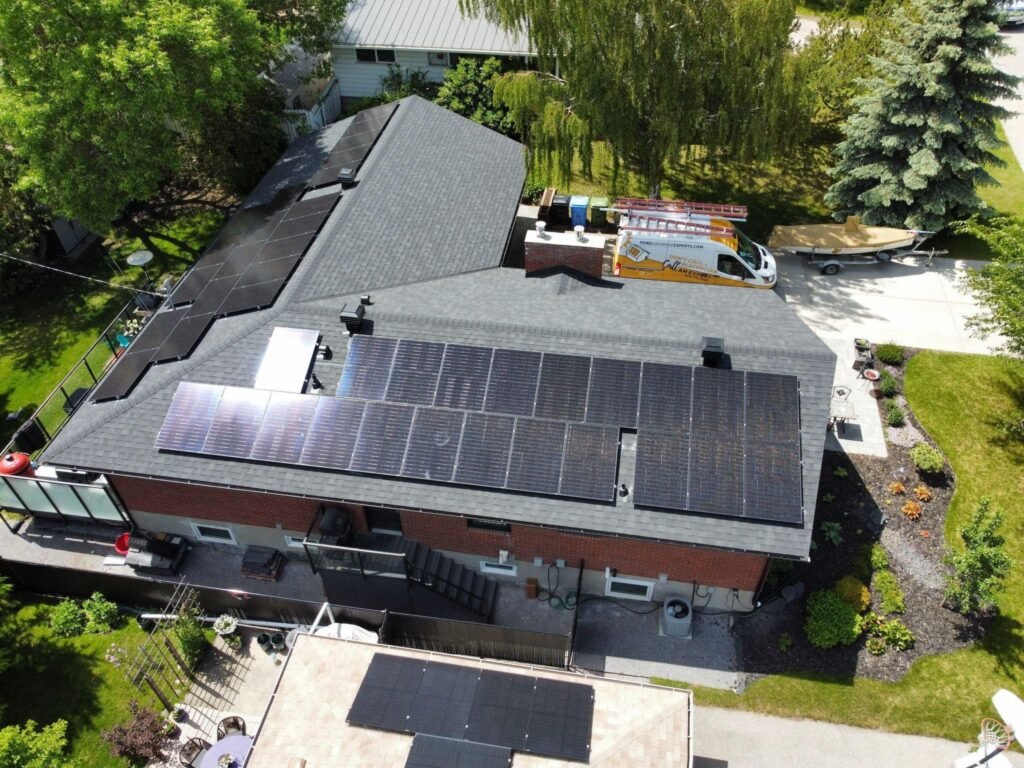
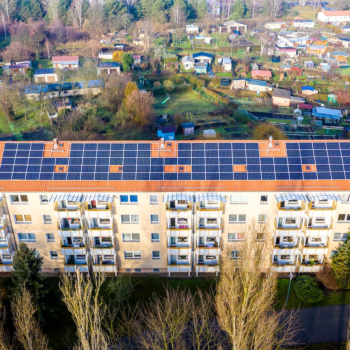
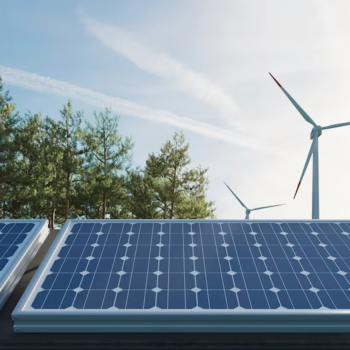
Residential solar installation in Calgary, Alberta
More Sunshine Than You Think
Calgary sits at 51 degrees north latitude. That alone tends to trigger assumptions. But assumptions do not pay power bills. Data does. The city receives approximately 2,396 hours of sunshine per year, more than most major Canadian cities, and comparable with parts of the American Midwest. Its position at the foot of the Rockies gives it dry, clear air and relentlessly blue skies. The global horizontal irradiance, which measures how much solar energy actually reaches the ground, comes in at approximately 1,350 kilowatt hours per square meter annually. For context, Toronto sits at 1,270 and cloudy Vancouver at 1,190.
This surprises a lot of people. It surprised many of the homeowners who installed systems and then watched their production data come in higher than they expected. The surprise is partly the fault of how solar has been marketed for decades: desert imagery, glossy skies, rooftops in Phoenix. The implication has always been that warmth is the point. It is not.
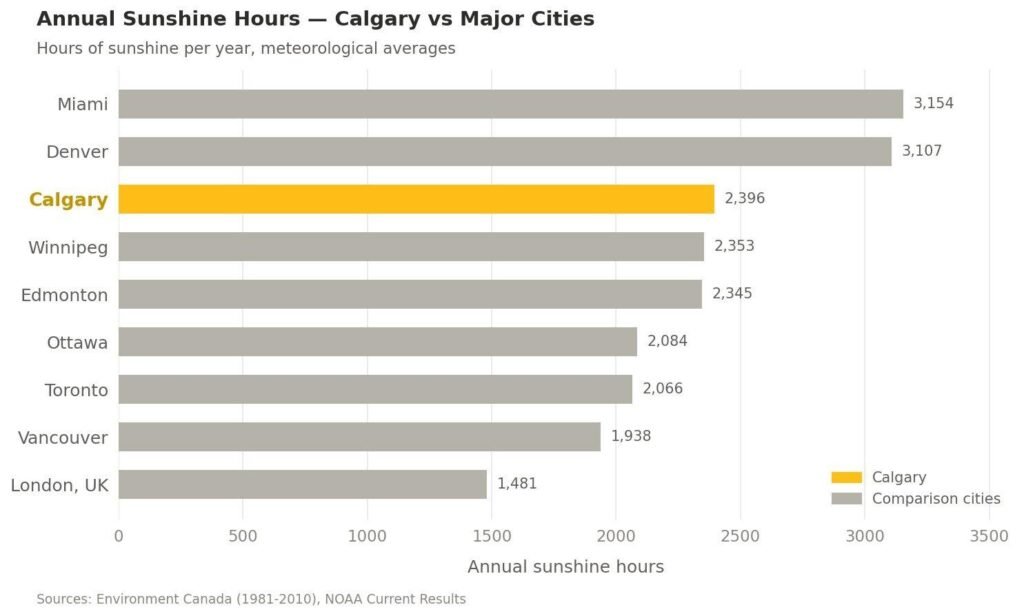
Calgary receives 2,396 sunshine hours annually – more than any other major Canadian city
Cold Weather Is Actually Good for Solar Panels
Here is the part that tends to get people’s attention. Solar panels do not like heat. They like photons. And when cell temperatures climb, their efficiency drops.
Every solar panel has what is called a temperature coefficient, a figure describing how much output changes as temperature rises above 25 degrees Celsius. For most standard panels, efficiency falls between 0.3 and 0.5 percent for every degree above that threshold. On a scorching summer afternoon in a warm climate, a panel running at 65 degrees Celsius can produce 10 to 20 percent less electricity than its rated capacity.
Cold climates work in reverse. At 0 degrees Celsius, a panel can exceed its rated output by 5 to 7 percent. On a clear January day in Calgary, when the air is dry and the sky is sharp and the temperature is well below freezing, every hour of sunshine produces more electricity per installed kilowatt than the same panel would on an identical sunny afternoon in Dallas or Sacramento. Research into cold climate solar performance has found that installations in freezing environments can achieve 12 to 15 percent higher energy output than comparable systems in warmer locations receiving the same number of sunlight hours.
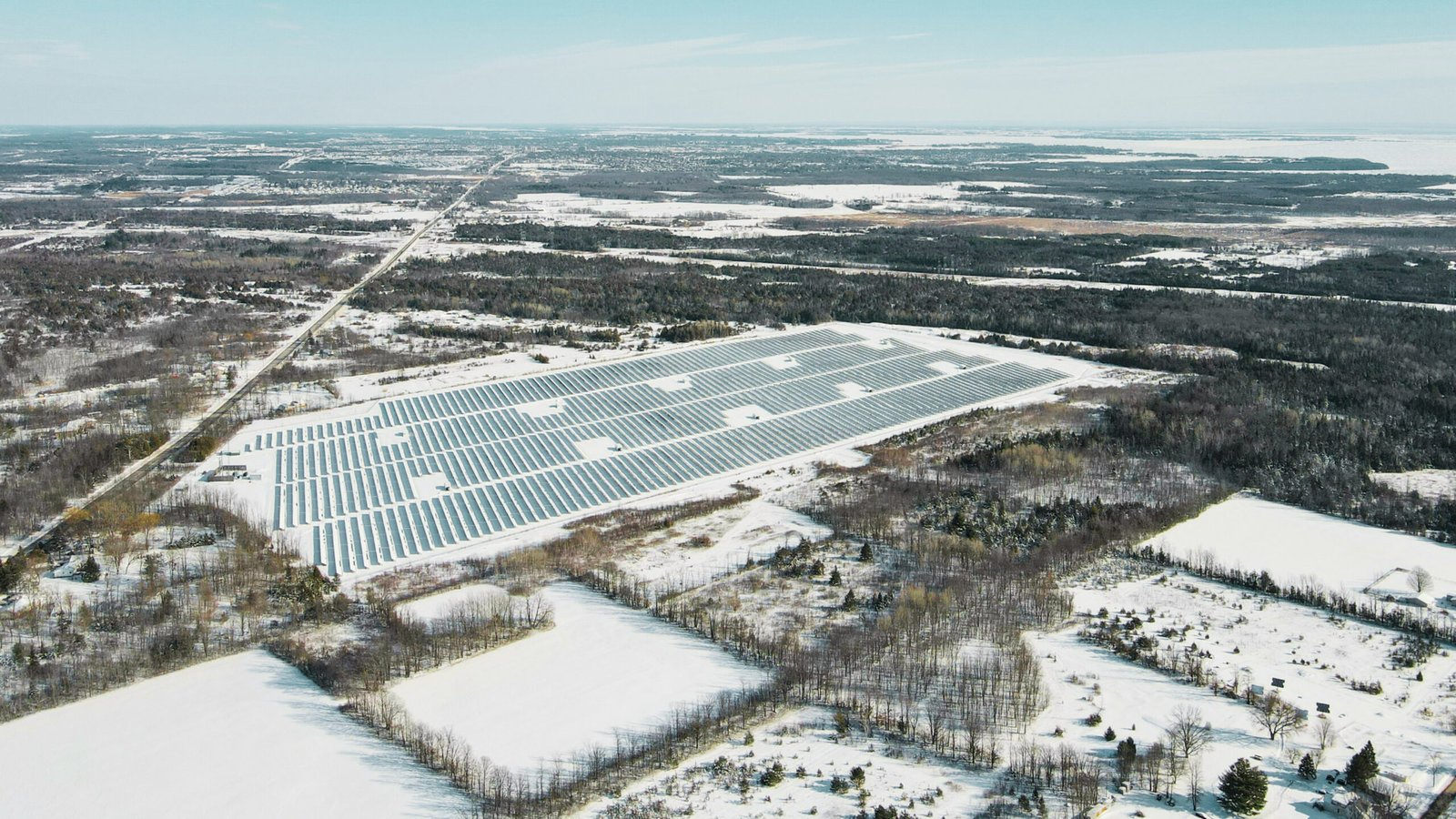
Snow gets a worse reputation than it deserves. Panels installed at a proper angle shed accumulation quickly, typically within a day or two of snowfall. Calgary’s Chinook winds are the warm gusts that roll down from the Rockies and can push temperatures up by 20 degrees in an afternoon. They accelerate that process considerably. And when snow sits on the ground around a home, it actually reflects additional light back up onto the panels, giving output a small but real boost.
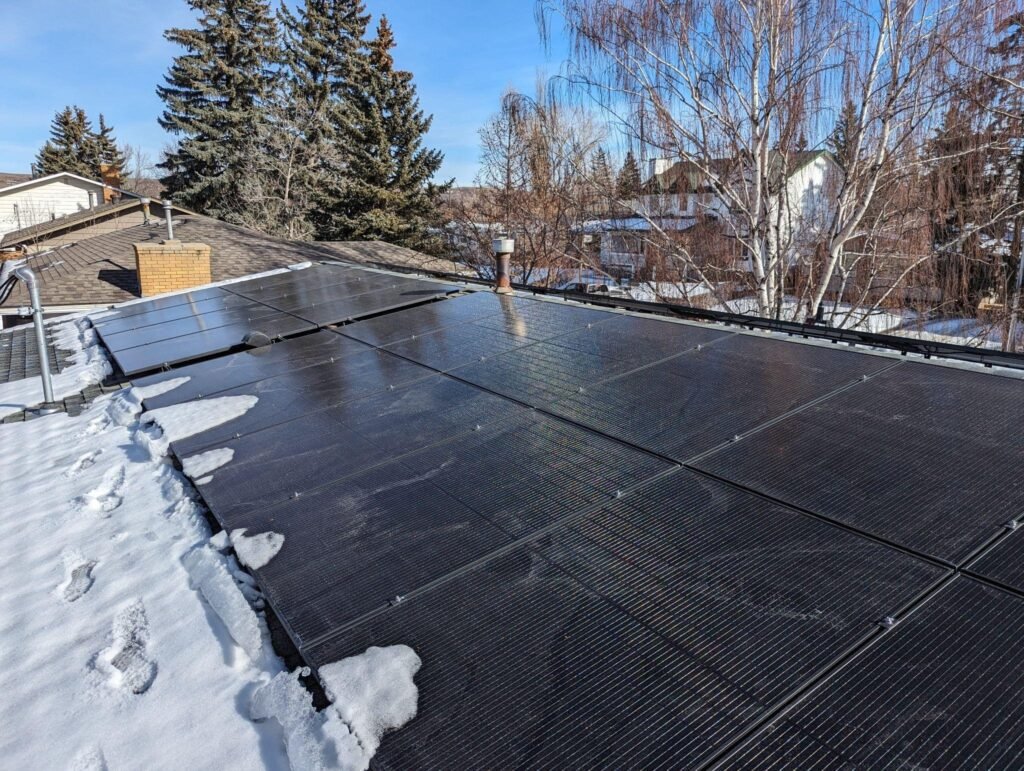
Winter in Calgary does not slow solar production – panels shed snow quickly and perform above rated capacity in freezing temperatures
What Happens When Electricity Prices Keep Rising
The financial case for solar depends heavily on what you would otherwise pay for electricity. The more expensive grid power is, the faster a solar system pays for itself.
Alberta’s electricity market is deregulated, which means prices follow commodity markets rather than being set by a regulated utility. Between January 2023 and January 2024 alone, residential electricity rates in the province increased by approximately 119 percent. That is not a typo. The Alberta Energy Board followed with a further 20 percent regulated rate increase in 2024.
A homeowner who installs solar in this environment is not just buying cheaper electricity today. They are locking in a known cost for 25 to 30 years while their neighbors continue absorbing whatever the market decides to charge. Industry data from Calgary currently puts average payback periods at 5 to 7 years for well designed residential systems. After that, the electricity the panels produce is, for practical purposes, free.
The Financial Incentives That Make the Numbers Work
Alberta’s provincial policy framework has also made residential solar meaningfully more accessible. Under the province’s Micro Generation Regulation, homeowners who export surplus electricity to the grid receive credits that flow back through their retailer and offset consumption during low production periods. Alberta charges no provincial sales tax, which means solar equipment and installation carry only the 5 percent federal goods and services tax. That is a genuine cost advantage over most other provinces and many American states.
For homeowners who do not want to pay the full installation cost upfront, the Clean Energy Improvement Program (CEIP) offers an alternative. It finances solar installations through a charge attached to the municipal property tax bill, repaid over 10 to 20 years at competitive interest rates. For many households, the monthly addition to their property tax bill is roughly equal to the reduction in their electricity bill, making the system cashflow neutral or positive from the first month.
There is also a longer term financial argument worth understanding. Studies suggest that solar adds approximately 3 to 5 percent to the value of a residential property. In a market where home values are closely watched, that is not a trivial consideration.
A Market That Has Already Started Moving
None of this is hypothetical. Residential solar capacity in Calgary has approximately tripled since 2019. Homeowners who installed systems several years ago are now deep into payback and watching their electricity costs trend toward zero. New installations are accelerating as word spreads and as the economics become more widely understood.
The broader lesson here is one that applies well beyond Alberta. Cold climate cities across North America, including Denver, Minneapolis, Salt Lake City and Edmonton, share many of the same underlying conditions: high sunshine hours, cold winters that boost panel performance, and electricity markets where the case for generating your own power keeps getting stronger.
The image of solar as a warm weather technology has been a durable one. But the homeowners in Canada’s coldest cities are writing a different story, measured in kilowatt hours, falling power bills, and payback periods that are arriving faster than most of them expected.
About Panel Upgrade Experts:
Paul Hannania is the owner of Panel Upgrade Experts (panelupgradeexperts.com/solar-panels-calgary/), a residential solar and electrical installer based in Calgary, Alberta. With over a decade of experience installing solar systems across Alberta’s climate, Paul writes about the practical realities of solar adoption in cold-weather markets.