Let’s set the record straight, like the inappropriate drunk uncle at your wedding AI is here to get its groove on. Catching heat faster than the Californian wildfires we need to understand if this thing will destroy, or complement our place on this planet. Let’s explore…To power AI you need some serious juice for its computational processing and cooling of the physical hardware that sits in dystopian fortresses we know as Data Centres.
How much Energy?
A ChatGPT prompt on average requires roughly 3 watt-hours of electricity which equates to about 20 minutes on TikTok. The irony is that I asked ChatGPT around 30+ prompts to help research for this piece which is equivalent to powering the very laptop I’m writing on for 4 hours.
Let’s look this at scale…globally!
It’s been suggested that ChatGPT processes around 200 million requests a day, which could power 20,000 homes. But training a large-language model can consume some serious wattage enough to power 130 homes for a whole year! Now you wouldn’t want to pick up OpenAIs tab, their daily bill could well be over $700,000 per day.
What if AI was totally powered by Wind or Solar?
The world consumes around 26,000 TWh, of which data centers account for about 500 TWh. A rough assumption would be 30% dedicated to AI, which equates to about 150TWh.
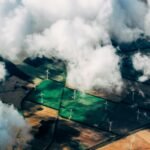
💨That’s roughly 26,000 wind turbines across 300 million football fields (16,000 sq. kilometers / 9,600 sq. miles).
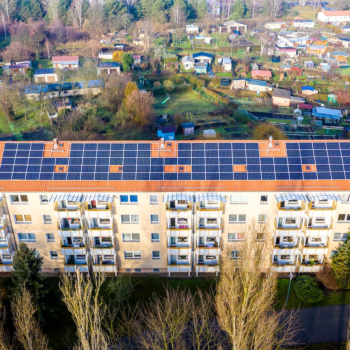
☀️ If solar, it’s about 300 million solar panels across 300,000 football fields (1500 sq. kilometers / 580 sq. miles).
The scary thought is that touted projections suggest AI demand will grow 10X from 2022 to 2030.
Whos doing something about it?
To assist in tackling the foreseeable problem, we need to rely heavily on those responsible for AI in the first place…the big techs. But thankfully unlike the big oil companies of the 60-70’s, at least the guys responsible are doing something about it most having already achieved net-zero and 100% renewable energy goals.
Google: Carbon neutral since 2007; 100% renewable energy since 2017; aims for carbon-free energy by 2030.
Facebook (Meta): Net-zero emissions since 2020; 100% renewable energy since 2020; aims for net-zero emissions across its value chain by 2030.
Apple: Carbon neutral since 2020; 100% renewable energy since 2018; aims for a carbon-neutral supply chain by 2030.
Amazon: Committed to net-zero carbon by 2040; largest corporate purchaser of renewable energy; aims for 100% renewable energy by 2025.
Nvidia: Carbon neutral since 2022; committed to 100% renewable energy by 2025; aims to reduce greenhouse gas emissions intensity.
Other side effects of AI that will likely diminish or evolve over time include the physical footprint of data centers, the materials needed for servers and processing power, job displacement, and ethical concerns regarding its use.
So whats the good news about AI?!
If it doesn’t have a sexy title, it’s not on brand for AI lol. Deepmind, Premonition, Xylem, Aclima, Rainforest CX (short for connection..duh!). But seriously there are some great applications that both big tech and startups have pioneered making real positive change.
Where tech and AI truly shine is in compensating for our human limitations: being available 24/7, processing millions of data points in an instant, and reaching places we can’t physically access. In forests, acoustic monitoring systems detect illegal logging and poaching activities, while satellite imagery analysis identifies high-risk deforestation areas, enabling preemptive conservation efforts. In marine environments, AI algorithms track coral health and map species distributions, providing crucial data on climate change impacts in our oceans. On land, AI works in conjunction with drone technology to predict mosquito-borne disease outbreaks, aiding in public health preparedness.
Check out the full list of Initiatives and Startups:
Google DeepMind developed an algorithm that optimizes energy usage in cooling Google’s data centers, reducing energy requirements by 35%.
Some great initiatives through Microsoft’s AI for Earth program.
- Wild Me uses AI to create a platform for wildlife researchers to monitor and study animal populations. The platform employs computer vision and deep learning to identify individual animals from photographs, enabling large-scale monitoring of species like whale sharks and elephants.
- SilviaTerra leverages AI to map and monitor forest ecosystems. By analyzing satellite imagery and other data sources, the company provides detailed forest inventories, helping landowners and conservationists manage forests sustainably.
- Agrimetrics uses AI to provide insights into agricultural practices, helping farmers make data-driven decisions. The platform integrates data from various sources, including weather forecasts and soil sensors, to optimize farming operations and improve sustainability.
Rainforest Connection uses AI and acoustic monitoring to detect illegal logging and poaching activities in real-time. By placing old smartphones equipped with solar panels in the treetops, RFCx captures the sounds of the forest, which are then analyzed by AI algorithms to identify threats. This early warning system helps rangers intervene and protect endangered species and habitats.
DeepMind, in collaboration with Google Earth Engine, uses AI to predict and monitor deforestation in real-time. By analyzing satellite images and other environmental data, AI models can identify areas at high risk of deforestation, enabling governments and conservation organizations to take proactive measures to protect forests.
The Nature Conservancy uses AI to analyze underwater images of coral reefs. AI algorithms identify and map coral species, monitor their health, and detect changes over time. This information helps conservationists understand the impact of climate change on coral reefs and develop strategies to protect and restore these vital ecosystems.
Blue River Technology, a subsidiary of John Deere, develops AI-driven solutions for precision agriculture. Their See & Spray technology uses computer vision and machine learning to identify and treat individual plants. This reduces the need for herbicides and pesticides, minimizing environmental impact and improving crop yields.
Orbital Insight uses AI to analyze satellite imagery and geospatial data to monitor natural resources, including forests, water bodies, and agricultural lands. Their AI models provide insights into land use changes, deforestation rates, and water resource management, helping organizations make informed decisions for sustainable resource management.
Global Fishing Watch uses AI to monitor fishing activities globally. By analyzing data from Automatic Identification Systems (AIS) on ships, AI models detect illegal, unreported, and unregulated (IUU) fishing activities. This transparency helps governments and organizations enforce fishing regulations and protect marine ecosystems.
Microsoft’s Project Premonition uses AI and robotic drones to monitor and predict the spread of mosquito-borne diseases. By collecting and analyzing environmental data and mosquito samples, AI algorithms can predict outbreaks and help public health organizations take preventive measures to reduce the spread of diseases like malaria and Zika.
The Ocean Cleanup uses AI and machine learning to develop systems that remove plastic from oceans and rivers. Their Interceptor project, powered by AI, identifies and collects plastic waste from rivers before it reaches the ocean, aiming to address the source of ocean plastic pollution.
Google’s EIE uses AI to provide cities and local governments with data on carbon emissions, renewable energy potential, and climate-related insights. By analyzing satellite imagery and other data sources, EIE helps cities make informed decisions to reduce emissions, improve air quality, and plan for climate resilience.
Descartes Labs: This company uses AI to analyze satellite imagery, providing critical insights into deforestation, land use changes, and carbon emissions. Their AI models enable more effective tracking and combating of deforestation.
Carbon Engineering: This company is pioneering AI-driven solutions for carbon capture and removal from the atmosphere, playing a crucial role in mitigating climate change.
Xylem: Their AI-driven water management systems are transforming water resource conservation and distribution by monitoring and optimizing water infrastructure to reduce wastage.
Aclima: This company utilizes AI to map air pollution with high precision. Their sensor-equipped vehicles collect real-time air quality data, helping cities and organizations make informed decisions to improve air quality.
Conservation Metrics: They focus on preserving marine life through AI, using software to analyze underwater camera footage for monitoring and protecting marine ecosystems.