Lifestyle

  1. Lifestyle

Lesson 1: Communicate Urgency

  • The brain has a tendency to react strongly to risks that seem novel, uncertain, uncontrollable, and life-threatening --i.e. COVID-19, immediacy
  • Even though it already kills people, Climate Change is predominantly seen as a risk to be faced in the future
  • Shaping awareness around climate change requires reframing its message

Lesson 2: Elevate the Voices of Trusted Messengers

We are learning valuable lessons from this Public Health Crisis

  • Gallup poll rates nurses as the most trusted profession 18 years in a row
  • Can the healthcare community can be more vocal on climate change? Think George Mason Program on Climate Change and Health, Hospital Coalitions, etc.
  • Pew demonstrated that six-in-ten Americans say scientists should play an active role in policy debates about scientific issues
  • Are you tired of hearing 97% of scientists agree on human-caused CC? Clearly that message isn't working.
  • Maybe it is time to hear more from scientists directly, rather than politicians, professors and children.

Lesson 3: Localized Scale Works Best

  • Simple attainable solutions that can be done from home are essential (i.e. telecommuting, leveraging video conferencing solutions, like Zoom, to facilitate remote work)
  • Decentralized response? Perhaps not the most effective, if we had responded sooner to COVID...
  • We are hearing from local leaders... In Atlanta, governor and mayor coordinated efforts...encouraged use of hand san and avoidance of public events
  • Global Covenant of Mayors, ICLEI, National Council of Local Governments, etc. building capacity at these hyper-local levels for climate action

More to know

  • Shift Perspective, Short-Term vs. Long-Term
    • Sacrificing convenience of globalized economy, at least temporarily
    • Amazon reducing stock, harder to access consumer goods, like toilet paper
  • Recognition of Vulnerable populations
    • Like climate change, people who are hit hardest are already vulnerable
      • Low-income, elderly, sick
    • People are banding together to help them

Be intentional, coronavirus feels personal

  1. On NPR, Dan Gilbert, Harvard psychologist, argued that climate change lacks four fundamental features that typically trigger an immediate response: Intentional, Immoral, Imminent, Instantaneous
  2. Show immediacy w/out compromising integrity
  3. “With some people, climate change is actually more of an imminent threat. I mean, I'm thinking about farmers who are seeing more ruined crops. I'm thinking about people who live in certain regions that are definitely getting more extreme weather.”

Dig deeper → 8 min

  1. Lifestyle

Lesson 1: Reduce or remove your vulnerability to ‘the system’

The globalized world today has allowed for the rapid spread of ideas, knowledge, goods, services, and people. Unfortunately, globalization has also proliferated the pandemic we face today. The interconnected world creates many issues, but also allows us to collaborate and work together to come up with innovative ways to solve crises that arise from that inter-connectivity.

Lesson 2: No one can bring you peace but yourself

The global pandemic is a perfect example of a time in which things outside of us can stifle our ability to live a life the way we see fit. You didn’t create the virus, you didn’t spread it, and if you’re one of the many people feeling stuck in your home right now, you may feel helpless ‘doing the right thing’ and watching others directly impact your experiences by not listening to authorities.

Lesson 3: 'Sustainability' is timeless

The principles of self-reliance and sustainability are timeless. Those words of Emerson ring true today. He had a deep passion for Nature and felt placing ourselves in the natural world, away from society, was the key to dropping the ego and living a more fulfilling life. The way I see it, he was practicing sustainability in his time.

Dig deeper → 8 min
  1. Lifestyle

Big picture: There is a lot of activism on campus, but we need to evaluate how effective it is.

Why it matters: 89% of youth believe they can make a difference on climate change. Students at colleges and universities commit to making a positive impact on the planet and crafting a more promising future. There is, however, a stark disconnect between young people’s passion for helping the planet and their understanding of how to make effective change.

College activist best practices: Explore specific career paths for peers to find meaningful work in the renewable energy sector or in startups that are actively practicing sustainability. Show everyday people how small individual changes, such as reducing red meat consumption, can have an impact. Demands for divestments and recycling programs only go so far.

Bottom line: Activism focuses on short-term problems such as university endowments or common initiatives. These issues have a streamlined pathway for success, but their impact is statistically uncritical.

  1. Lifestyle

If you’re a socially conscious adult, you may have experienced trouble navigating the jungle of brands and product offerings that is the eco-friendly space. 

Big picture: Shopping dominates modern culture, yet it also advances many issues like messy supply chains or the abundance of plastic waste in the ocean.

Between the lines: Buying green or purchasing eco-friendly products creates a ‘warm glow’ in consumers. It generates satisfaction, like the feeling from helping others. 

Purse vs. Purpose

  • Buying less is better for the pocket book, but buying green isn’t often more expensive. 
  • Price often largest barrier for consumers
  • Eco friendly items are often more expensive to less sustainable alternatives 

For the people: Buy green or Buy less? Short answer — do both 

  • Limiting your consumption within reason
    • On one : you don’t need to stop buying things you need on a regular basis, but you might not need that fourth pair of sunglasses
    • On the other : you might deserve that new pair of sunglasses after your latest accomplishment, we get it. We encourage you to find a company that has limited environmental impact - Read how here.

Dig deeper → 3 min

  1. Lifestyle

The scoop The fashion industry faces criticism for not following environmental standards to produce cheaper closet updates. Once again. But at what cost?

At the expense of exploiting cheap labor and adding to the global problem of industrial pollution. Brands such as Zara have been at the center of this heated debate as they continue to follow their fast business models.

The invisible price tag

  • Online fashion houses such as Zaful, Shein and Romwe make millions on their fashion lines by taking advantage of low-wage labor in sweatshops in China and other parts of Asia. 
  • Customers fall victim to the low prices of their goods but a rising number in the online consumer market have complained about the sub-standard quality of the items they purchase. 
  • Consumers of fast fashion tend to ignore the moral and environmental standards that companies disregard. 

What are the consequences?

  • Over 265 million children globally are enslaved by manufacturing houses found guilty of illegal labour practices. 
  • As of 2017, only 15% of old clothes were recycled.
  • Companies such as Zaful make greenwashing claims about their sustainability programs but there is a shadow of doubt as to what their policies on environmental management actually are?

Eco-friendly goes beyond price

  • There are strict sustainability guidelines which restrict organic cloth manufacturers from scaling their production.
  • Sustainable fashion must enable the consumers to lead more minimalist lifestyles. 

Choose slow fashion

  • Consider quality over quantity. What is that you really need?
  • Leverage your purse by purchasing from sustainable brands in order to facilitate the shift towards a sustainable industry.
  • Upcycle by using old fabrics for other uses once you’re done using the fashion item, to create a circular consumption pattern for yourself.

Dig deeper → 4 min

  1. Lifestyle

How do we stop the single-use plastic craze during a pandemic? What does a post-pandemic world look like for plastic?

What to know More people are buying single-use plastic since the pandemic started.

Why it matters It took decades for sustainability to gain serious traction, and a matter of weeks to destroy some real progress on the way we live. People are buying delivery, shopping online, and throwing single-use items away more than ever before. That means a lot of waste to be managed in the coming years. We need to reconsider how we evaluate short term versus long term risk.

Big picture Yes, PPE is important. Yes, oil is cheap. And for now, it makes good business sense to produce plastic because it is cheaper. Yes, I know your business may be struggling and you need to save every dollar possible to make ends meet.

But, if you are in any way, shape or form invested in the long-term well-being of this planet and/or your business, you must take a deeper look at our business models, processes, and impacts to determine whether it is hurting or helping the big blue-green planet and its constituents.

Dig deeper → 5 min

  1. Lifestyle

The scoop In the world of factory farming, public health risks are completely ignored.

Could applying “social distancing” rules to animals really help us all live healthier and safer lives?

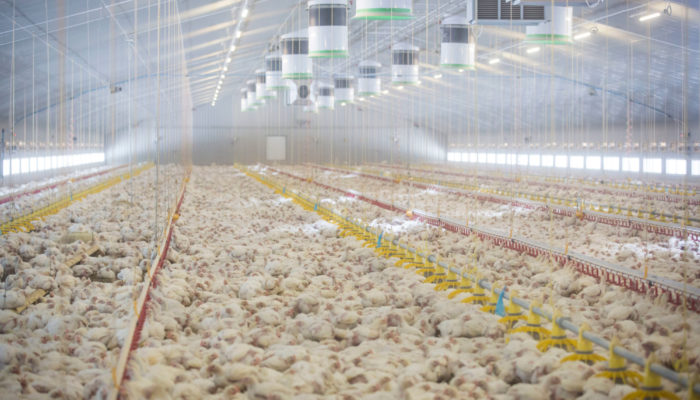
Why it matters Most animals (both wild or domestic) carry some type of virus. It’s easy enough to learn from the recent outbreak and stay away from wildlife. But what about domesticated animals in factory farms? Farm animals carry many diseases.

As the world population increases, so does the demand for meat products. More meat = more crowded spaces in factory farms.

Bottom line Removing factory farming, or significantly improving its operations, is a contributing factor in preventing another public health disaster.

Dig deeper → 5 min

Weekly Newsletter

> Be Part of the Solution

Join our community of +220k Conscience Readers

Trending News | Innovations | ESG
Brand Reviews | Careers

Sustainable Review is copyright material. All rights reserved.

Exclusive Content Weekly

> Be Part of The Solution

Join our community of +220k Conscious Readers