People

  1. Politics and Policy

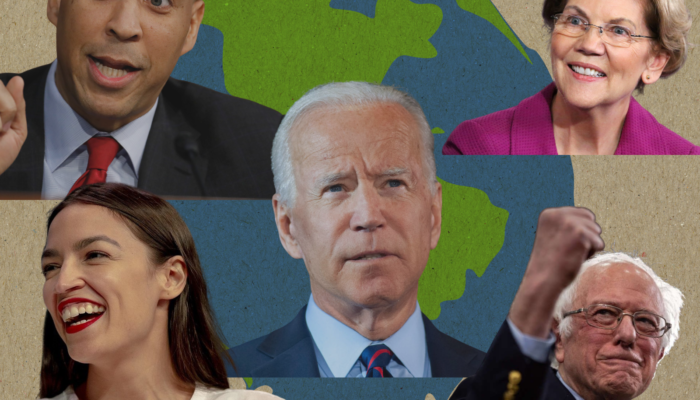
Biden re-signed the Paris accord this week. Like I wrote about last week, the next four years will have major implications about the role of federal governance in climate mitigation.

Here at SR, we don’t endorse politicians but we certainly criticize them. Expect us to watch this administration closely and keep you up-to-date on America’s progress on environment-related issues.

  1. Politics and Policy
Busy? Try the speed read.

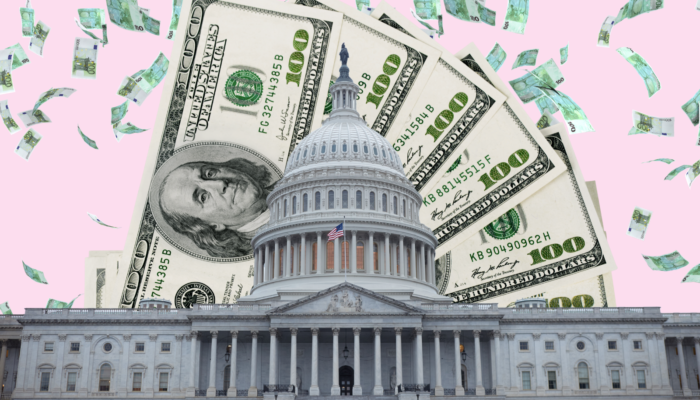
The scoop: With control of Congress and the White House, the Democrats have the weight of the world take serious climate action. If they fail, perhaps government is incapable of getting the job done.

Some talking points:

  • Any climate plan taken in the next few years should be targeted at institutions, not individuals.
  • We're looking for stringent environmental protections laws, and harsher rules on corporate carbon emissions. Let's not damage SMB's either, please.
  • ^In that light, if there was a vaccine-like waitlist for taking climate action, corporations should be at the top of the list. Let's get them out of the way.

Bottom line: The legacy of federal governance (fair or not) lies in the hands of an aging Biden. If his administration fails to bring about tangible change, the distrust of government may be irrevocable.

Dig deeper --> 1 min

  1. Lifestyle
Busy? Try the speed read.

The scoop: Sustainability in 2020 was about transition. Let's make this decade about change (not the World Economic Forum kind... the ordinary people kind).

Top sustainability trends in 2020:

  1. Economics merge with environment
    • Rise of ESG superfunds
    • Corporate-social sustainability skyrockets
    • Individual sustainable investing spikes
  2. Climate awareness goes mainstream
    • Data showed most Americans now concerned about environmental issues.
    • Climate entered national politics.
    • Animals gained more rights - backed by science as much as emotion.
  3. Climate community can't stop fighting with itself. Here are different type of activists:
    • The optimist "Don't worry, science & tech will get us out of this mess!"
    • The concerned consumer "How can we blame corporations if we keep buying their products??"
    • The concerned citizen "The problem isn't with consumers, it's with citizens. You need to vote to make real change!"
    • The institutionalist "It doesn't matter what individuals do, it's governments and corporations that are to blame."
    • The doomsday-er "We are screwed no matter what, Kathy. Start preparing for the next Ice Age."
    • The compromiser "I think Biden made good cabinet choices for climate."
    • The radicalist "If you drive a gas car, I realistically can't spend Thanksgiving with you."

Bottom line: 2020 was a mixed year for sustainability, but we are bullish long-term.

Dig deeper → 7 min

  1. Lifestyle
Busy? Try the speed read.

The scoop: Electronics produce millions of material waste every year. Here are some simple ways to recycle or repurpose your old gear.

Recycling electronics:

  • You can dispose of old batteries, computers, tvs, and phones at major retailers like Home Depot, Best Buy, Lowe's and Staples. Use a search engine to find one near you.
  • Make sure your device is shot before recycling it - you may be able to donate it, sell it online, or trade it in for a new device.
  • Always back-up old files and do a factory reset before selling, recycling or donating a device.

Bottom line: Being responsible with e-waste is an easy way to dampen your footprint and help under-served communities at the same time.

Dig deeper ➝ 4 min.

  1. Politics and Policy

Below are top 10 head-scratchers for the so-called 'COVID-19 Relief Package'.

  1. Despite spending 15 years and billions of dollars, American counternarcotics efforts in Afghanistan are ineffective (Foreign Aid)
  2. The Fish and Wildlife Service is subsidizing yachting (Environment, Energy,Science)
  3. NIH paid to find out if hot tubbing can lower stress (Health Care)
  4. Using CARES Act funds, the FAA renovated a taxiway at the airport on Nantucket Island most often used by private jets (Miscellaneous)
  5. NIH paid researchers to interview San Franciscans about how they use edible cannabis (Health Care)
  6. FEMA paid for test tubes for COVID tests but received contaminated mini soda bottles (Miscellaneous)
  7. NIH paid researchers to develop methods to stop grown adults from binge-watching television (Health Care)
  8. DOD lost more than 100drones over Afghanistan (Military)
  9. USAID is open to creating a venture capital fund in Bosnia & Herzegovina for bad investments (Foreign Aid)
  10. NSF ran lizards on a treadmill (Environment, Energy, Science)
  1. Lifestyle
Busy? Try the speed read.

The scoop: Individuals need basic survival skills to lead a more sustainable lifestyle.

Ways to be more independent + sustainable:

  • Grow your own food
  • Make something from scratch (DIY)
  • Learn one new hard skill every "x" (42 examples with how-to videos below)
  • Rescue an animal
  • Make your property inclusive to wildlife
  • Stop buying random shit
  • Choose fresh air over screen time (at least once a day)

Bottom line: If you understand how to be independent, you can seamlessly be your best sustainable self. If you are dependent on institutions in your everyday life, you are not a sustainable human. Sorry, not sorry.

Dig deeper → 5 min

  1. Politics and Policy
Busy? Try the speed read.

The scoop: The World Bank projects extreme poverty to rise for the first time since the 1990s, while 270 million people are at risk of starvation (2x higher than 2019).

Lockdowns and inequality: 20+ million Americans are still unemployed. 160,000 US business have closed. Despite that, Amazon, Wal-Mart and Costco (for example) are posting record high online sales.

What can we do? Go beyond SBA loans and stimulus checks. We should like, actually be doing everything we can to keep small business owners afloat.

Local coffee shops > Starbucks, Thrift > Marshall's, Art galleries for Home Decor > Amazon.

Bottom line: We can clean up this institutional mess by creating a new structure around congressional term limits, monopoly break-ups, whistleblower support, and free speech... or we can allow the same actors to weave the world we've grown to love and hate.

Dig deeper → 3 min

  1. Politics and Policy
Busy? Try the speed read.

The scoop: Biden vowed to sign the Paris agreement in his first day in office. As an environmentalist, I think it's all hype no action.

Why Paris no bien:

  1. It's a pledge, not a policy. There's no binding enforcement mechanism. So a country like Russia or Mexico can agree to it, but it doesn't hold them accountable.
  2. It lets China off the hook. China, the #1 carbon emitter in the world, can hide behind the US if we re-join it. If the US led the world on climate policy without Paris, it would expose China's energy reality (they are slated to make up nearly half of global coal demand in 2024).

Bottom line: We get it, Trump sucks and he left the Paris agreement so the Paris agreement must be amazing. Well, the Paris agreement is ultimately not that significant in terms of climate action. Policy reform > pretty pictures

Dig deeper → 2 min

  1. Lifestyle
Busy? Try the speed read.

Big picture: Every influential organization and leader around the world (besides Trump) is telling us to Build Back Better. What are we trying to fix?

A little context: History shows how major global resets can fail poorer nations. Bretton Woods perpetuated inequality behind the veil of humanitarian activism. If the status quo changes the status quo, did the status quo really change?

Some talking points:

  1. Governments caused the COVID debacle, not the people. Yet, the people face the consequences.
  2. Governments (and international organizations), perpetrators of the broken system, want to fix it.
  3. Suggestions from big orgs are abstract and ambiguous, rather than tangible like term limits.

Bottom line: As we watch world leaders discuss recovery options, let’s prioritize tangible change rather than utopian fantasies.

Dig deeper → 2 min

  1. Lifestyle

The current tradition:

  1. Lot'sa pumpkin picking: American farmers produce billions of pounds worth of pumpkin every year. When they end up in the garbage, they decompose in landfills and emit methane/
  2. Cheap costume wearing: Costumes from Big Retailers like Amazon and Wal-Mart use cheap materials and labor. Many people only wear their costumes once or twice before throwing it out.
  3. Kids candy eating: Candy sales are up 13% this year despite the pandemic. Candy wrappers are are often improperly disposed of, and many treats use harmful ingredients like palm oil (causes deforestation).

Proposed solutions for Hallogreen:

  1. If you're going to buy a pumpkin, eat it (or let the squirrels eat it).
  2. Reuse, create or thrift a costume.
  3. Don't eat candy because it's basically corn starch with sugar and food dye. If you are sugar-crazed (not judging you), just make sure you dispose of it properly by checking for recycling labels and washing out food oils before throwing it in the blue bin.

Bottom line: Let's use 2020 as an opportunity to reflect and reform wasteful traditions by making this October Hallogreen.

Dig deeper → 2 min

Weekly Newsletter

> Be Part of the Solution

Join our community of +220k Conscience Readers

Trending News | Innovations | ESG
Brand Reviews | Careers

Sustainable Review is copyright material. All rights reserved.

Exclusive Content Weekly

> Be Part of The Solution

Join our community of +220k Conscious Readers