Author: Jared Wolf

I am a marketer, content creator, and climate change optimist committed to demystifying sustainability. I have published over 150 articles spanning climate and sustainability, dedicating his time to crafting scientifically-accurate, apolitical content around sensitive climate topics.My content is designed to create a healthier, happier climate conversation through earth-conscious, honest independent media.
  1. Business

Curious about running a sustainable small business? Once a fringe business strategy, sustainability has become a prerequisite for any new business hoping to succeed in the long-term. Whether you own a pizza shop, landscaping company, real-estate firm or just starting out, prioritizing sustainability is an easy and effective way to distinguish your small business and ensure long-term stability.

This guide will help you adapt, react and plan for the wave of industry trends that prioritize social impact in a post-pandemic world.

  1. Politics and Policy
Busy? Try the speed read.

The scoop: The World Bank projects extreme poverty to rise for the first time since the 1990s, while 270 million people are at risk of starvation (2x higher than 2019).

Lockdowns and inequality: 20+ million Americans are still unemployed. 160,000 US business have closed. Despite that, Amazon, Wal-Mart and Costco (for example) are posting record high online sales.

What can we do? Go beyond SBA loans and stimulus checks. We should like, actually be doing everything we can to keep small business owners afloat.

Local coffee shops > Starbucks, Thrift > Marshall's, Art galleries for Home Decor > Amazon.

Bottom line: We can clean up this institutional mess by creating a new structure around congressional term limits, monopoly break-ups, whistleblower support, and free speech... or we can allow the same actors to weave the world we've grown to love and hate.

Dig deeper → 3 min

  1. Politics and Policy
Busy? Try the speed read.

The scoop: Biden vowed to sign the Paris agreement in his first day in office. As an environmentalist, I think it's all hype no action.

Why Paris no bien:

  1. It's a pledge, not a policy. There's no binding enforcement mechanism. So a country like Russia or Mexico can agree to it, but it doesn't hold them accountable.
  2. It lets China off the hook. China, the #1 carbon emitter in the world, can hide behind the US if we re-join it. If the US led the world on climate policy without Paris, it would expose China's energy reality (they are slated to make up nearly half of global coal demand in 2024).

Bottom line: We get it, Trump sucks and he left the Paris agreement so the Paris agreement must be amazing. Well, the Paris agreement is ultimately not that significant in terms of climate action. Policy reform > pretty pictures

Dig deeper → 2 min

  1. Lifestyle
Busy? Try the speed read.

Big picture: Every influential organization and leader around the world (besides Trump) is telling us to Build Back Better. What are we trying to fix?

A little context: History shows how major global resets can fail poorer nations. Bretton Woods perpetuated inequality behind the veil of humanitarian activism. If the status quo changes the status quo, did the status quo really change?

Some talking points:

  1. Governments caused the COVID debacle, not the people. Yet, the people face the consequences.
  2. Governments (and international organizations), perpetrators of the broken system, want to fix it.
  3. Suggestions from big orgs are abstract and ambiguous, rather than tangible like term limits.

Bottom line: As we watch world leaders discuss recovery options, let’s prioritize tangible change rather than utopian fantasies.

Dig deeper → 2 min

  1. Better Markets
  2. Business
  3. Profit

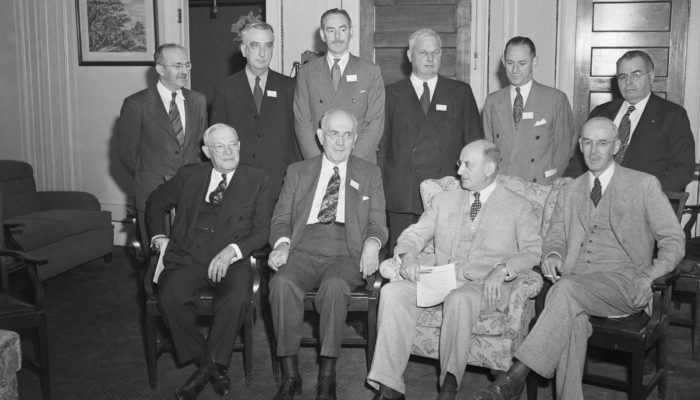
The scoop: the IMF published a statement calling the pandemic recovery plan a ‘new Bretton Woods moment’.

What is Bretton Woods? Bretton Woods was an international conference that took place in 1944 with the goal of preventing another World War by establishing a new international monetary framework.

The legacy of Bretton Woods: Although the agreement no longer serves a purpose in the modern world, its effects are still being felt; there is more negotiation between nations both economically and politically and the global market is more interconnected than ever before.

Lessons for coronavirus, globalization:

1. Make politics people-oriented

Leaders and policy-makers of international organizations are motivated by self-interest and private sector pressure. Likewise, they propose policies that favor private interest and hurt the average worker.

2. Make international finance fair and equal

Loan conditionalities from the IMF are often attached without serious consideration for the interest of the borrowing nation or its citizens. Recommendations by the World Bank and IMF don't always resolve economic hardships for developing nations.

Bottom line: If this is a new Bretton Woods moment, perhaps we can learn a thing or two about our convoluted past of international do-good. Rather than just hit the reset button, we should consider how poverty alleviation requires more than a paycheck.

Dig deeper → 8 min

  1. Better Business
  2. Better Markets
  3. Business
  4. Profit

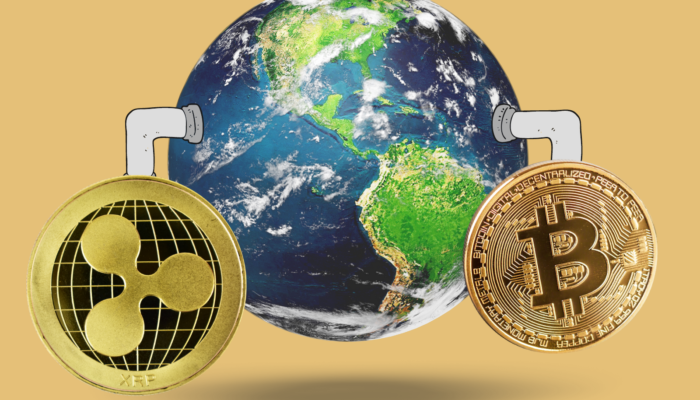
The scoop: Last week, Ripple’s CEO made an ambitious commitment to go carbon net-zero by 2030 in collaboration with conservation Rocky Mountain Institute and REBA, and pressured other crypto companies to do the same.

Talking points:

  1. Unlike Bitcoin, Ripple (XRP) was built with a finite supply (100 billion) at its inception, making it easier to control mining activities and mitigate its environmental footprint.
  2. Compared to Bitcoin’s 4.51 billion lightbulb hours needed to mine it, the XRP Ledger uses just 79,000.
  3. A lot needs to happen to make do on that claim, but Ripple is the first crypto looking to go carbon net-zero, and they have a plan (see below).

Bottom line: I don’t know if Ripple, Ethereum, and Bitcoin will one day replace Euros, Dollars and Yuan. With that said, why not bet a dollar on the possibility that they one day could?

Dig deeper → 3 min.

  1. Lifestyle

The current tradition:

  1. Lot'sa pumpkin picking: American farmers produce billions of pounds worth of pumpkin every year. When they end up in the garbage, they decompose in landfills and emit methane/
  2. Cheap costume wearing: Costumes from Big Retailers like Amazon and Wal-Mart use cheap materials and labor. Many people only wear their costumes once or twice before throwing it out.
  3. Kids candy eating: Candy sales are up 13% this year despite the pandemic. Candy wrappers are are often improperly disposed of, and many treats use harmful ingredients like palm oil (causes deforestation).

Proposed solutions for Hallogreen:

  1. If you're going to buy a pumpkin, eat it (or let the squirrels eat it).
  2. Reuse, create or thrift a costume.
  3. Don't eat candy because it's basically corn starch with sugar and food dye. If you are sugar-crazed (not judging you), just make sure you dispose of it properly by checking for recycling labels and washing out food oils before throwing it in the blue bin.

Bottom line: Let's use 2020 as an opportunity to reflect and reform wasteful traditions by making this October Hallogreen.

Dig deeper → 2 min

  1. Energy and Environment

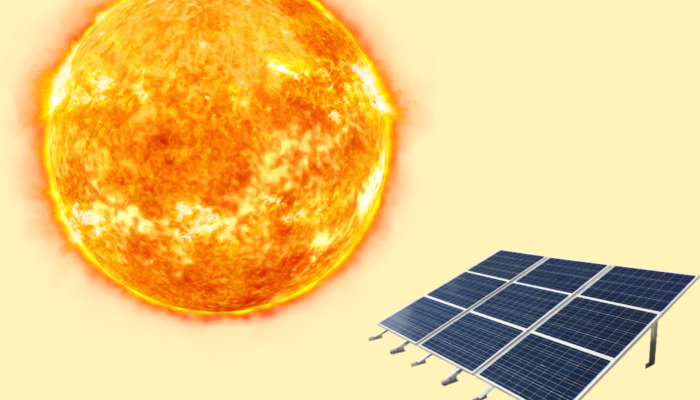
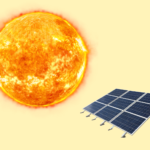
The International Energy Agency (IEA) rolled out its annual World Energy Outlook report with a bombshell. Solar power is expected to replace coal as the #1 source of energy production by 2025.

The backstory: In the last few years, governments and corporations flooded billions of dollars into the renewable energy space. Wind & solar energy have become cheaper than gas & oil as a result. It is now easier to manufacture and install solar panels than ever before.

By the numbers:

  • The IEA thinks 80% of new power generation will come from renewables.
  • We need to boost up investment in the energy grid by at least $460 billion in 2030 to hit our goals.
  • The global economy will return to pre-covid levels in 2021, but 7% smaller over long term compared to 2019 projections.

Between the lines: China alone will account for 40% of global growth for electricity demand over the next ten years. Southeast Asia and Africa will see major demand increases for energy over the next few decades.

Meanwhile, IEA's report found that global CO2 emissions will not return to 2019 levels until 2027, due to energy mix with renewables and coal's big drop in 2020.

Zoom out: We need a structural transformation of the global energy sector to hit on sdg's (those UN-sanctioned green goals we keep talking about), and that requires a lot of clean capital stock.

The report makes it clear that low growth of emissions ≠ a climate change solution. It's a means to an end.

Bottom line: Solar will replace coal as king sometime this decade.

Dig deeper → <2 min

  1. Business

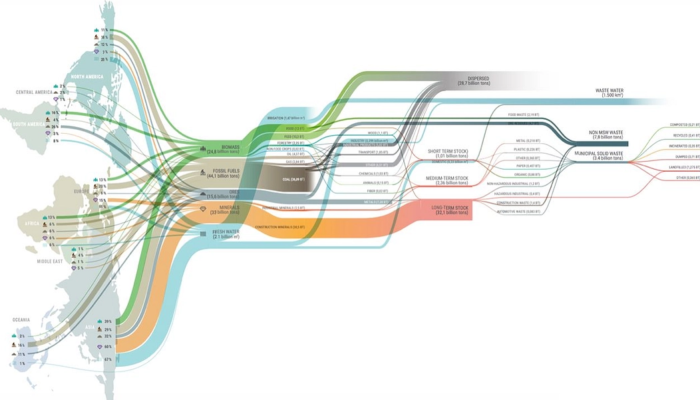
The scoop: The world uses a lot of materials to produce a lot of waste.

By the numbers:

  1. Asia accounts for 60% of mineral extraction and 67% of freshwater use.
  2. The world disperses 28.7 billion tons of fossil fuels and biomass energy.
  3. Europe, Asia and N. America account for 78% of fossil fuel output.

Key takeaways:

  1. It takes <resources to produce >materials.
  2. A lot of freshwater, an increasingly scarce resource, turns into wastewater every year.
  3. Most raw materials and natural resources end up in the land, air or water.

Bottom line: The current production process outweighs Earth's production capacity. To solve that, we need to maximize the life-cycle of products, treat natural resources carefully, and minimize waste.

Dig deeper → <1 min.

  1. Politics and Policy

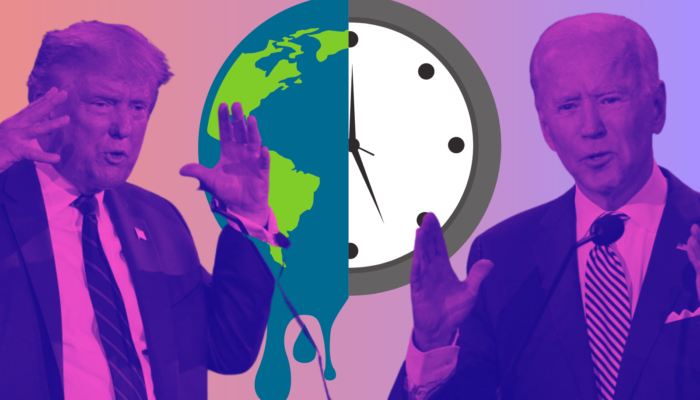
The scoop: The world witnessed the first ever climate change question in a US presidential debate. They spent 10 minutes on the topic.

Why it matters: Recent polls revealed 12% of likely voters considered climate change to be their #1 issue behind the economy and coronavirus.

Stuff to know: Biden suggested that foreign countries should give Brazil $20 billion to stop Amazon deforestation. The Amazon rainforest is made up of 300 billion trees and 1/5 of the world's species. Trump acknowledge anthropogenic climate change (sort of) for the first time.

Bottom line: The world is suffering from a public health disaster that has leaked into the global economy, yet voters still consider climate change a centerpiece issue. That is a sign of things to come.

Dig deeper → 3 min

Weekly Newsletter

> Be Part of the Solution

Join our community of +220k Conscience Readers

Trending News | Innovations | ESG
Brand Reviews | Careers

Sustainable Review is copyright material. All rights reserved.

Exclusive Content Weekly

> Be Part of The Solution

Join our community of +220k Conscious Readers