Author: Jared Wolf

I am a marketer, content creator, and climate change optimist committed to demystifying sustainability. I have published over 150 articles spanning climate and sustainability, dedicating his time to crafting scientifically-accurate, apolitical content around sensitive climate topics.My content is designed to create a healthier, happier climate conversation through earth-conscious, honest independent media.
  1. Politics and Policy

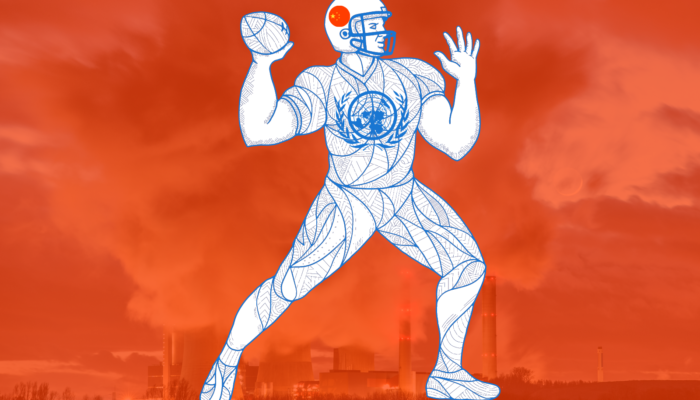
The scoop: China made an announcement to the UN with plans to go carbon neutral by 2060.

What to know:

  1. China is the number one carbon emitter in the world, with more carbon emissions thn the US and Europe combined.
  2. China is still investing heavily in coal-powered plants through 2020, de-legitimizing the carbon pledge.
  3. The UN took the pledge very seriously, indicating its unwillingness to criticize Chinese climate policy.

Bottom line: China’s carbon pledge is smoke and mirrors. The announcement comes weeks before a major US election when voters are antsy. The United Nations needs to focus on human rights efforts, not tweeting celebration emojis for empty words.

Dig deeper 3 min

  1. Energy and Environment

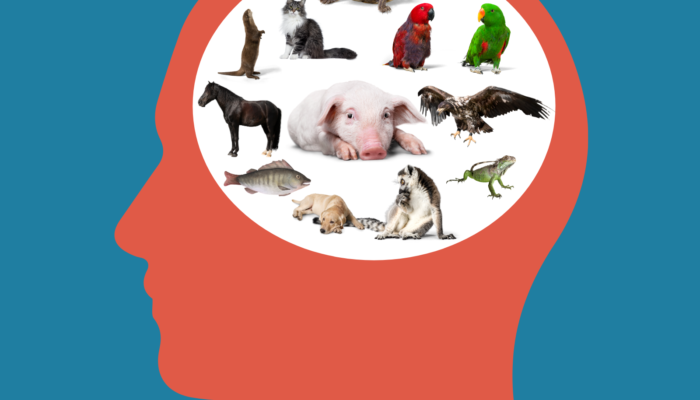
Question: How can sustainability succeed without laws protecting animals?

The science is out on animals. Man's outdated perceptions of our underwater and in-the-forest cousins are coming to light as science meets PETA.

Animals are sentient beings. It's not a romance novel, it's the world we live in. Animals experience a wide range of emotions.

The animal manifesto: Every squirrel, every rabbit, every bear, every fish serves a clear, identifiable role in Earth's ecosystem except for two creatures: invasive species like pythons in the Everglades.... and mankind.

Humans as protectors: Man certainly plays a role in this crazy floating ball universe, but we've drifted so far from our hunter-gatherer origins that our ecological purpose is becoming harder and harder to define. As such, it is the moral responsibility of man to act as benevolent stewards for the vulnerable, voiceless animal kingdom.

Animal lives matter: The next sustainability chapter of post-industrial society begins with a recognition of animals as they are, fellow Earthlings deserving of basic rights.

Bottom line Today, most advanced nations do not recognize animals as sentient beings. And we expect sustainable lifestyles to be widely adopted in our homes? You have to learn how to drive a car before lifting up the hood to fix it.

  1. Tech

The scoop Tech companies can use AI to compose new songs using existing datasets of music. This poses a serious threat to musicians and artists. Let's talk about it.

About the tech

  1. AIVA Technologies, based in Luxembourg, created an AI that composes music for movies, commercials, games and TV shows.
  2. OpenAI’s Jukebox allows users to generate genre-specific music. You can look up an artist and select a genre. Theoretically, it would fuse that artist with a Mississippi the selected genre.
  3. Holograms tours are becoming increasingly popular. Eventually, using AI composition tools and hologram tech, deceased artists will be able to tour new music... and it will be hard to tell the difference from a standard pop concert.
  4. VOCALOID is a voice synthesizing software that allows users to create 'virtual pop stars'. They are already widely popular in Asia.
  5. Other voice synthesizing tools allow users to imitate famous voices and spit out whatever output you'd like. Copyright law hasn't caught up to this deepfake dystopian reality, so feel free to go make Jay-Z say whatever you want.

Humans > robots ... for now At least for the foreseeable future, AI is incapable of creating music without mimicking an existing data set that originated from human innovation. Similar to the way AIVA pitched their product, Artificial Intelligence can be used to help the artist speed-up and maximize the composition process. It should be treated as a tool, not a replacement.

Zoom out There will always be a place for bipedal fleshbags in the arts. With or without AI in music. Why? Because the consumers of creation are also fleshbags, and we want to be wowed and wooed by the hairy, smelly creatures that feel and squeal just like we do.

What does this have to do with sustainability? Supporting a pro-human future (in the face of tech) is a critical component of a sustainable future. We need to develop new technologies in a way that prioritizes happiness and harmony over production and profit.

Dig deeper → 9 min

  1. Energy and Environment

The scoop It's been 161 years since the US drilled oil for the first time. Let's talk about the history and future of oil, and where it fits into our plans for better planet.

Talking points

  1. We keep running out of oil and then find more.
  2. It seems like the world is moving away from oil, but the US is producing more today than ever before.
  3. Unconventional oil, which is oil that is extracted by non-traditional means, is more problematic given its more likely to use more costly and environmentally disruptive processes.
  4. If you stream videos, drive a car, or live in a colder climate, you probably use more fossil fuels than you think.
  5. To move away from oil, we need to either invest heavily in a climate plan at an institutional level (cons: more government market intervention, higher taxes) or create a marketplace where renewables are the more viable option for businesses and consumers.

Final thoughts More investment in renewables will help ‘fuel’ the transition away from oil. In the meantime, let’s get the Republican party to acknowledge climate change.

Dig deeper 2 min

  1. Tech

What's happening Neuralink, a neural tech company owned by Elon Musk, is hosting a public event this Friday, August 28th. The event will feature a live demo of the innovative new technology.

What is Neuralink? The four by four millimeter chip sits in a sealed cylinder where it is inserted in the back of your head. Made up of 1,024 electrodes, the N1 works with your brain's neurons to solve neurological mysteries.

Musk believes the micro-chip will be able to solve any neurological disorder from Parkinson's to Alzheimer's.

Why it matters The technological prospects of solving neurological mysteries is fascinating and worthy of covering.

This emerging new era in the human timeline will make or break the human future, and quite possibly the natural world.

Some talking points

  1. Philosophical questions: Humans are flawed. That makes us human. If Neuralink makes our brains perfect, free of mistakes and failures, what does that world look like?
  2. Hacking: Technology is advancing faster than laws and regulations. Legal and compliance frameworks just can’t keep up. How can we safely stop hackers from entering our brains?
  3. Global inequality: When Neuralink inevitably matures into a product for convenience rather than desperation, rich kids who can afford neural chips will advance even faster beyond less-privileged peers.

Bottom line When do we take it 'too far'? Will we ever?

Let's learn the lessons of our past, and put reasonable pressure on innovative new technologies before they get too big to fail. That way we can ensure that the innovation is serving the best interest and will of the people, rather than exacerbating our greatest problems.

Dig deeper → 5 min

  1. Lifestyle

What are you talking about? Plogging. AKA jogging while picking up litter. Yes, you can exercise and help the environment AT THE SAME TIME.

Pro-tips for plogging

  1. Safety: Look before you touch and use good judgment. If you suspect something may be hazardous, leave it be and notify your local township!
  2. Reycling properly: Recycle according to local laws. Most parks and rec facilities have recycling bins. Use them! If you are unsure about your local recycling policy, look up '{city/town} {state} recycling' on your favorite search engine
  3. Local clean-ups: Check your area for local clean-ups at parks, lakes, rivers and highways.
  4. Share on social: Use #plogging and post your eco-warrior efforts on social media so other people can learn about this awesome trend!

Dig deeper >1 min

  1. Politics and Policy

What’s happening On Monday, the Trump administration approved drilling plans for an oil and gas leasing program in Alaska’s Arctic National Wildlife Refuge (ANWR).

Energy vs. Environment This is a big policy win for Republicans in a decades-long fight for energy independence. However, the South Carolina-sized refuge has never been used for oil extraction and for good reason.

The pristine land, made up of a biodiverse plant and wildlife population, deserves protection now more than ever. America is already oil-abundant. We don't need more drilling.

So we are oil rich, why the move? Short answer: $$$$. Oil companies drilling on federal lands get a break on royalties.

Threat to Gwich’in people Gwich’in leaders are vocal about their fight against drilling in the coastal plains of ANWR. The Gwich’in people have lived in the ANWR for over a millenia.

What can you do

  1. You can sign a petition, available at the bottom of this article.
  2. Alaskans can vote in the upcoming Senatorial race; the incumbent candidate supports ANWR drilling.

Dig deeper → 1 min

  1. Politics and Policy

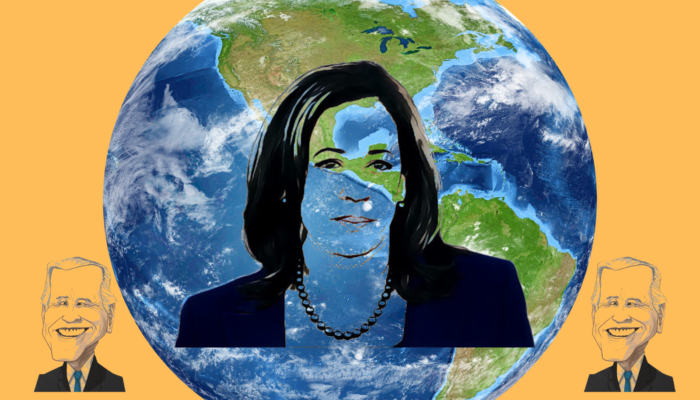
Veep nominee Harris Democratic presidential nominee Joe Biden announced Senator Kamala Harris as his running mate this week. She is the first woman of color to sit on a national ticket.

What to know After dropping out before the first primary, Kamala Harris has been working with other prominent Democrats to push several new climate bills with a concentration on matters of justice.

Call it what you want, but most political pundits point to Kamala's identity as a woman of color as the main reason for the Democratic Party's, I mean, Biden's strategic selection.

One big thing One of the more interesting prospects of a Biden-Harris ticket is the reemergence of 2015 Paris Agreement. As it stands today, the US will formally quit the Paris Agreement on 4 November, 2020, the day after the election.

My take on Paris I'm not convinced (and neither are some experts) that an international agreement is the answer to climate action without true compliance. What holds nations accountable for these commitments?

As the US-China economic race continues, the Paris Agreement would become more of a cat-and-mouse due to the associated costs of energy reduction than an actual solution.

A Biden-Harris ticket through the lens of climate:

  1. New legislation committed to environmental justice
  2. A series of executive orders designed to build a clean economy; there will be ambitious targets for 2025.
  3. A proposal to make a $1.7 trillion federal investment into climate resilience over the next 10 years.
  4. New efforts toward climate diplomacy/increased cooperation with other nations, traditional allies.
  5. More stringent environmental regulation, increase environmental standards for infrastructure projects.

Bottom line Neither Biden or Harris are climate experts. Their careers were not built on climate activism. However, they are concerned about these critical issues and will hire a team of dedicated experts.

Americans want purpose not perfection. In a candidate, I think everyday voters are looking for public consideration, personal accountability, and the ability to get shit done.

Dig deeper 5 min

  1. Tech

What's the situation? A stricken ship has leaked over 1,000 tons of oil over the coast of Mauritius. Experts fear that the ship may soon break in half, which could have devastating effects on the surrounding environment.

How did it happen? It is believed that harsh weather conditions caused the leak.

Who caused it? The cracked vessel, MV Wakashio, is operated by the Japanese Mitsui OSK Lines.

More facts The spill occurred near two environmentally protected marine ecosystems, as well as the Blue Bay Marine Park reserve. There are also mangrove plantations and well-known beaches nearby.

Threatened birds, captive fruit bats, and thousands of plants were removed from a nearby island, Ile aux Aigrettes by conservation activists.

Using technology to mitigate spills Human error is the leading cause for maritime accidents.

By integrating AI into the complicated world of global transportation, we can reduce and possibly even eliminate the risks associated with long-distance, heavy-duty shipping routes.

AI can…

  • Use predictive analysis to prevent spills
  • Expedite response-time
  • Mitigate risks for clean-up efforts

Bottom line Using AI in shipping and clean-ups lessens the risk of future spills, and reduces the impact of existing disasters.

Dig deeper → 5 min
Weekly Newsletter

> Be Part of the Solution

Join our community of +220k Conscience Readers

Trending News | Innovations | ESG
Brand Reviews | Careers

Sustainable Review is copyright material. All rights reserved.

Exclusive Content Weekly

> Be Part of The Solution

Join our community of +220k Conscious Readers