Author: Jared Wolf

I am a marketer, content creator, and climate change optimist committed to demystifying sustainability. I have published over 150 articles spanning climate and sustainability, dedicating his time to crafting scientifically-accurate, apolitical content around sensitive climate topics.My content is designed to create a healthier, happier climate conversation through earth-conscious, honest independent media.
  1. Business

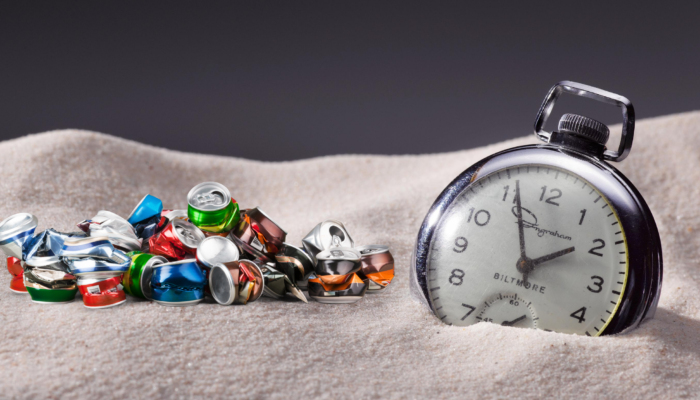
What to know American aluminum can suppliers are experiencing a shortage. Unpredictable consumer behavior and increased demand led suppliers to miss production levels and now beverage brands must scramble to compete for what's left.

Why it matters The overall shift from single-use plastics has also led major drink makers to shift from plastic bottles to aluminum cans. And while aluminum cans don't last in the atmosphere forever, they still can have damning effects on waste management. We are living in a world where China doesn't want our trash anymore, and recyclable aluminum cans are more of a band-aid solution of a larger problem.

The silver lining Consider it a stress test. With real-world examples about the fragility of our global system in place, we can now create applicable solutions outside the classroom.

Key recommendations for the shortage

  1. Brands can adapt by providing bulk alternatives to the traditional 12 oz can.
  2. Brands can also educate consumers on the label about the importance of maintaining a can's shape for recycling purposes. I was a beer can crusher in college, and I had no clue that crushing a beer can would make it near impossible to recycle.
  3. To consumer, do you love beer? Me too. Go to your local brewery, and fill up a growler. You can fill up a lot of beer for a great price, straight from the tap. You can support a local business, and the beer tastes fantastic if you pick the right brewer. There are more quality independent breweries out there today than ever before.

Dig deeper → 1 min

  1. Business

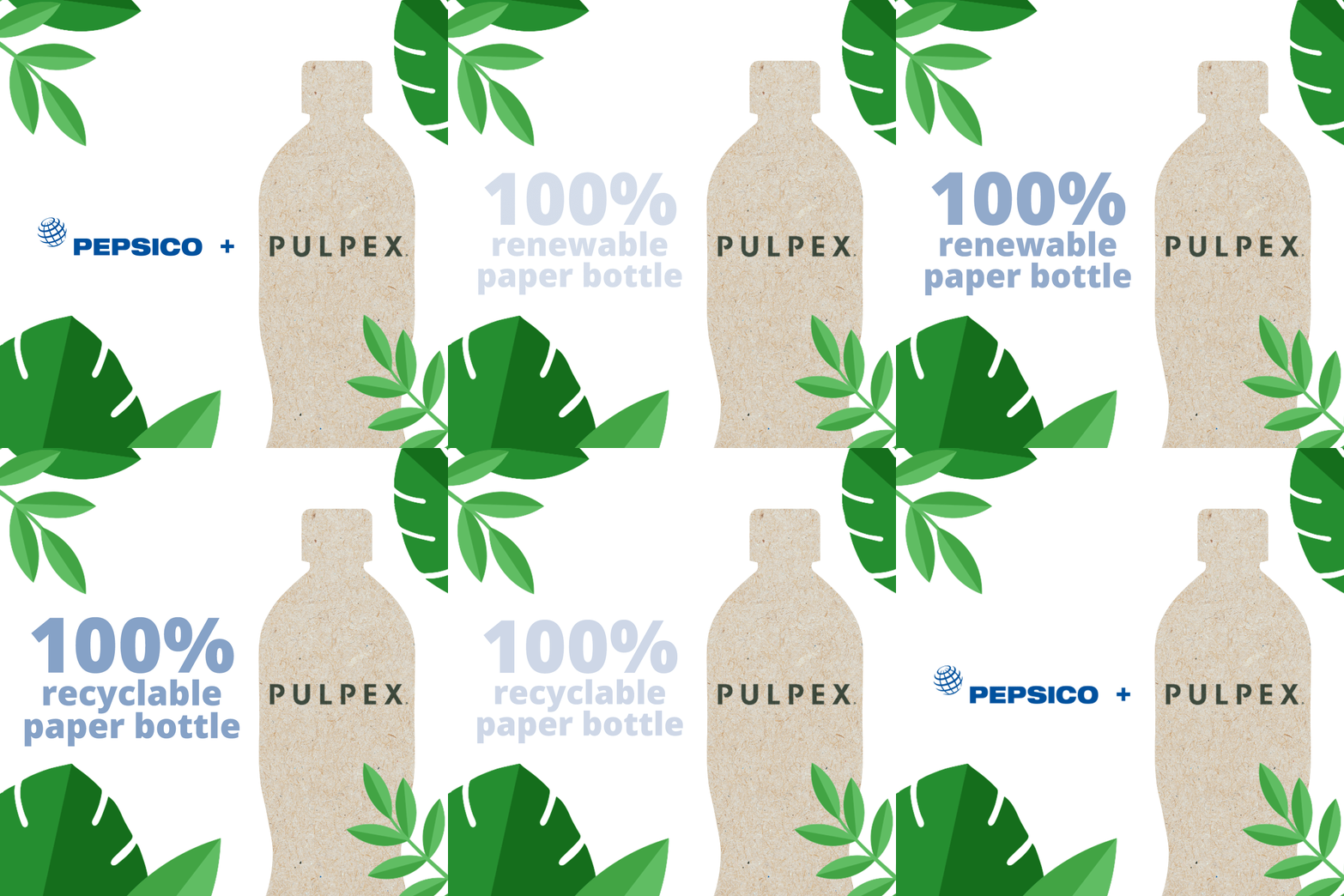
The scoop As consumer goods go green, PepsiCo announced last week its plan to further develop and scale the world’s first recyclable paper bottle.

Paper bottles PepsiCo will begin testing on the new paper bottle in 2021. The bottle is made from sustainably sourced pulp to meet food-safe standards and is designed to be fully recyclable in standard waste streams.

Bottom line

  • We need innovation and ambition in the food & beverage space, this is a good place to start
  • Limiting the amount of waste in the ocean is always a win, but Pepsi still has a long way to go
  • Organizations are building new, innovative ways to clean up Pepsi’s mess.
  • This is definitely a bit of greenwashing
    • The announcement calls for R&D testing in 2021, so we may not see paper bottles on the shelf for some time.
    • Furthermore, Pepsi did not elaborate on its major paper proposal’s inevitable impact on trees.
    • Will there be ecological offsets for the increased production of PepsiCo recyclable paper bottles?

Dig deeper → >1 min

  1. Business

The scoop Market research firm JD Power released a new index based on environmental, social and governance (ESG).

Key findings

  • Consumer awareness and engagement with utility climate initiatives are very low
  • Most concerned cities: NYC, LA and Portland are most concerned cities on climate change
  • Climate change skeptics: Wyoming and Alabama have the largest percentages of climate change skeptics
  • Business customers more engaged in sustainability than residential customers

Why it matters Sustainability has a communication and education problem. Companies in traditional industries like electricity need to adapt marketing initiatives to match 21st century tools, and communicate better with consumers.

Dig deeper → 2 min

  1. Business

The billion-dollar banana maker announced an ambitious plan to eliminate fossil-based plastic packaging by 2025, and reach net-zero carbon emissions by 2030.

Dole's plan Turn food waste into repurposed solutions like...

  1. Pineapple skin packaging
  2. New snacks made from rejected fruit
  3. Facilities powered by food waste converted into electricity.

What to expect Other major food producers will respond. The goal-setting sustainability trend continues, and only time will tell whether R&D goal-making converts into tangible results.

In the meantime, you can feel a little bit better about your next purchase of a Nicaraguan-born Dole banana.

Dig deeper --> 1 min

  1. Lifestyle

Lesson 1: Reduce or remove your vulnerability to ‘the system’

The globalized world today has allowed for the rapid spread of ideas, knowledge, goods, services, and people. Unfortunately, globalization has also proliferated the pandemic we face today. The interconnected world creates many issues, but also allows us to collaborate and work together to come up with innovative ways to solve crises that arise from that inter-connectivity.

Lesson 2: No one can bring you peace but yourself

The global pandemic is a perfect example of a time in which things outside of us can stifle our ability to live a life the way we see fit. You didn’t create the virus, you didn’t spread it, and if you’re one of the many people feeling stuck in your home right now, you may feel helpless ‘doing the right thing’ and watching others directly impact your experiences by not listening to authorities.

Lesson 3: 'Sustainability' is timeless

The principles of self-reliance and sustainability are timeless. Those words of Emerson ring true today. He had a deep passion for Nature and felt placing ourselves in the natural world, away from society, was the key to dropping the ego and living a more fulfilling life. The way I see it, he was practicing sustainability in his time.

Dig deeper → 8 min
  1. Lifestyle

How do we stop the single-use plastic craze during a pandemic? What does a post-pandemic world look like for plastic?

What to know More people are buying single-use plastic since the pandemic started.

Why it matters It took decades for sustainability to gain serious traction, and a matter of weeks to destroy some real progress on the way we live. People are buying delivery, shopping online, and throwing single-use items away more than ever before. That means a lot of waste to be managed in the coming years. We need to reconsider how we evaluate short term versus long term risk.

Big picture Yes, PPE is important. Yes, oil is cheap. And for now, it makes good business sense to produce plastic because it is cheaper. Yes, I know your business may be struggling and you need to save every dollar possible to make ends meet.

But, if you are in any way, shape or form invested in the long-term well-being of this planet and/or your business, you must take a deeper look at our business models, processes, and impacts to determine whether it is hurting or helping the big blue-green planet and its constituents.

Dig deeper → 5 min

  1. Tech
Busy? Try the speed read.
The short answer: 5G is bad for the environment. Or at least it's not good for it.The rollout of the 5G cellular network requires A LOT of energy and infrastructure. In the United States, much of that energy comes from natural gas and fossil fuels. Higher (and more frequent) demand for energy = more gas & oil = tougher environmental challenges.

What we know: 5G emits high-frequency (millimeter waves) between 30Ghz and 300Ghz. That requires antennas to be in close proximity. Due to the lack of far-reaching signals, 5G will not replace 4G LTE completely. 5G, for now at least, will serve as a complementary tool to its predecessor. This means more radiation in the air and atmosphere.

Big picture: 5G requires exponentially more towers and more energy than 4G in order to function properly. This means more radiation, that we don’t understand the long-term consequences of, and more gas and oil consumption, which we do understand the consequences of.

Why it matters: Determining whether 5g is bad for the environment boils down to four words: personal health + environmental impact. Research varies widely on the subject from A-Okay to Doomsday.

Some experts point out how 5G EMF radiation is non-iodizing, meaning it does not carry enough energy to iodize atoms or molecules. However, the International Agency for Research on Cancer recently stated there is still a potential risk to humans for this kind of exposure.

While it is uncertain how severely 5G radiation impacts health, we know it has an effect. Just look up the About>Legal>RF Exposure disclaimer on your iPhone. Plus, we know many natural resources are needed to power this close-proximity network.  We should be hesitant to make our homes, businesses and cities ‘smart’ at the cost of environmentally-invasive infrastructure.

If you are concerned about 5G exposure, consider the following steps:
  • Protect yourself by limiting exposure to 5G-enabled devices when possible. 
  • Sign a petition to delay the deployment of the 5G wireless network until institutions understand and enact regulations in accordance with the potential health hazards and environmental impact (link at the bottom of the article)

Dig deeper → 7 min

  1. Earth Week
Welcome to the second installment in our Earth Day series, the 1980s. The decade started with a win for environmental justice and the literal “defining moment” for sustainable development.Everything was bigger in the 1980s – big hair, leg warmers, and boom boxes, big phones, big junk bonds and trading scandals, and, of course, the advent of MTV and personal computing. It also may have been the decade in which we “lost Earth”.The second half of the decade included one of the most successful international environmental negotiations and brought climate change and its impacts to the public consciousness for the first time. This is Earth Day, 1980s edition.
  1. Politics and Policy

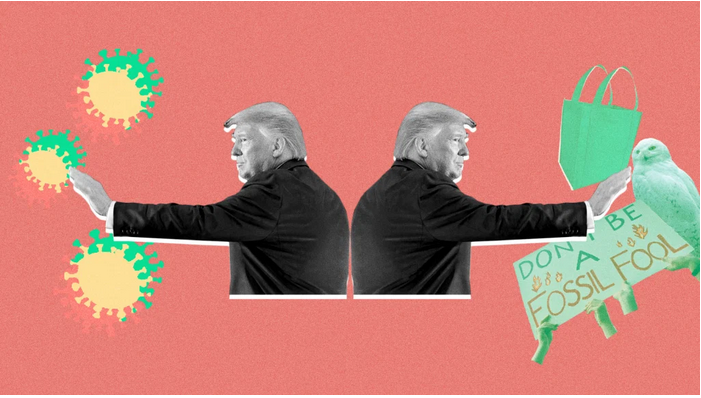
Why it matters Changes made now can pave the way for a new and dangerous status quo in environmental regulation that could severely impact the environment.

The big picture The EPA’s policies work to protect our environment and our health. Rolling them back can have grave consequences for both. 

  • A New York Times analysis revealed how the Trump Administration rolled back nearly 100 environmental rules and regulations since 2016. 
  • Proponents of radical changes like the Green New Deal are still the overwhelming minority in Congress. 

What actually happened The Federal Government proposed rolling back 6 major pieces of EPA rules and regulations including:

  1. Weakening the National Environmental Policy Act
  • Successfully allowing final environmental impact statements for projects with federal funding to effectively exclude climate change considerations. Unscrewing tight policy measures will give a free pass to pollute on major infrastructure projects, like oil & gas pipelines. 
  1. Suspending EPA Enforcement
  • The Environmental Protection Agency (EPA) decided to indefinitely suspend enforcement of its rules and regulations due to COVID-19. Companies will self-regulate their own air and water pollution (sort of). The rule was applied on March 13th.
  1. Opening a national park to resource extraction
  • The Trump administration recently pushed through a final environmental impact statement for a 211-mile road in Alaska that would bisect a national park and open up an area rich in copper, zinc, and other minerals.
  1. Reducing regulation for  a major slaughterhouse
  • The Department of Agriculture confirmed a waiver that allowed a private company to inspect a Tyson Foods slaughterhouse in lieu of the EPA.
  1. Reducing the impact of fuel efficiency standards
  • Last week, the Trump administration rolled back Obama-era vehicle efficiency standards through 2026. Those standards, which passed in 2012, mandated 5% annual increases in fuel economy. The new standards will require less stringent 1.5% annual increases.
  1. Trying to bail out Big Oil:
  • When drafting legislation for the coronavirus stimulus package, the Trump administration intended to buy millions of barrels of oil from struggling producers. Luckily, the measure was nixed in the final legislation due to a lack of funding.

Dig deeper → 3 min

  1. Tech

Big picture EF Schumacher warned us that Small is Beautiful. We ignored his message. Schumacher was a German-British Statistician and Economist who believed in a human-scale, decentralized approach to technological development.

In his book, Schumacher discusses the principles of Buddhist economics and addresses how modern economic thinking causes much of the emotional distress we experience in our 21st-century lives. Yes, the book published in 1973, but it is more relevant today than it was in its time.

Why it matters Our wealth has increased across the board, but we are no happier as a species. Positive human relationships, shared emotion, fulfilling purpose — these are the tenants of a progressive society.

Drones, phones, face ID, and VR are band-aid solutions for a dispirited population. Schumacher was a visionary. He saw the society's downward path and tried putting it to a halt.

Bottom line Let’s learn the lessons of our past and present through Small is Beautiful. We can start building cities with that appreciation for nature in mind. Not for some Romantic hippie-induced utopia, but for the sake of the rational economic mind.

Dig deeper → 7 min

Weekly Newsletter

> Be Part of the Solution

Join our community of +220k Conscience Readers

Trending News | Innovations | ESG
Brand Reviews | Careers

Sustainable Review is copyright material. All rights reserved.

Exclusive Content Weekly

> Be Part of The Solution

Join our community of +220k Conscious Readers