

Most people think about sustainability when buying food, clothing, or household products. Few consider what indoor playgrounds are made of. Yet these installations often use large amounts of plastic, foam, painted steel, and synthetic flooring. When play centers remodel or relocate, old structures are discarded. Much of that material ends up in landfills because it is difficult to recycle or separate into individual components.
Indoor playgrounds sit at the intersection of three important conversations: material waste, environmental impact, and child safety. The industry is shifting as schools, malls, gyms, and entertainment spaces look for greener alternatives that still meet strict safety standards.
This article explores how sustainable production is emerging in commercial play equipment, which materials offer lower environmental impact, and what decision makers should look for when selecting a supplier.
The Environmental Cost of Traditional Playground Equipment
Conventional commercial playgrounds rely on materials that can be difficult to recycle or dispose of responsibly.
Common components include:
- PVC coated metals and foam
- Fiberglass tunnels and panels
- Synthetic padding and flooring
- Paints and adhesives that may include volatile organic compounds
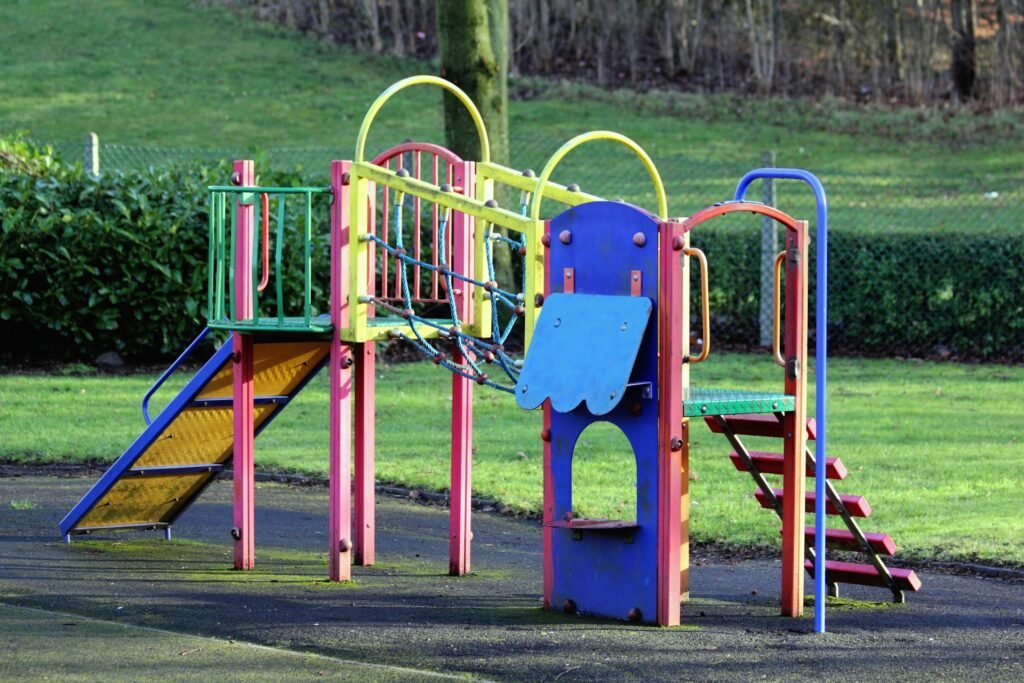
A single indoor play center can use hundreds of square meters of tubing, padding, netting, and plastic accessories. When facilities remodel, the older equipment is typically discarded. According to a report published by Statista, the global toy and play equipment industry produces millions of metric tons of plastic waste every year, and only a small fraction enters recycling streams.
Parents rarely see the manufacturing side. They only see the final installation. The environmental footprint happens long before the first child climbs into a ball pit.
The Rise of Sustainable Materials in Commercial Play Spaces
More businesses are shifting their purchasing criteria toward low impact materials, and several categories are gaining momentum. Recycled steel and aluminum are becoming standard options because metals are among the most easily recyclable materials available. The American Iron and Steel Institute reports that using recycled steel can reduce emissions by as much as 75 percent compared to producing new steel from raw ore.
Sustainable wood also plays a growing role. Some designers integrate FSC certified timber into smaller structures, particularly in Montessori inspired or educational environments where natural textures and visual warmth are part of the design goals.
Another important change is the transition to non toxic paints and coatings. Water based finishes eliminate many of the harmful solvents used in older paint formulas, reducing the release of VOCs into indoor environments. Alongside this shift, manufacturers are experimenting with more durable fabrics and padding. These higher quality materials extend the usable life of each playground element, which meaningfully reduces waste and lowers resource consumption over time.
These changes are happening for a reason. Parents ask more questions. Facility managers need equipment that supports environmental commitments. Communities expect safe, clean play spaces that do not create unnecessary landfill waste.
What Sustainable Production Looks Like in Practice
Many manufacturers are beginning to rethink how commercial play equipment is produced. The shift usually starts with replacing solvent based coatings with safer, non toxic paints. It also includes selecting durable materials that can be recycled at the end of their lifespan. The most meaningful change happens in design. Instead of creating equipment as one solid unit, components are engineered so individual parts can be replaced without sending an entire structure to a landfill.
Dream Garden, a supplier of commercial indoor playground equipment, illustrates this approach. Their corporate responsibility statement highlights the use of eco friendly materials, non toxic paints, and production methods intended to reduce environmental impact while keeping play spaces safe for children. They also design their systems to be modular, allowing only worn or damaged elements to be swapped out. This approach reduces waste and extends the overall life of the installation.
Why Sustainability Matters in Indoor Play Spaces
Indoor environments intensify many of the challenges linked to traditional play equipment. There is less natural ventilation, which means chemicals from paints or adhesives linger in the air longer. Surfaces are also cleaned frequently with commercial cleaning products, increasing the exposure to residue. On top of that, children interact with playground equipment through direct skin contact far more than they do with other indoor fixtures. This combination makes material safety even more important. According to the Environmental Working Group, volatile organic compounds released from paints and adhesives can contribute to respiratory irritation and long term air quality concerns. Choosing low impact and non toxic materials is not only an environmental choice, it is directly connected to health and safety.
How Buyers Can Evaluate Sustainable Claims
Any company can market its products as eco friendly, so buyers need a clear way to evaluate whether those claims reflect real action. Transparency is the first sign of credibility. Manufacturers that share material details such as whether steel is recycled, plastics are BPA free, or coatings are water based are usually more committed to responsible production. Documentation and certifications provide additional proof. Depending on the country or region, common standards include EN71, CE, REACH, or ASTM.
Design also plays a role. Truly sustainable equipment can be repaired and updated instead of discarded. Modular systems allow worn parts to be replaced individually rather than sending an entire structure to a landfill, which keeps equipment in use for longer and reduces waste. Longevity is another indicator of sustainability. Longer warranties often signal better materials and a reduced need for replacements. Finally, end of life considerations matter. Some manufacturers help with recycling or repurposing worn elements, closing the loop and preventing unnecessary disposal.
Where Indoor Playgrounds Fit Into the Circular Economy
Circular economy models prioritize reuse and longevity. Indoor playgrounds can fit into this model when designed correctly.
A sustainable installation focuses on:
- Long lasting structures instead of disposable elements
- Repair and refurbishment instead of replacement
- Recycled or recyclable materials
- Minimal use of hazardous chemicals
The goal is simple. Use fewer resources, extend the product lifespan, and reduce landfill waste.
Conclusion
Sustainability in play spaces is no longer a niche concern. It is part of responsible commercial planning and corporate social responsibility. Choosing eco conscious playground equipment protects the environment, keeps indoor air healthier, and encourages safer play for children.
The next time you walk into a play center or family entertainment venue, look beyond the colorful slides and tunnels. Consider the materials. Consider the lifecycle. Small decisions at the manufacturing stage influence environmental impact for years.
Indoor playgrounds can deliver joy to children without creating lasting waste. Manufacturers that invest in sustainable production are showing what that future can look like.