Business

  1. Business
Busy? Try the speed read.

The scoop: NFTs went mainstream. Now more people are starting to realize Ethereum has a sustainable energy problem. There is a solution.

Not all blockchains are the same: Bitcoin uses about 1% of the world’s electricity. Ethereum is the second largest coin and runs on a similar model as Bitcoin. Neither are energy efficient.

Still, blockchain technology as a whole operates under many different consensus algorithms. Bitcoin and Ethereum’s proof-of-work model is just one version.

Sustainable proposals: Convert mining facilities to use more renewable forms of energy. That’s a good place to start.

More effectively, big coins like Bitcoin and Ethereum can operate using a proof-of-stake model to be more sustainable. This would allow fewer nodes (computers) to validate transactions on the public ledger and increase the energy efficiency of their blockchains.

Finally, emerging coins should look to more efficient consensus algos like Ripple as a model for sustainable crypto. That would propel the industry forward.

Bottom line: Progress is happening. There are existing solutions. The blockchain industry just needs a little nudge to do better.

Dig deeper → 3 min

  1. Business
Busy? Try the speed read.

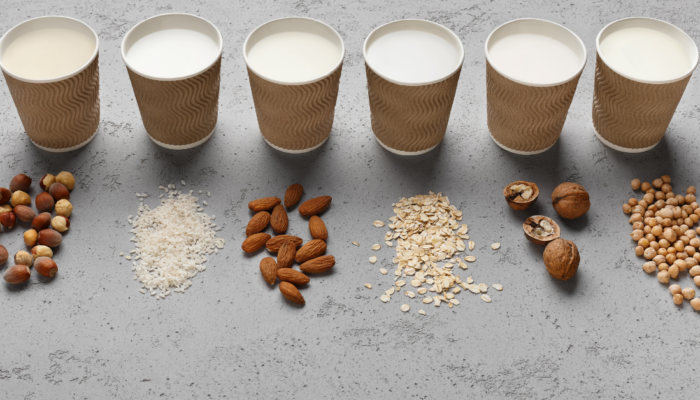
The scoop: All plant milk is more sustainable than dairy milk. But that doesn't mean all plant milks are sustainable.

SR's favorites:

  • Pea milk: protein-rich, noninvasive crop, good taste.
  • Hemp/flax seed milk: nutritious and low emission-based.
  • Hazelnut milk: tastes great in a cup of coffee, pollinates naturally, grows on trees.

Bottom line: Every company has a different process, but we can draw conclusions about the sustainability of certain crops. As consumer interest in plant milk keeps growing, it's important to distinguish good labels from bad labels.

The best best thing you can do is make your own plant milk at home. Just take your favorite organic, fair-trade nut or seed and mix it with water in a blender. Details in the article!

Dig deeper → 6 min

  1. Business

Busy? Try the speed read.

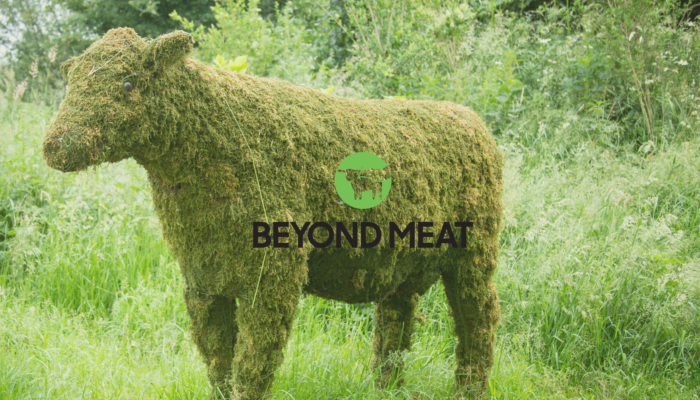
The scoop: Is Beyond Meat sustainable? The plant-based protein maker has turned veganism mainstream. But they need to be more transparent.

Some talking points:

  • Beyond Meat packaging needs work. Their flagship product (Beyond Burger) is not compostable.
  • Beyond Meat uses 99% less water, 93% less land, 90% fewer greenhouse gases, and 46% less energy than a traditional beef burger.
  • Pea protein is a sustainable protein choice, but they should prioritize sustainable farming > organic farming.
  • A report from 2018 criticized Beyond Meat's transparency around sustainability reporting, giving them a 0%.

Bottom line: Beyond Meat needs to revisit its supply chain, but they are on the upward trajectory for both profitability and sustainability. Quality company that just needs to keep improving. Beyond Meat is on its way to being sustainable.

Dig deeper 6 min


  1. Business
Busy? Try the speed read.

Founder story: Elon Musk (co-founder) is a controversial figure with a complicated history. But he is a forward-thinker that can help drive a more sustainable future.

Industry standards: Automakers have a history of poor environmental standards. The manufacturing process requires loads of resources, equipment and infrastructure. Tesla has a $500bn+ market cap, so we understand that complete sustainability is difficult to accomplish.

Materials: Modern cars use metals (aluminum in common), silica, rubber, plastic, rubber, soy, wheat, rice… to name a few. In terms of sustainability, the lithium ion battery is most concerning.

Tesla's current battery uses cobalt... linked to human rights violations in the Congo. Cobalt also makes the vehicle more expensive. Tesla is currently working to remove cobalt from their supply chain.

Ethics: To hit ambitious production goals, Tesla overworked domestic workers in a pretty ugly way. That adds to their controversy in the Congo. Not a good look when a billionaire does so well and you find out workers were unhappy.

Bottom line: Tesla has sustainability tied to its mission, and they are doing awesome things in the solar energy space. Still, their current business model is not sustainable. Wait until Tesla removes cobalt, improves worker conditions and reduces vehicle prices to make an ethical purchase.

Dig deeper → 5 min.

  1. Business
Busy? Try the speed read.

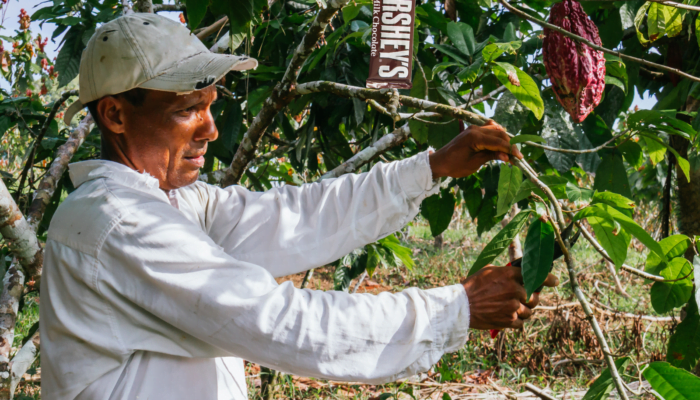
The scoop: Hershey is accused of avoiding to pay premiums on cocoa deals that would help alleviate farmer poverty.

Hershey versus West Africa: Hershey denies the allegations. The lvory Coast and Ghana, who make up 2/3 of the world's cocoa production, are preventing Hershey from using sustainability schemes in West Africa.

These schemes allow brands to market their product (in this case chocolate) as fair-trade, ethical, etc.

A broader point about corporate sustainability: Hershey's (alleged) loophole attempt is all too common in the age of crony capitalism.

Corporate sustainability seeks long-term profits by aligning business models with healthier environments and more prosperous economies. Working around basic premiums that keep hard-working cocoa farmers out of deep poverty is not a sustainable business model.

Bottom line: West African cocoa regulators are sticking to their guns on this issue. I don't think they're bluffing. Recommendation: avoid Hershey products until they provide a more transparent response.

List of popular Hershey products to avoid this holiday season:

  1. Hershey's (duh)
  2. Butterfingers
  3. Reese's
  4. Pay Day
  5. Jolly Rancher
  6. Twizzler's
  7. York Peppermint
  8. Breath Savers
  9. Ice Breakers
  10. Heath Bar
  11. Rolo
  12. The Whatchamacallit Bar
  13. Take 5
  14. Milk Duds
  15. Mr. Goodbar
  16. Almond Joy
  17. Whoppers
  18. Kit Kat
  19. Good & Plenty
  20. Pirate's Booty
  21. SkinnyPop
  22. Krave Jerky

Dig deeper → 1 min

  1. Business

Curious about running a sustainable small business? Once a fringe business strategy, sustainability has become a prerequisite for any new business hoping to succeed in the long-term. Whether you own a pizza shop, landscaping company, real-estate firm or just starting out, prioritizing sustainability is an easy and effective way to distinguish your small business and ensure long-term stability.

This guide will help you adapt, react and plan for the wave of industry trends that prioritize social impact in a post-pandemic world.

  1. Better Markets
  2. Business
  3. Profit

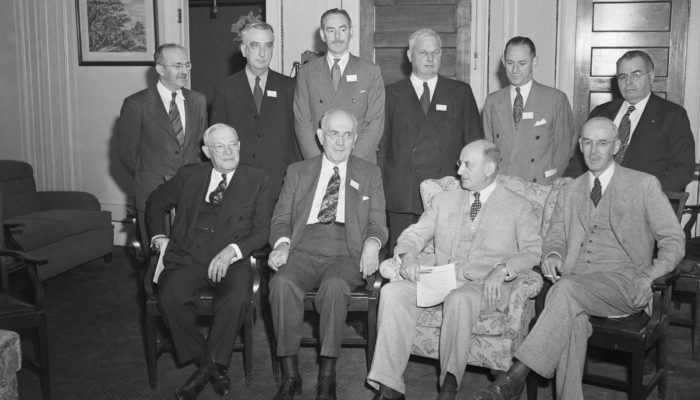
The scoop: the IMF published a statement calling the pandemic recovery plan a ‘new Bretton Woods moment’.

What is Bretton Woods? Bretton Woods was an international conference that took place in 1944 with the goal of preventing another World War by establishing a new international monetary framework.

The legacy of Bretton Woods: Although the agreement no longer serves a purpose in the modern world, its effects are still being felt; there is more negotiation between nations both economically and politically and the global market is more interconnected than ever before.

Lessons for coronavirus, globalization:

1. Make politics people-oriented

Leaders and policy-makers of international organizations are motivated by self-interest and private sector pressure. Likewise, they propose policies that favor private interest and hurt the average worker.

2. Make international finance fair and equal

Loan conditionalities from the IMF are often attached without serious consideration for the interest of the borrowing nation or its citizens. Recommendations by the World Bank and IMF don't always resolve economic hardships for developing nations.

Bottom line: If this is a new Bretton Woods moment, perhaps we can learn a thing or two about our convoluted past of international do-good. Rather than just hit the reset button, we should consider how poverty alleviation requires more than a paycheck.

Dig deeper → 8 min

  1. Better Business
  2. Better Markets
  3. Business
  4. Profit

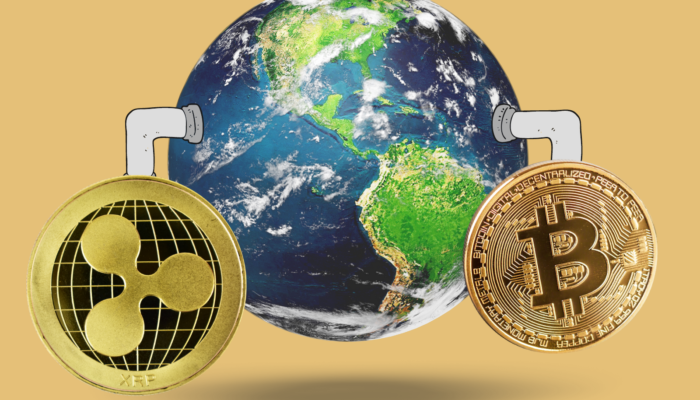
The scoop: Last week, Ripple’s CEO made an ambitious commitment to go carbon net-zero by 2030 in collaboration with conservation Rocky Mountain Institute and REBA, and pressured other crypto companies to do the same.

Talking points:

  1. Unlike Bitcoin, Ripple (XRP) was built with a finite supply (100 billion) at its inception, making it easier to control mining activities and mitigate its environmental footprint.
  2. Compared to Bitcoin’s 4.51 billion lightbulb hours needed to mine it, the XRP Ledger uses just 79,000.
  3. A lot needs to happen to make do on that claim, but Ripple is the first crypto looking to go carbon net-zero, and they have a plan (see below).

Bottom line: I don’t know if Ripple, Ethereum, and Bitcoin will one day replace Euros, Dollars and Yuan. With that said, why not bet a dollar on the possibility that they one day could?

Dig deeper → 3 min.

  1. Better Business
  2. Business
  3. Profit
  4. Tech

Why are wildfires detrimental to our environment?

  • Burn millions of acres of forests each year; trees are critical to (1) absorbing greenhouse gases to lessen the effects of climate change and (2) preserving biodiversity.
  • Kill and displace wildlife.
  • Disrupt water cycles and soil fertility.
  • Endanger lives and livelihood of local communities.

How are drones being used to fight wildfires?

  • Provide real-time support on the ground for firefighters to improve safety.
  • Map weather patterns to prevent spreading of the fire to mitigate environmental destruction.

What are the benefits of a drone compared to a traditional aircraft?

  • Safer since you don’t need a pilot to operate it.
  • More versatile since a drone can fly in poor conditions and hard to reach spaces.
  • More accurate by using GPS and imaging technologies to generate a “smart map.”

Bottom line

More recently, the use of drones for fire prevention in the U.S. has been gaining support from the federal government. Regulatory hurdles are starting to lessen. Plus, the civil-use of drones is now more widely accepted.

Drones are becoming a key technological advancement in fighting wildfires. They can not only protect our communities, but they can also mitigate the environmental impact caused by fires.

Dig deeper → 4 min

  1. Business

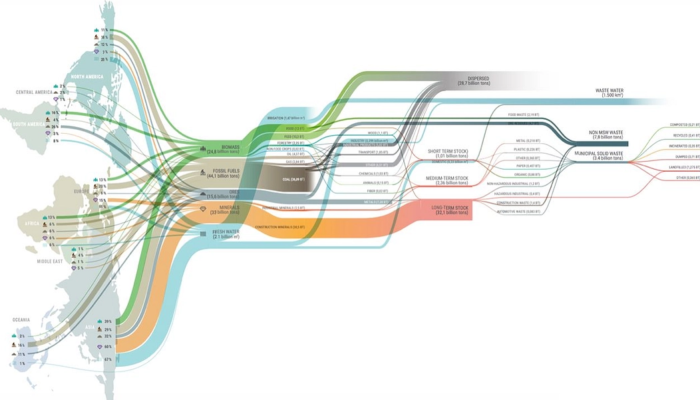
The scoop: The world uses a lot of materials to produce a lot of waste.

By the numbers:

  1. Asia accounts for 60% of mineral extraction and 67% of freshwater use.
  2. The world disperses 28.7 billion tons of fossil fuels and biomass energy.
  3. Europe, Asia and N. America account for 78% of fossil fuel output.

Key takeaways:

  1. It takes <resources to produce >materials.
  2. A lot of freshwater, an increasingly scarce resource, turns into wastewater every year.
  3. Most raw materials and natural resources end up in the land, air or water.

Bottom line: The current production process outweighs Earth's production capacity. To solve that, we need to maximize the life-cycle of products, treat natural resources carefully, and minimize waste.

Dig deeper → <1 min.

Weekly Newsletter

> Be Part of the Solution

Join our community of +220k Conscience Readers

Trending News | Innovations | ESG
Brand Reviews | Careers

Sustainable Review is copyright material. All rights reserved.

Exclusive Content Weekly

> Be Part of The Solution

Join our community of +220k Conscious Readers