Profit

  1. Business

This week, I had the chance to sit down with Madison Rifkin, founder of Mount. Mount is a SaaS platform that enables private property (think airbnb) to launch, track and monetize their guest amenities. Those amenities can include things like bikes and e-scooters.

Mount allows travelers to use more sustainable modes of short distance travel in place of ubers or car rentals. And it accomplishes this without causing a scooter-frenzied-tourist headache for city administrators, because all of the equipment is completely owned and controlled by the host.

If you'd like to learn more about Mount and how they're disrupting the hospitality industry, check out the full Q&A below.

Check out our full interview.

  1. Business
Busy? Try the speed read.

Big picture: GM announced plans to release an electric Hummer in 2023. It got me thinking, is it time to make the switch to electric vehicles?

Benefit of electric vehicles:

  1. Lower carbon footprint... social impact ✓
  2. Lower maintenance costs... convenience factor ✓
  3. Tax credits... financial incentive ✓

Cost of electric vehicles:

  1. EVs require minerals like cobalt and lithium to function. Mineral mining is a tough industry with poor standards in developing countries like Bolivia and Chile. Organizations are working to change that.
  2. Electric vehicles have a limited driving range compared to their gas cousins. You may find yourself charging up more than usual.
  3. High sticker prices: The average price of a new electric vehicle is almost double the price of a gas car.
  4. Limited amount of charging stations: this is a tricky one, because there are still more charging stations per EV on the road than there are gas stations for gas cars. Unless you go on a road trip, most of your charging will probably be at home anyway.

Bottom line: With billions of dollars flowing in, electric vehicles are not only here to stay, they are booming.

If you 1) need a car in your life 2) want to be a part of a cleaner future and 3) can afford the extra monthly cost (for now), then making a switch to electric vehicles is the right thing to do.

Dig deeper ➝ 3 min

  1. Business
Busy? Try the speed.

The scoop: Biking connects billions of people from around the world. It can be a great tool to reduce personal carbon footprints too. But not all bike companies focus on ethics and sustainability.

The manufacturing problem: Since the 2000s, most bikes are manufactured in Asia, where workers’ rights are less transparent. It is difficult to track worker conditions in these parts of the world.

Steel requires energy: Metal itself can be sustainable, but certain forms of steel require lots of energy to extrapolate. It is important to look for sustainably-sourced steel.

Read below for a full list of ethical bike manufacturers.

Dig deeper → 4 min

  1. Business
Busy? Try the speed read.

The scoop: NFTs went mainstream. Now more people are starting to realize Ethereum has a sustainable energy problem. There is a solution.

Not all blockchains are the same: Bitcoin uses about 1% of the world’s electricity. Ethereum is the second largest coin and runs on a similar model as Bitcoin. Neither are energy efficient.

Still, blockchain technology as a whole operates under many different consensus algorithms. Bitcoin and Ethereum’s proof-of-work model is just one version.

Sustainable proposals: Convert mining facilities to use more renewable forms of energy. That’s a good place to start.

More effectively, big coins like Bitcoin and Ethereum can operate using a proof-of-stake model to be more sustainable. This would allow fewer nodes (computers) to validate transactions on the public ledger and increase the energy efficiency of their blockchains.

Finally, emerging coins should look to more efficient consensus algos like Ripple as a model for sustainable crypto. That would propel the industry forward.

Bottom line: Progress is happening. There are existing solutions. The blockchain industry just needs a little nudge to do better.

Dig deeper → 3 min

  1. Business
Busy? Try the speed read.

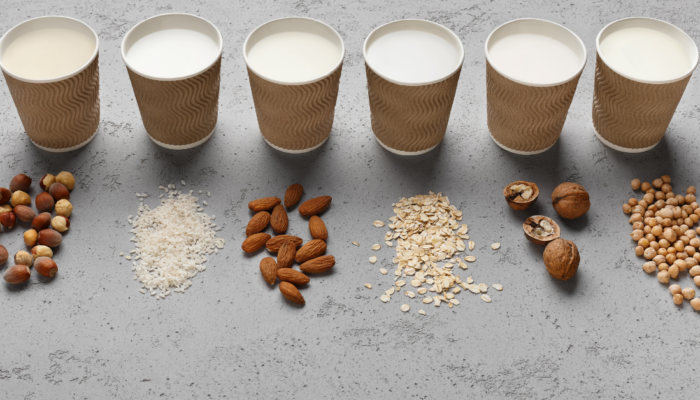
The scoop: All plant milk is more sustainable than dairy milk. But that doesn't mean all plant milks are sustainable.

SR's favorites:

  • Pea milk: protein-rich, noninvasive crop, good taste.
  • Hemp/flax seed milk: nutritious and low emission-based.
  • Hazelnut milk: tastes great in a cup of coffee, pollinates naturally, grows on trees.

Bottom line: Every company has a different process, but we can draw conclusions about the sustainability of certain crops. As consumer interest in plant milk keeps growing, it's important to distinguish good labels from bad labels.

The best best thing you can do is make your own plant milk at home. Just take your favorite organic, fair-trade nut or seed and mix it with water in a blender. Details in the article!

Dig deeper → 6 min

  1. Business

Busy? Try the speed read.

The scoop: Is Beyond Meat sustainable? The plant-based protein maker has turned veganism mainstream. But they need to be more transparent.

Some talking points:

  • Beyond Meat packaging needs work. Their flagship product (Beyond Burger) is not compostable.
  • Beyond Meat uses 99% less water, 93% less land, 90% fewer greenhouse gases, and 46% less energy than a traditional beef burger.
  • Pea protein is a sustainable protein choice, but they should prioritize sustainable farming > organic farming.
  • A report from 2018 criticized Beyond Meat's transparency around sustainability reporting, giving them a 0%.

Bottom line: Beyond Meat needs to revisit its supply chain, but they are on the upward trajectory for both profitability and sustainability. Quality company that just needs to keep improving. Beyond Meat is on its way to being sustainable.

Dig deeper 6 min


  1. Tech
Busy? Try the speed read.

The scoop: Uphold, a digital trading platform, released a digital carbon credit coin called UPCO2.

On a mission to democratize carbon: Think of corporations and governments as the gatekeepers of carbon credit markets. Using blockchain technology, UPCO2 hopes to ease the barrier to entry for ordinary people. UPCO2 can also help standardize carbon prices on a global level using voluntary carbon credits (VCUs).

Should you buy one? UPCO2 coins help reforestation efforts in areas like the Amazon, Congo Basin, and Indonesia. Carbon prices (like any commodity) are pretty volatile, but I predict durable demand for this asset. Everyday people want more ways to take climate action. This is one.

Dig deeper → 4 min

  1. Business
Busy? Try the speed read.

Founder story: Elon Musk (co-founder) is a controversial figure with a complicated history. But he is a forward-thinker that can help drive a more sustainable future.

Industry standards: Automakers have a history of poor environmental standards. The manufacturing process requires loads of resources, equipment and infrastructure. Tesla has a $500bn+ market cap, so we understand that complete sustainability is difficult to accomplish.

Materials: Modern cars use metals (aluminum in common), silica, rubber, plastic, rubber, soy, wheat, rice… to name a few. In terms of sustainability, the lithium ion battery is most concerning.

Tesla's current battery uses cobalt... linked to human rights violations in the Congo. Cobalt also makes the vehicle more expensive. Tesla is currently working to remove cobalt from their supply chain.

Ethics: To hit ambitious production goals, Tesla overworked domestic workers in a pretty ugly way. That adds to their controversy in the Congo. Not a good look when a billionaire does so well and you find out workers were unhappy.

Bottom line: Tesla has sustainability tied to its mission, and they are doing awesome things in the solar energy space. Still, their current business model is not sustainable. Wait until Tesla removes cobalt, improves worker conditions and reduces vehicle prices to make an ethical purchase.

Dig deeper → 5 min.

  1. Business
Busy? Try the speed read.

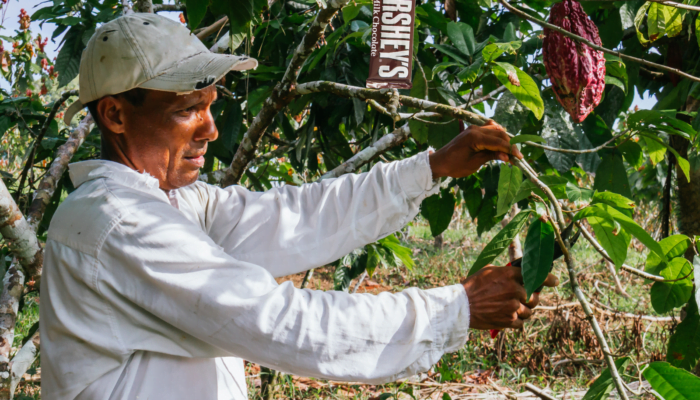
The scoop: Hershey is accused of avoiding to pay premiums on cocoa deals that would help alleviate farmer poverty.

Hershey versus West Africa: Hershey denies the allegations. The lvory Coast and Ghana, who make up 2/3 of the world's cocoa production, are preventing Hershey from using sustainability schemes in West Africa.

These schemes allow brands to market their product (in this case chocolate) as fair-trade, ethical, etc.

A broader point about corporate sustainability: Hershey's (alleged) loophole attempt is all too common in the age of crony capitalism.

Corporate sustainability seeks long-term profits by aligning business models with healthier environments and more prosperous economies. Working around basic premiums that keep hard-working cocoa farmers out of deep poverty is not a sustainable business model.

Bottom line: West African cocoa regulators are sticking to their guns on this issue. I don't think they're bluffing. Recommendation: avoid Hershey products until they provide a more transparent response.

List of popular Hershey products to avoid this holiday season:

  1. Hershey's (duh)
  2. Butterfingers
  3. Reese's
  4. Pay Day
  5. Jolly Rancher
  6. Twizzler's
  7. York Peppermint
  8. Breath Savers
  9. Ice Breakers
  10. Heath Bar
  11. Rolo
  12. The Whatchamacallit Bar
  13. Take 5
  14. Milk Duds
  15. Mr. Goodbar
  16. Almond Joy
  17. Whoppers
  18. Kit Kat
  19. Good & Plenty
  20. Pirate's Booty
  21. SkinnyPop
  22. Krave Jerky

Dig deeper → 1 min

Weekly Newsletter

> Be Part of the Solution

Join our community of +220k Conscience Readers

Trending News | Innovations | ESG
Brand Reviews | Careers

Sustainable Review is copyright material. All rights reserved.

Exclusive Content Weekly

> Be Part of The Solution

Join our community of +220k Conscious Readers