Profit

  1. Business

Curious about running a sustainable small business? Once a fringe business strategy, sustainability has become a prerequisite for any new business hoping to succeed in the long-term. Whether you own a pizza shop, landscaping company, real-estate firm or just starting out, prioritizing sustainability is an easy and effective way to distinguish your small business and ensure long-term stability.

This guide will help you adapt, react and plan for the wave of industry trends that prioritize social impact in a post-pandemic world.

  1. Better Markets
  2. Business
  3. Profit

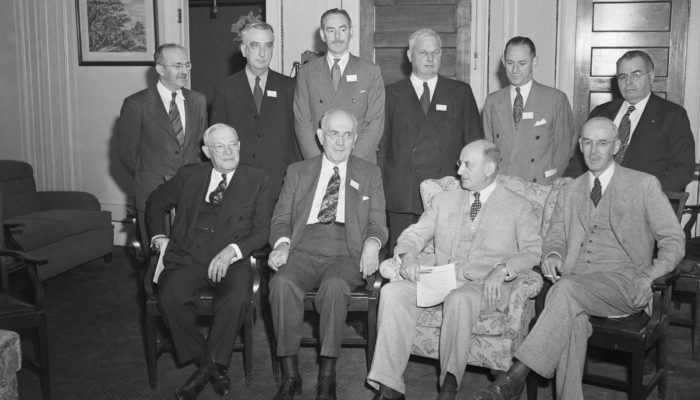
The scoop: the IMF published a statement calling the pandemic recovery plan a ‘new Bretton Woods moment’.

What is Bretton Woods? Bretton Woods was an international conference that took place in 1944 with the goal of preventing another World War by establishing a new international monetary framework.

The legacy of Bretton Woods: Although the agreement no longer serves a purpose in the modern world, its effects are still being felt; there is more negotiation between nations both economically and politically and the global market is more interconnected than ever before.

Lessons for coronavirus, globalization:

1. Make politics people-oriented

Leaders and policy-makers of international organizations are motivated by self-interest and private sector pressure. Likewise, they propose policies that favor private interest and hurt the average worker.

2. Make international finance fair and equal

Loan conditionalities from the IMF are often attached without serious consideration for the interest of the borrowing nation or its citizens. Recommendations by the World Bank and IMF don't always resolve economic hardships for developing nations.

Bottom line: If this is a new Bretton Woods moment, perhaps we can learn a thing or two about our convoluted past of international do-good. Rather than just hit the reset button, we should consider how poverty alleviation requires more than a paycheck.

Dig deeper → 8 min

  1. Better Business
  2. Better Markets
  3. Business
  4. Profit

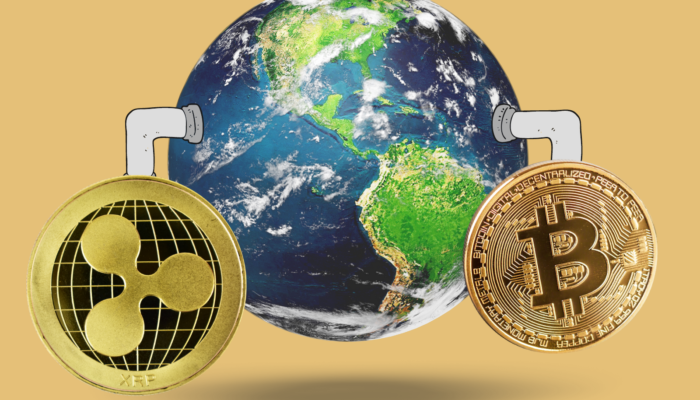
The scoop: Last week, Ripple’s CEO made an ambitious commitment to go carbon net-zero by 2030 in collaboration with conservation Rocky Mountain Institute and REBA, and pressured other crypto companies to do the same.

Talking points:

  1. Unlike Bitcoin, Ripple (XRP) was built with a finite supply (100 billion) at its inception, making it easier to control mining activities and mitigate its environmental footprint.
  2. Compared to Bitcoin’s 4.51 billion lightbulb hours needed to mine it, the XRP Ledger uses just 79,000.
  3. A lot needs to happen to make do on that claim, but Ripple is the first crypto looking to go carbon net-zero, and they have a plan (see below).

Bottom line: I don’t know if Ripple, Ethereum, and Bitcoin will one day replace Euros, Dollars and Yuan. With that said, why not bet a dollar on the possibility that they one day could?

Dig deeper → 3 min.

  1. Better Business
  2. Business
  3. Profit
  4. Tech

Why are wildfires detrimental to our environment?

  • Burn millions of acres of forests each year; trees are critical to (1) absorbing greenhouse gases to lessen the effects of climate change and (2) preserving biodiversity.
  • Kill and displace wildlife.
  • Disrupt water cycles and soil fertility.
  • Endanger lives and livelihood of local communities.

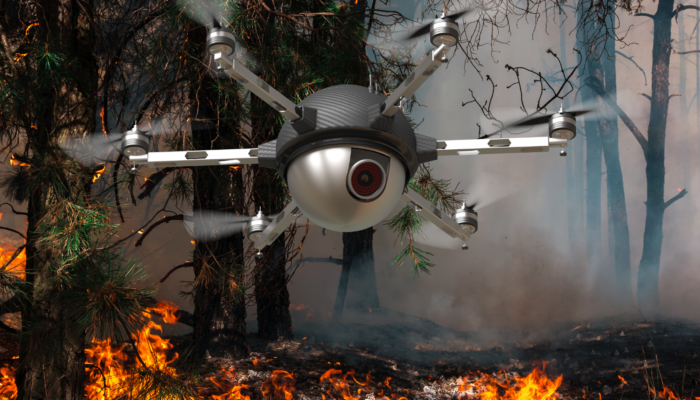
How are drones being used to fight wildfires?

  • Provide real-time support on the ground for firefighters to improve safety.
  • Map weather patterns to prevent spreading of the fire to mitigate environmental destruction.

What are the benefits of a drone compared to a traditional aircraft?

  • Safer since you don’t need a pilot to operate it.
  • More versatile since a drone can fly in poor conditions and hard to reach spaces.
  • More accurate by using GPS and imaging technologies to generate a “smart map.”

Bottom line

More recently, the use of drones for fire prevention in the U.S. has been gaining support from the federal government. Regulatory hurdles are starting to lessen. Plus, the civil-use of drones is now more widely accepted.

Drones are becoming a key technological advancement in fighting wildfires. They can not only protect our communities, but they can also mitigate the environmental impact caused by fires.

Dig deeper → 4 min

  1. Business

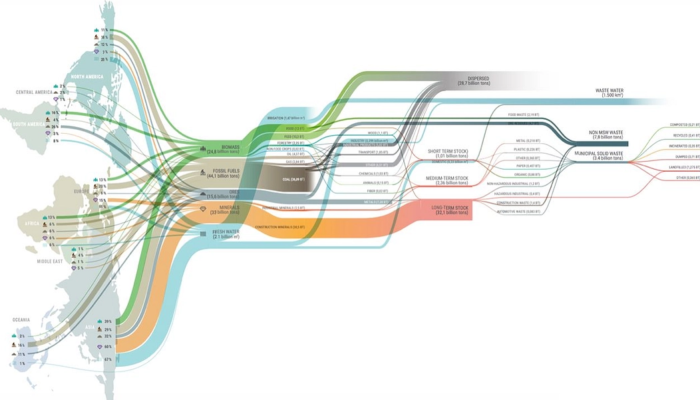
The scoop: The world uses a lot of materials to produce a lot of waste.

By the numbers:

  1. Asia accounts for 60% of mineral extraction and 67% of freshwater use.
  2. The world disperses 28.7 billion tons of fossil fuels and biomass energy.
  3. Europe, Asia and N. America account for 78% of fossil fuel output.

Key takeaways:

  1. It takes <resources to produce >materials.
  2. A lot of freshwater, an increasingly scarce resource, turns into wastewater every year.
  3. Most raw materials and natural resources end up in the land, air or water.

Bottom line: The current production process outweighs Earth's production capacity. To solve that, we need to maximize the life-cycle of products, treat natural resources carefully, and minimize waste.

Dig deeper → <1 min.

  1. Business

The scoop: Golf is still growing, but it needs to incorporate sustainable practices to keep trending up.

Why it matters: Golf uses 2 billion gallons of water every day, and makes up over a million acres of land in the US alone.

Our recommendations:

  1. Invest in new technologies that conserve freshwater.
  2. Take advantage of regenerative and eco-friendly management practices like limiting the use of pesticides, encouraging the growth of wild plants off the fairway, or enacting policies that treat wildlife responsibly.

Bottom line: As a major outdoor sport, golf has a serious opportunity here to capture the hearts of young athletes. As much as it will be challenge, golf and sustainability can work together very well.

Dig deeper → 2 min

  1. Tech

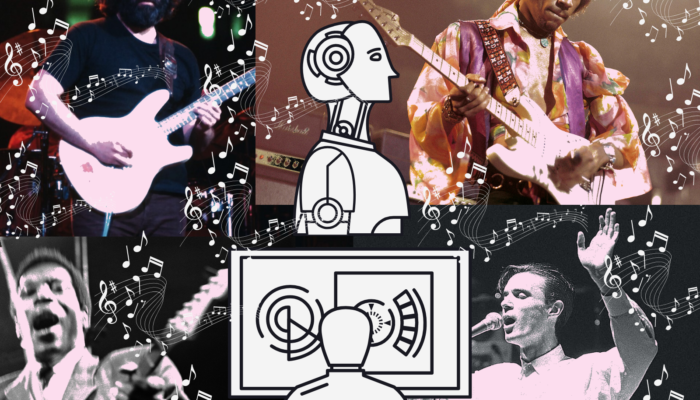
The scoop Tech companies can use AI to compose new songs using existing datasets of music. This poses a serious threat to musicians and artists. Let's talk about it.

About the tech

  1. AIVA Technologies, based in Luxembourg, created an AI that composes music for movies, commercials, games and TV shows.
  2. OpenAI’s Jukebox allows users to generate genre-specific music. You can look up an artist and select a genre. Theoretically, it would fuse that artist with a Mississippi the selected genre.
  3. Holograms tours are becoming increasingly popular. Eventually, using AI composition tools and hologram tech, deceased artists will be able to tour new music... and it will be hard to tell the difference from a standard pop concert.
  4. VOCALOID is a voice synthesizing software that allows users to create 'virtual pop stars'. They are already widely popular in Asia.
  5. Other voice synthesizing tools allow users to imitate famous voices and spit out whatever output you'd like. Copyright law hasn't caught up to this deepfake dystopian reality, so feel free to go make Jay-Z say whatever you want.

Humans > robots ... for now At least for the foreseeable future, AI is incapable of creating music without mimicking an existing data set that originated from human innovation. Similar to the way AIVA pitched their product, Artificial Intelligence can be used to help the artist speed-up and maximize the composition process. It should be treated as a tool, not a replacement.

Zoom out There will always be a place for bipedal fleshbags in the arts. With or without AI in music. Why? Because the consumers of creation are also fleshbags, and we want to be wowed and wooed by the hairy, smelly creatures that feel and squeal just like we do.

What does this have to do with sustainability? Supporting a pro-human future (in the face of tech) is a critical component of a sustainable future. We need to develop new technologies in a way that prioritizes happiness and harmony over production and profit.

Dig deeper → 9 min

  1. Business

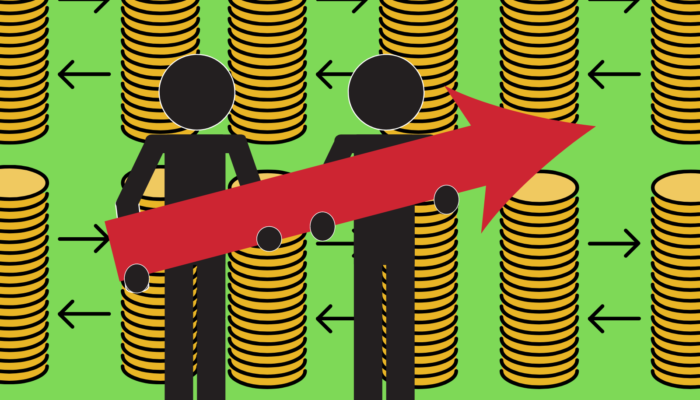
The scoop A new stock exchange was approved by the SEC in 2019. It focuses on long-term sustainability. We thought it demanded more PR.

Things to know

  1. 87% of executives and directors feel most pressured to demonstrate strong financial performance within two years.
  2. If all US companies had employed long-term strategies, they would have added
    • $1 trillion to U.S. GDP
    • Five million jobs between 2001 and 2015
  3. Economic earnings for long-term firms grew on average 81% more than other firms.

Long Term Stock Exchange was founded by Eric Ries after an international tour for his NYT best-seller Lean Startup. The stock exchange uses principles-based listing standards for new companies.

Bottom line In a time in which we face unprecedented and urgent long-term problems such as climate change, racial injustice, and the threat of epidemics, it is crucial that our infrastructure supports the long-term solutions needed to tackle such complex problems.

Dig deeper → 4 min

  1. Tech

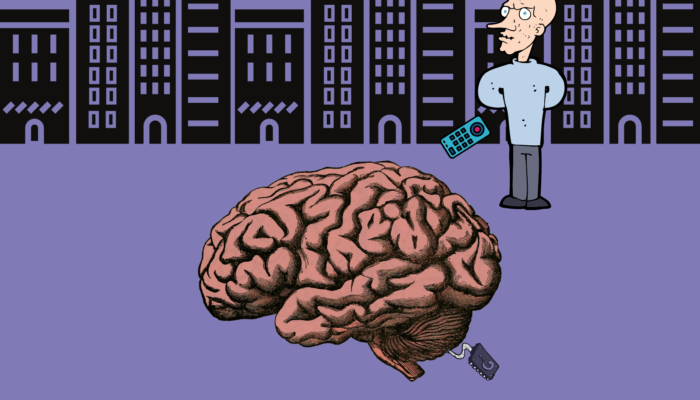
What's happening Neuralink, a neural tech company owned by Elon Musk, is hosting a public event this Friday, August 28th. The event will feature a live demo of the innovative new technology.

What is Neuralink? The four by four millimeter chip sits in a sealed cylinder where it is inserted in the back of your head. Made up of 1,024 electrodes, the N1 works with your brain's neurons to solve neurological mysteries.

Musk believes the micro-chip will be able to solve any neurological disorder from Parkinson's to Alzheimer's.

Why it matters The technological prospects of solving neurological mysteries is fascinating and worthy of covering.

This emerging new era in the human timeline will make or break the human future, and quite possibly the natural world.

Some talking points

  1. Philosophical questions: Humans are flawed. That makes us human. If Neuralink makes our brains perfect, free of mistakes and failures, what does that world look like?
  2. Hacking: Technology is advancing faster than laws and regulations. Legal and compliance frameworks just can’t keep up. How can we safely stop hackers from entering our brains?
  3. Global inequality: When Neuralink inevitably matures into a product for convenience rather than desperation, rich kids who can afford neural chips will advance even faster beyond less-privileged peers.

Bottom line When do we take it 'too far'? Will we ever?

Let's learn the lessons of our past, and put reasonable pressure on innovative new technologies before they get too big to fail. That way we can ensure that the innovation is serving the best interest and will of the people, rather than exacerbating our greatest problems.

Dig deeper → 5 min

Weekly Newsletter

> Be Part of the Solution

Join our community of +220k Conscience Readers

Trending News | Innovations | ESG
Brand Reviews | Careers

Sustainable Review is copyright material. All rights reserved.

Exclusive Content Weekly

> Be Part of The Solution

Join our community of +220k Conscious Readers