Profit

  1. Business

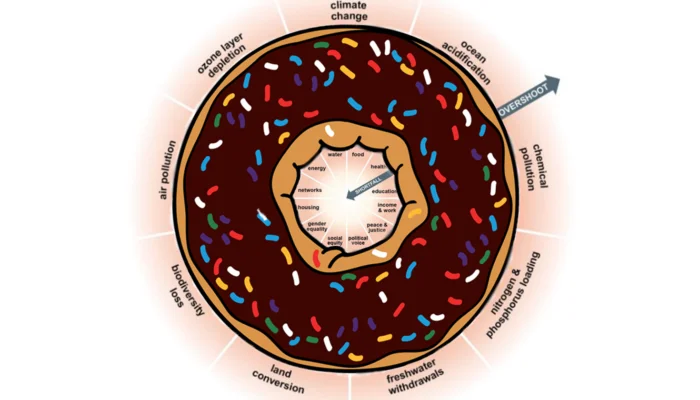
Big picture In the age of corporate social justice, sustainability risk management can help firms make better choices for the planet while staying competitive.

Why it matters

  1. Identify the effects of sustainability issues on internal and external stakeholder value.
  2. Actively include sustainability in objective setting and cascading objectives across the levels of the organizational hierarchy.
  3. Develop concrete support for identifying, assessing, and managing economic sustainability risks.

Bottom line Sustainable risk management is the most effective and realistic strategy for creating a sustainable economy, as it allows companies to achieve the best of both worlds: financial success and climate risk mitigation.

  1. Business

Current score Sports are still ‘cancelled’ - thanks COVID - but this ‘stoppage of gameplay’ presents an opportunity to improve sustainable business practices.

Quantify it Waste Management (WM) estimates that the four major professional leagues (NFL, MLB, NBA, NHL) generate approximately 35,000 metric tons of carbon dioxide (CO2) each year from their fans’ waste activities alone.

Big picture The sports world is rife with possibilities to convert to more sustainable practices that would strengthen bottom lines and increase public perception and longevity of their industry.

Why it matters Sports’ influence extends far beyond the reach of their stadiums, fields, rinks, and media presence. They impact cities’ transportation infrastructure, boost local economies and can significantly affect their regions’ environmental systems.

Next steps Say bye to hot dogs, and hello to better AC.

  • The pandemic draws attention to the meat industry and indicated essential changes necessary in the ‘food space’ 
  • Plant based alternatives can help pivot from factory farming and more towards a plant based future. 
  • Another adjustment will need to come in the live event arena where improved HVAC technology and design will reduce air pollutants and filter bacteria while increasing energy efficiency and lowering costs. 

Bottom line This pandemic will give fans and consumers a rare opportunity to play a role in systematically changing the operations of the sports industry. Our past has revealed that human beings can quickly adapt to changing environments.

The sports industry as a whole should reflect on this opportunity and make significant changes needed to forge ahead and prevent history from repeating itself.

Dig deeper → 2 min

  1. Tech
Busy? Try the speed read.
The short answer: 5G is bad for the environment. Or at least it's not good for it.The rollout of the 5G cellular network requires A LOT of energy and infrastructure. In the United States, much of that energy comes from natural gas and fossil fuels. Higher (and more frequent) demand for energy = more gas & oil = tougher environmental challenges.

What we know: 5G emits high-frequency (millimeter waves) between 30Ghz and 300Ghz. That requires antennas to be in close proximity. Due to the lack of far-reaching signals, 5G will not replace 4G LTE completely. 5G, for now at least, will serve as a complementary tool to its predecessor. This means more radiation in the air and atmosphere.

Big picture: 5G requires exponentially more towers and more energy than 4G in order to function properly. This means more radiation, that we don’t understand the long-term consequences of, and more gas and oil consumption, which we do understand the consequences of.

Why it matters: Determining whether 5g is bad for the environment boils down to four words: personal health + environmental impact. Research varies widely on the subject from A-Okay to Doomsday.

Some experts point out how 5G EMF radiation is non-iodizing, meaning it does not carry enough energy to iodize atoms or molecules. However, the International Agency for Research on Cancer recently stated there is still a potential risk to humans for this kind of exposure.

While it is uncertain how severely 5G radiation impacts health, we know it has an effect. Just look up the About>Legal>RF Exposure disclaimer on your iPhone. Plus, we know many natural resources are needed to power this close-proximity network.  We should be hesitant to make our homes, businesses and cities ‘smart’ at the cost of environmentally-invasive infrastructure.

If you are concerned about 5G exposure, consider the following steps:
  • Protect yourself by limiting exposure to 5G-enabled devices when possible. 
  • Sign a petition to delay the deployment of the 5G wireless network until institutions understand and enact regulations in accordance with the potential health hazards and environmental impact (link at the bottom of the article)

Dig deeper → 7 min

  1. Business

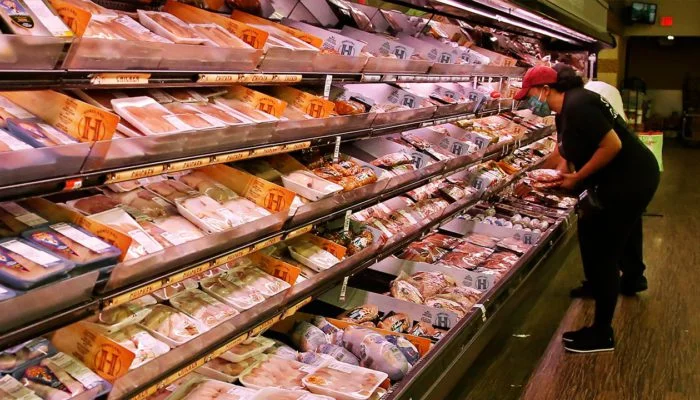
The scoop John Tyson, Chairman of Tyson Foods, sent out a dire message about the global food chain supply breaking as millions of chickens, cattle and pigs face euthanasia due to widespread closures of slaughter houses. 

Where it stands

  • Meat processing plants across America face closure due to the pandemic. 
  • Processing plants use the ’just in time’ inventory system.
    • Animals have limited processing time, after which they get too big and loses their monetary value for companies such as Tyson.
  • It is difficult for meat processors to pivot between varying amounts of demand, exposing its shortcomings as a reliable form of food production. 

What are the main concerns?

  • Most meat processing plants operate in counties in America worst-hit by the coronavirus pandemic. 
  • Thousands of animals and workers in these poorly-sanitised plants remain in close proximity to one other. 
  • The chances of infections spreading are incredibly high in the plants, with over 5,000 meat workers and 1,500 workers contracting the virus since April. 
  • Meat processing systems lack a vital aspect of sustainability: resilience. 

Zoom out Farmers have discarded millions of pounds of edible food due to the virus and warn of increased food security concerns. Almost 30-40% of food is wasted in America, equivalent to an estimated value of $162 billion every year. 

Bottom Line Our food systems need to focus on resilience plans moving forward, making them more adaptable and decentralised to effectively deal with external disturbances such as a pandemic.

Dig deeper → 5 min

  1. Tech

Big picture EF Schumacher warned us that Small is Beautiful. We ignored his message. Schumacher was a German-British Statistician and Economist who believed in a human-scale, decentralized approach to technological development.

In his book, Schumacher discusses the principles of Buddhist economics and addresses how modern economic thinking causes much of the emotional distress we experience in our 21st-century lives. Yes, the book published in 1973, but it is more relevant today than it was in its time.

Why it matters Our wealth has increased across the board, but we are no happier as a species. Positive human relationships, shared emotion, fulfilling purpose — these are the tenants of a progressive society.

Drones, phones, face ID, and VR are band-aid solutions for a dispirited population. Schumacher was a visionary. He saw the society's downward path and tried putting it to a halt.

Bottom line Let’s learn the lessons of our past and present through Small is Beautiful. We can start building cities with that appreciation for nature in mind. Not for some Romantic hippie-induced utopia, but for the sake of the rational economic mind.

Dig deeper → 7 min

  1. Business

I had the chance to sit down 1on1 with TemperPack co-CEO Brian Powers. In our conversation, we talked social entrepreneurship, venture capital and the future of sustainability.Last month, the sustainable packaging start-up closed a $22.5 million Series B, led by billionaire Steve Case's Revolution Growth, bringing its total funding to $40 million.

The story TemperPack was founded in 2015 as a partnership between two friends from Maryland and a third colleague from school, the company was born out of a desire to reduce the amount of unsustainable packaging that correlated with the growing world of e-commerce delivery.

The products TemperPack launched ClimaCell© in 2018. ClimaCell© is a bio-foam material made primarily from plant starch in our proprietary formula. They also produce JootBox©, which is a 100% recycled joot fiber that is recycled from used burlap sacks.

Check out the full interview here.

  1. Business

Check it out Founded in April, Zauben is an end-to-end product and service company centered around green roofs and living walls.

The story Chief Vision Officer & Founder Zachary Smith was uniquely inspired by the abundance of artificial tools and toys in our everyday life. Smith observed expanding city limits, looming threats from climate change, and an increasing dependence on technology.

Learn more Green building remains a relatively young, untapped market in the United States. Zauben looks to be at the forefront of this hot urban trend in the coming years. They have a team of dedicated, award-wining designers who are ready to kick-ass in their first year of launching. Get ready to green the world with Zauben.

Dig deeper --> 3 min

Weekly Newsletter

> Be Part of the Solution

Join our community of +220k Conscience Readers

Trending News | Innovations | ESG
Brand Reviews | Careers

Sustainable Review is copyright material. All rights reserved.

Exclusive Content Weekly

> Be Part of The Solution

Join our community of +220k Conscious Readers