Composting is a sustainable practice that helps reduce waste while enriching soil health. Grass clippings, often overlooked after mowing, can be a valuable resource in your composting endeavors. Harnessing the power of grass decomposers can accelerate the decomposition process, turning these clippings into nutrient-rich compost for your garden.
In this guide, we’ll explore techniques for composting grass clippings and discuss how grass decomposers contribute to this process.
Key Takeaways
- Lawn mowing is a cornerstone of an effective lawn care regimen. However, it poses some challenges, including the use of gas-powered lawn equipment and synthetic fertilizers.
- Grass clippings are an excellent alternative to synthetic fertilizers as they are rich in nitrogen and can significantly enhance composting.
- Grass decomposers, including fungi and microorganisms, break down grass clippings, accelerating decomposition.
- Composting grass clippings reduces waste, enriches soil, and promotes a healthier lawn and garden ecosystem.
Understanding Lawn Mowing and Grass Clippings
Lawn mowing is a cornerstone of an effective lawn care regimen. It plays a vital role in maintaining grass’s health and aesthetic appeal, helping homeowners ensure their yards appear tidy and inviting. However, the benefits of this quintessential gardening activity go beyond the visual appeal. It is an art and science that contributes significantly to the overall health of the lawn by:
- Encouraging the growth of thick, lush turf that leaves less room for weeds to take root.
- Stimulating the grass to grow healthier and stronger.
- Removing pests from the tips of the grass blades and preventing fungal diseases that tend to afflict longer blades and other surrounding plants.
- Contributing to the local ecosystem by controlling soil erosion, retaining moisture in the soil, and providing habitat for various beneficial organisms.
The act of mowing the lawn is not only beneficial for the grass but also offers psychological and physical benefits to the mower. This outdoor activity provides valuable physical exercise, contributing to overall health and well-being. Additionally, the repetitive nature of the task, combined with the satisfaction of immediately visible results, can offer mental relaxation and a sense of accomplishment.
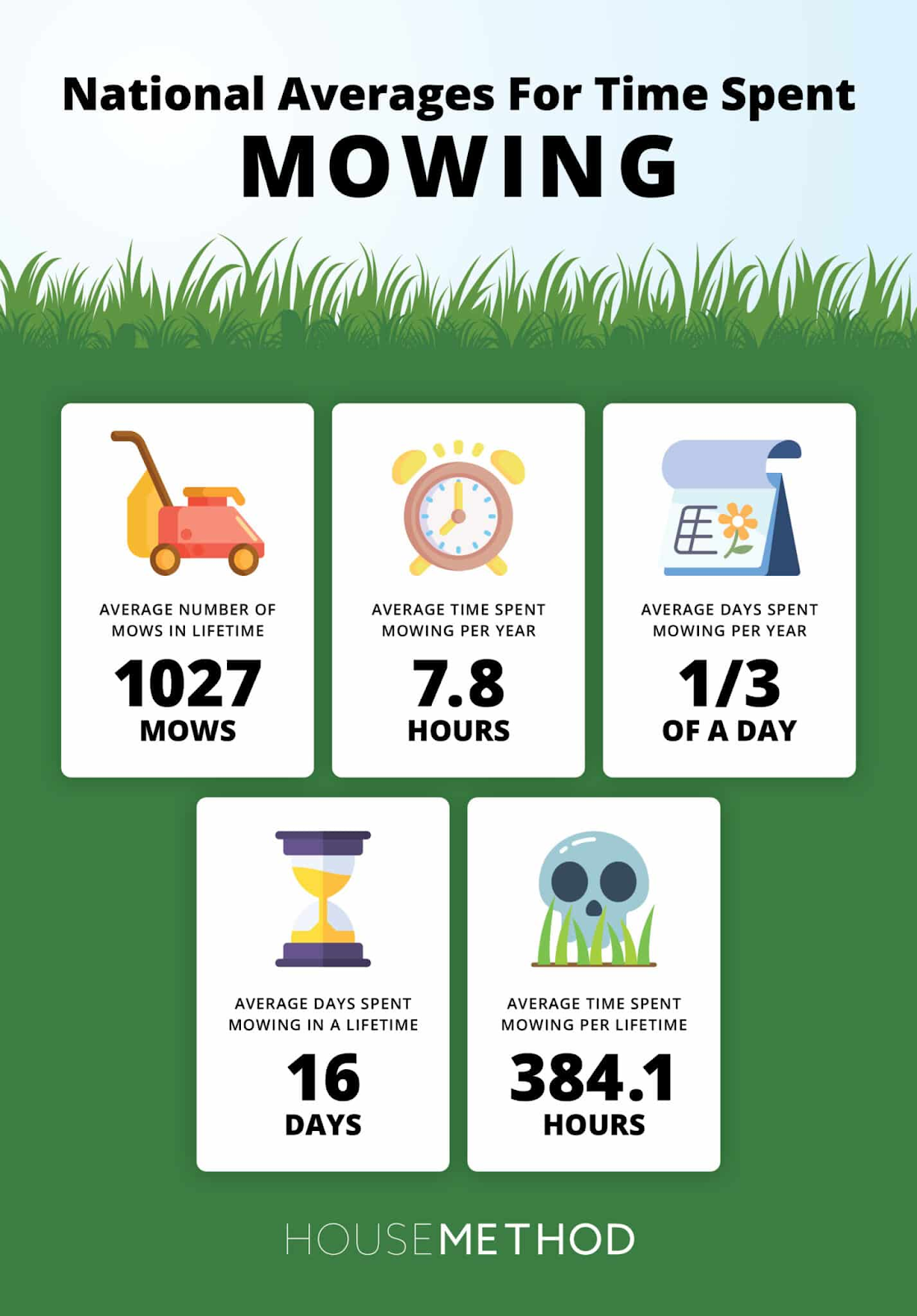
Given these advantages, it’s no wonder that lawn maintenance has become a popular activity for many homeowners, especially in the United States. Analyzing data from the 300 largest Metropolitan Statistical Areas and computing the average time spent on mowing, Today’s Homeowner discovered that:
- Americans dedicate more than 384 hours of their lives to mowing their lawns, equating to 16 days!
- The Southern United States stands out for its significant time commitment to sod care, necessitating an average of 510 hours over a lifetime, just 20 hours shy of the combined averages of the Northeastern and Western regions.
- Augusta, GA residents lead the pack, spending an average of 27.2 hours annually on lawn mowing—the highest among all cities in the nation.
- On the contrary, Cambridge, MA residents devote the least time to lawn maintenance among the surveyed cities, with an average of only 30.7 hours spent mowing their lawns throughout their lifetimes.
However, regular lawn mowing also poses several challenges. In addition to the reliance on gas-powered lawn equipment, which emits high levels of localized emissions, many homeowners opt for synthetic fertilizers to achieve vibrant, verdant lawns post-mowing.
These synthetic fertilizers significantly contribute to climate change through their manufacturing process and widespread use. In an article by The National Audobon Society, David Wolfe, a Cornell University professor specializing in plant and soil ecology, noted that the production of one ton of nitrogen fertilizer releases four to six tons of carbon into the atmosphere. Moreover, most fertilizers supply more nitrogen than plants can utilize, leading soil microbes to convert excess nitrogen into nitrous oxide gas, which possesses 300 times the heat-trapping capability of CO2.
But why bother using synthetic fertilizers when you have superior and more sustainable alternatives readily available in your yard—grass clippings!
Grass clippings generated from lawn mowing might seem like another form of yard debris you must deal with. The truth, however, is that they are packed with essential nutrients like nitrogen, serving as a potent source of nourishment for soil microorganisms and plants when decomposed correctly.
Grass clippings are primarily composed of water, with a significant portion of their dry weight being organic matter, including nitrogen, phosphorus, and potassium. These elements are vital for the healthy growth of garden plants and soil richness.
When grass clippings decompose, decomposers such as bacteria, fungi, and worms break down this organic matter, converting it into a form that plants can readily absorb.
What to Do with Grass Clippings
Understanding the immense potential benefit of grass clippings to your lawn and garden, here are several sustainable practices to make the most of them.
- Leave Them on the Lawn: Consider leaving them on your lawn instead of bagging and disposing of grass clippings. This practice, known as grasscycling, allows clippings to decompose naturally, returning valuable nutrients to the soil. It reduces the need for synthetic fertilizers and promotes healthier turf growth.
- Compost Them: Grass clippings are rich in nitrogen, an essential component of compost. Adding grass clippings to your compost pile or bin accelerates the decomposition process, producing nutrient-rich compost for your garden. Remember to layer them with brown materials like leaves or wood chips to maintain a balanced carbon-to-nitrogen ratio.
- Mulch Garden Beds: Spread grass clippings as mulch around garden beds to suppress weeds, retain moisture, and regulate soil temperature. As they decompose, they release nutrients into the soil, enriching it for plant growth. Avoid thick layers of grass clippings to prevent matting and suffocating plants.
- Feed Livestock: If you have livestock such as chickens or rabbits, consider using grass clippings as feed. Ensure the clippings are free from pesticides or herbicides and feed them in moderation to avoid digestive issues.
- Create Pathways: Use grass clippings to create natural pathways in your garden or between garden beds. This eco-friendly alternative to traditional paving materials adds organic matter to the soil as it decomposes, improving soil structure and fertility.
Composting Grass Clippings Effectively
If you’re hesitant about leaving grass clippings on your lawn to decompose naturally due to concerns about their appearance, composting offers the ideal solution for managing them effectively. Aside from solving the issue of disposing of yard waste by converting them into valuable nutrients for your garden, composting helps in reducing methane emissions from landfills, contributing to a healthier environment.
There are several ways to compost grass clippings, including traditional compost bins, vermicomposting with worms, or incorporating them directly into garden beds. Choose a method that suits your space, time, and gardening needs.
- Traditional Compost Bin: Utilize a compost bin to contain grass clippings and other organic materials. Layer grass clippings with brown materials like leaves or wood chips to maintain a balanced carbon-to-nitrogen ratio.
- Vermicomposting: Introduce earthworms to your compost pile to aid in decomposition. Worms feed on grass clippings, converting them into nutrient-rich castings that improve soil structure and fertility.
- Direct Application: Spread grass clippings directly onto garden beds as mulch. As they decompose, they release nutrients into the soil, enriching it for plant growth.
Optimizing Conditions for Decomposition
As discussed earlier, decomposition is nature’s way of recycling organic matter. Microorganisms like bacteria, fungi, insects, and earthworms break down dead organic material, turning it into compost.
The key to successful composting lies in managing four essential elements: carbon, nitrogen, moisture, and oxygen. Grass clippings, high in nitrogen, must be balanced with carbon-rich materials to be efficient composts. As such, to accelerate their decomposition, add brown (carbon-rich) materials like dry leaves, straws, ground coffee, and paper. Maintaining the proper moisture level and aerating the pile regularly will also accelerate decomposition.
Additional tips to speed up the decomposition of grass clippings:
- Chop grass clippings into smaller pieces to speed up decomposition.
- Avoid adding grass clippings treated with herbicides or pesticides to your compost pile.
Monitoring Your Compost Pile
Keeping an eye on your compost pile is crucial. It should have a pleasant, earthy smell. If it starts to smell bad, it could indicate an imbalance in materials or a lack of aeration. Temperature is another indicator of progress. A warm or hot pile means that decomposition is happening effectively.
Using Your Finished Grass Clippings Compost
Once your grass clippings have fully decomposed into nutrient-rich compost, it’s time to reap the benefits in your garden. Here’s how to utilize your finished compost effectively:
- Fertilize Garden Beds: Spread a layer of finished grass clippings compost over garden beds to enrich the soil with essential nutrients. The compost provides a balanced blend of nitrogen, carbon, and other micronutrients, promoting healthy plant growth and vigor.
- Amend Soil: Mix compost into the soil when planting new crops or transplanting seedlings. This improves soil structure, enhances water retention, and boosts microbial activity, creating optimal conditions for plant growth.
- Top Dress Lawns: Apply a thin layer of compost over your lawn as a top dressing to replenish nutrients and improve soil health. This practice helps reduce thatch buildup, enhances soil fertility, and encourages deeper root growth for a lush, green lawn.
- Mulch Around Trees and Shrubs: Use finished compost as mulch around trees and shrubs to conserve moisture, suppress weeds, and steadily release nutrients. Apply a layer of compost around the base of plants, leaving a few inches of space around the trunk or stems to prevent rot.
- Make Compost Tea: Brew compost tea by steeping finished compost in water to create a nutrient-rich liquid fertilizer. Use aeration and agitation methods to extract beneficial microorganisms and nutrients from the compost, then apply the compost tea to plant foliage or soil for a natural boost.
Proper Compost Storage
Producing large batches of compost from grass clippings can save you both time and money, but it’s crucial to store the compost correctly to preserve its quality and effectiveness. Here’s how to ensure proper storage:
- Container Selection: Choose a suitable container or compost bin that accommodates the volume of compost you intend to store. Opt for bins with lids to keep out moisture and pests while allowing for adequate airflow.
- Location: Place the compost container in a shaded area with good airflow. Avoid direct sunlight, which can dry the compost and diminish microbial activity. Additionally, ensure the storage location is easily accessible for regular monitoring and use.
- Moisture Management: Maintain the proper moisture level in the compost by monitoring its moisture content regularly. The compost, like a wrung-out sponge, should feel damp to support microbial activity and decomposition. Adjust moisture levels as needed by adding water or dry materials.
- Turning and Aeration: Periodically turn or aerate the compost to promote uniform decomposition and prevent anaerobic conditions. Mix the compost thoroughly using a pitchfork or compost turner, incorporating air and facilitating microbial activity.
- Covering: Cover the compost container with a lid or tarp to prevent excessive moisture buildup during rain or snowfall. Covering also helps retain heat within the compost pile, accelerating decomposition and minimizing odors.
Conclusion
Grass clippings are often seen as ‘waste’ products, but they are valuable commodities that must be properly used to realize their value.
Composting is one of the simplest and most sustainable ways to use grass clippings. When done right, it can enhance the health of your garden and contribute to environmental sustainability. By understanding the decomposition process, harnessing the power of grass decomposers, and implementing effective composting practices, you can turn ordinary yard waste into nutrient-rich compost for your plants.
Experiment with different composting methods to find the one that best suits your gardening needs. Also, do not forget the importance of balance in your compost pile; monitor its progress, and soon, you’ll reap the rewards of your efforts with richer soil and healthier plants.
Frequently Asked Questions
Yes, grass clippings can be composted with other organic materials, such as kitchen scraps, leaves, and yard waste, to create a balanced compost pile.
It’s best to avoid composting grass clippings treated with pesticides as they can harm beneficial decomposers and potentially contaminate your compost.
Grass clippings typically decompose within a few weeks to several months, depending on factors such as temperature, moisture, and aeration.
Leaving grass clippings on the lawn, also known as grasscycling, can provide natural nutrients to the soil, reduce the need for fertilizer, and promote healthier turf growth.
Yes, grass clippings can be composted in small spaces using compact compost bins or vermicomposting systems. Adjust the composting method to suit your available space and resources.