
Ever noticed how we’re recently being bombarded with “eco-friendly” products and “sustainable” practices?
While we’re glad that green living has become mainstream and more companies are jumping on the bandwagon, turns out NOT all of the messages we’re seeing are sent with great intentions.
This is what greenwashing is all about–where companies paint themselves greener than a leprechaun on a first date 🍀
But what exactly is greenwashing?
It’s when companies spend more time and money claiming to be environmentally friendly than actually implementing business practices that minimize environmental impact. In other words, it’s all talk and no walk–or should we say, all green and no clean? 🧼
This sad reality is more common than you think. To prove that, we’ll touch on some of the biggest greenwashing cases in history, current investigations, and new policies aimed at stopping this deceptive practice.
The Hall of Shame
BP’s “Beyond Petroleum” Campaign Proves That Oil and Water Don’t Mix

In the early 2000s, British Petroleum rebranded itself as Beyond Petroleum, promising to focus on renewable energy. The company spent $200 million on the project and pulled all the stops to make people believe that it had become an environmentally aware company.
Fast forward to 2010, and we have the Deepwater Horizon oil spill–one of the worst environmental disasters in history.
- The spill, triggered by a blowout that killed 11 people, released 4.9 million barrels of oil into the Gulf of Mexico.
- The company faced $65 billion in fines and clean-up costs
- BP had to discontinue many of its renewable energy projects to cover its financial losses, which included government fines, private damage claims, and legal bills.
- The company’s consumer sales dropped to 3.6% and its prices declined to 4.2%
H&M’s Conscious Collection

H&M has faced several lawsuits for misleading sustainability claims regarding its ‘Conscious Collection’. It was reported that consumers were paying premium prices for supposedly ‘eco-friendly items’, which were no more sustainable than regular H&M products. They also promoted a circular economy, but only a small fraction of collected garments were actually recycled. Some items labeled as using less water consumed more water during production. They were also accused of manipulating industry-adopted sustainability scores (Higg Index) reporting positive scores where negative scores should have been shown.
Depending on what country and jurisdiction, harsh monetary penalties have been avoided however H&M has agreed to correct any language or terms that may be misleading. And in the Netherlands, as agreed with the Authority for Consumers and Markets (ACM), H&M will donate €500,000 to sustainable causes.
Volkswagen’s “Clean Diesel” Scandal

As an established automobile company, you’d think Volkswagen knew better than to cheat its way to position itself as a sustainability leader in the industry. Unfortunately, wrong decisions were made, and the company almost ruined its almost eight decades-long history in 2015.
The automaker claimed the diesel cars it was selling in America were cleaner than a whistle. Well, that whistle was blowing some seriously dirty air, and the Environmental Protection Agency (EPA) was not having it.
The automotive giant was caught red-handed using “defeat devices” to cheat emissions tests, which was then dubbed the “diesel dupe” or “dieselgate.” The results? The scandal affected 11 million cars worldwide and faced fines of over $30 billion. The company’s reputation also took a nosedive as well as its stock price.
The Greenwashing Saga Continues
We know you’re waiting for a positive turnaround in the face of the abovementioned cases. While we’re glad to report that more and more companies are becoming sustainable, greenwashing still persists across industries.
In fact, there have already been 230 climate-related lawsuits against companies and trade associations. Two-thirds of them have been sent in since 2020. The figures are expected to grow, especially as the public becomes more aware of greenwashing.
Below are some of the most current cases to prove that such deceptive practice is common.
Shell’s Net-Zero Emissions Promise: Shell Game or Real Deal?
In 2021, environmental lawyers ClientEarth filed a complaint against Shell for its “misleading” net-zero emissions advertisements.
- Shell claims it will reach net-zero emissions by 2050.
- Critics argue this doesn’t align with the company’s continued investment in fossil fuels.
- The case ended in May 2023, with the UK High Court dismissing it.
- ClientEarth’s application to appeal the decision was also rejected. This is a major setback for efforts to hold companies accountable for their environmental claims and their role in the climate catastrophe.
- ClientEarth notes that it will keep fighting.
Amazon’s Climate Pledge Friendly Program is a Prime Example of Scrutiny
Back in 2020, Amazon launched its Climate Pledge Friendly program. Since then, it has faced criticisms for potentially misleading consumers about the environmental impact of its products.
- The program uses third-party certifications to label products as sustainable.
- Critics also argue that some of the certifications used in the program are too lenient or irrelevant.
- Investigations are ongoing in several countries.
Banking on Green or Just Cashing In? HSBC’s Climate Ads Sent Unclear Message
The UK’s Advertising Standards Authority (ASA) banned two of HSBC’s advertisements for greenwashing in 2022.
- The ads highlighted HSBC’s plans to plant trees and achieve net-zero emissions.
- The ASA ruled that the ads omitted information about HSBC’s continued financing of fossil fuel industries.
- This case emphasizes the growing scrutiny of financial institutions’ environmental claims, especially since many of them still support and fund projects that degrade the environment.
What’s Being Done
Thankfully, continued calls from conscious consumers, scientists, and even companies are not falling on deaf ears. Regulators and policymakers are stepping up their game. Here are some new initiatives aimed at stopping this deceptive practice:
- EU Green Claims Directive: Proposed in 2023, the EU Green Claims Directive aims to crack down on vague environmental claims. It requires companies to provide scientific evidence for green marketing claims.
- UK Green Claims Code: Introduced and enforced by the Competition and Markets Authority (CMA) in 2021, the Green Claims Code provides guidance for businesses making environmental claims. By breaking the code with unsubstantiated or misleading claims, companies will face up to tens of millions of pounds in fines.
- US FTC Green Guides Update: While this is currently under review, the FTC Green Guides Update is expected to provide stricter guidelines for environmental marketing claims. It may include new sections on carbon offsets and climate change.
Question: With these new policies in place, do you think companies will clean up their act, or will they find new ways to bend the rules?
A Rainbow of Deception 🌈
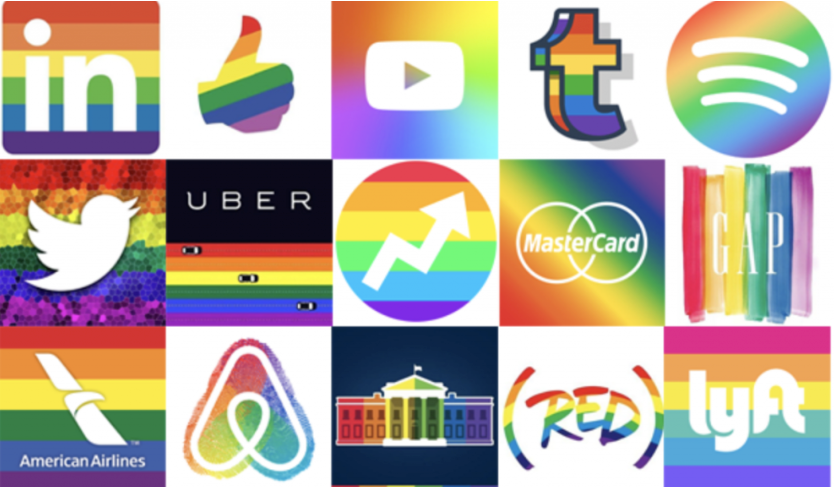
Do note that greenwashing isn’t the only color in the palette of corporate deception. There are other colorful “washing” being used by companies to push their hidden agendas and distract consumers from real issues. Here are some of them:
- Pinkwashing 🏳️🌈: Using LGBTQ+ friendly imagery or rhetoric to distract from unfriendly policies or practices
- Bluewashing 🌊: Presenting a false image of responsible water usage or ocean conservation
- Redwashing 🩸: Exaggerating a company’s commitment to social causes or human rights
- Whitewashing ⚪: Glossing over or hiding unpleasant facts about a company’s history or practices
How to Spot Greenwashing 🕵️♀️🌿
Tired of falling for corporate eco-fibs? Time to wear your eco-friendly detective hat and spot greenwashing practices following these tips:
- Look for specific claims and data: Vague statements like “eco-friendly” or “green” are red flags. Seek out concrete numbers and third-party certifications
- Check for transparency: Companies genuinely committed to sustainability usually provide detailed information about their practices. Be wary of brands that are tight-lipped about their supply chains or manufacturing processes
- Follow the money: Look at a company’s overall business model and investments. Are they putting their money where their mouth is?
- Be skeptical of flashy marketing: Excessive use of green imagery or nature-themed ads can be a smokescreen. Focus on facts rather than feelings
- Do your research: Check out environmental watchdog organizations and consumer reports. Also, don’t be afraid to ask companies direct questions about their practices.
A Playbook for Small Businesses on How to Avoid Greenwashing
If you’re a small business owner and you want to do right by the planet, here’s a handy playbook to help you avoid the greenwashing trap and genuinely walk the talk when it comes to sustainability:
- Start with Honesty 🤥➡️😇: The first rule for avoiding greenwashing? Don’t do it! Be truthful about your current practices and your goals for improvement. You must also communicate openly about areas where you’re excelling and where you need to improve. Your customers will appreciate your transparency.
- Make Specific, Verifiable Claims 🔍: Drop the vague statements like “eco-friendly” or “green.” Instead, focus on using specific, quantifiable claims like “Our package is made from X percent of recycled post-consumer plastic.” Also, provide evidence to back up your claims, such as a certification from reputable third-party organizations.
- Focus on Your Core Business 🎯: Don’t just slap a green label on your existing products. Think about how you can make your core business more sustainable. Ask questions like: “Can we source materials more responsibly?” “Can we reduce waste in our production process?” “Can we improve our water and energy use?”
- Educate Your Team 🧑🏫: Your employees are your front line in sustainability efforts. So, give them relevant training on environmental issues in your industry and encourage them to contribute ideas that can further improve your sustainability efforts.
- Collaborate and Learn 🤝: Partner with sustainability professionals and environmental organizations to receive guidance. Also, consider joining sustainability-focused business networks to learn from other businesses in your industry that have successfully implemented sustainability practices in their operations.
- Communicate Well 🗣️: When your business makes progress on its sustainability efforts, share it effectively. Use clear and jargon-free language, and consider showcasing real photos of your sustainable practices instead of stock images.
Hoping That the Future Is Indeed Green
The path to true sustainability is often paved with good intentions–and, at times, a whole lot of greenwash. But here’s the silver lining: increased awareness and stricter regulations are making it harder for companies to pull the cover over our eyes.
So, what can we do as consumers? Don’t be a bystander! Stay informed, ask questions, and support genuinely sustainable practices. Don’t discount the power of your purse. Companies will listen when consumers demand authentic green initiatives.
As for the future? Well, let’s hope it’s filled with more trees and less corporate hot air. Because when it comes to saving our planet, we need real action, not just a fresh coat of green paint.
Additional Sources
You can dive deeper into the issue of greenwashing by checking out these resources:
Reads
- The New Climate War: The Fight to Take Back Our Planet By Michael E. Mann – A book that explores climate denialism and greenwashing.
- The Guardian’s Sustainable Business Section – The independent publisher has several articles about greenwashing and sustainability practices.
- Greenpeace’s Greenwashing: What It is and How Not to Fall for It – An article explaining the deceptive practice of greenwashing in great depth and offering tips on how to avoid it
Video
- TED Talk: “The Dirty Secret of Capitalism — And a New Way Forward” by Nick Hanauer – Entrepreneur Nick Hanauer talks about the problem with capitalism and dismantles the mantra “greed is good.”
Academic Studies
- Effects of Misleading and Deceptive Environmental Claims in Advertising
- Revealing Greenwashing: A Consumers’ Perspective
- The Dark Side of Green Marketing: How Greenwashing Affects Circular Consumption
Podcasts
- Drilled – Melissa Aronczyk on the History of Greenwashing
- Link Laters – Greenwashing Series
- New Economics – Greenwashing