
In the last half-century, our awareness of environmental issues has dramatically increased. Our journey to this point has been arduous but not without wins. Our understanding of sustainability has grown, and we’re seeing actions on a global scale that genuinely make a difference in how we live. However, we’re also facing tough challenges as climate change remains a complex problem that needs more innovative solutions.
Our commitment to a sustainable future means we keep learning and adapting. Join us as we explore the decade when our collective consciousness about the environment has grown. We’ll delve into the insights gained over the years, highlighting the triumphs and hurdles we’ve encountered in our collective efforts toward a sustainable future. By looking back, we will be better equipped with the knowledge to continue our march towards a greener future.
Key Takeaways
- The 2000s saw heightened awareness of climate change and increased efforts toward sustainability.
- Environmental developments reflect the ongoing struggle against pollution and greenhouse gas emissions.
- Collaborative initiatives and global agreements are essential for combating climate change.
- Moving forward, prioritizing sustainable practices is imperative for safeguarding our planet’s future.
2000s: A Decade of Environmental Awakening
The turn of the millennium ushered in a new era of environmental consciousness. The 2000s served as a critical moment for reinvigorating efforts to tackle environmental issues. This period was built upon the foundations laid by the establishment of the Environmental Protection Agency (EPA) in the early 1970s, an agency dedicated to safeguarding the environment in the United States. However, this decade brought climate change into sharper focus than ever before, positioning it as an urgent global challenge.
This era emerged as a crucial turning point in the battle against climate change, underscored by an expanding collection of scientific research. This body of evidence unequivocally pointed to the harmful impacts of greenhouse gas emissions on our planet. The symptoms of climate change were becoming unmistakably clear, from the alarming melt of polar ice caps to the consistent rise in global temperatures and increasingly frequent and severe weather events.
Environmental Developments and Challenges
In response to these alarming signals, a coalition of governments, non-profit environmental groups, and dedicated activists mobilized with renewed vigor. Their mission was clear: to elevate public awareness about the realities of climate change and push for actionable, sustainable measures to mitigate its impact.
The 2000s thus became a decade defined by a collaborative push towards understanding and acting upon the complexities of climate change. Several vital developments and mounting challenges were crucial in sharpening our awareness and actions toward achieving sustainability.
Here’s a look at some of the pivotal environmental events from 2000-2009 and the obstacles that further defined our perspectives on climate change and conservation endeavors.
2000
Paul Crutzen Anthropocene
In 2000, scientists convened for a conference in Cuernavaca, Mexico. Eventually, frustrated by repeated mentions of the term Holocene to refer to modern times, geologist Paul Crutzen exclaimed that humans had made a geological and ecological imprint sufficient to mark a separate epoch, which he deemed the Anthropocene.
Crutzen was not the first to use the term – limnologist Eugene F. Stoermer had already begun to use the term Anthropocene informally in the 1980s. But Crutzen popularized the term, which now synthesizes scientific recognition of humanity’s irreversible impact on Earth. Interpretations vary as to the formal beginning of the Anthropocene, ranging from the first time humans used fire to the first time humans burned fossil fuels at scale.
Is it an event where a scientist popularized an obscure term? Maybe not. But we like to shed light on under-reported stories that nonetheless represent key developments, tangible or not, in sustainability’s long and winding tale.
Regardless of our future trajectory as a species, humans have already left a likely indelible impact on our planet. Photos from around the world depict global destruction that may never be fully rectified.
Floods and Droughts
Early in 2000, a powerful cyclone unleashed three weeks of relentless flooding across southern Africa, with Mozambique bearing the brunt of the devastation. Millions of people were displaced, their homes and livelihoods swept away by the surging waters. This disaster set a precedent for extreme weather events that became more frequent and severe due to climate change.
In the following months, India faced one of its most severe droughts on record. The drought didn’t confine its impacts within India’s borders; it also affected crops and livestock in neighboring Pakistan and Afghanistan. Some of the worst-hit areas had not received rainfall for up to eight years, exacerbating the dire conditions for agriculture-dependent communities and threatening food security.
Meanwhile, Cambodia and Thailand were grappling with their own water-related catastrophes in Southeast Asia, but of a different sort. Devastating floods displaced approximately 4.5 million people, leaving a trail of homelessness and upheaval. These floods showcased the vulnerability of densely populated regions to sudden and extreme environmental changes.
2001
Bill Clinton Leaves the Presidency
As Bill Clinton’s presidency came to a close in 2001, he left behind a significant environmental legacy that underscored his commitment to conservation. Among his notable achievements was the protection of 58 million acres of national forest from development, ensuring these vital areas remained untouched by industrial activity. Furthermore, Clinton’s efforts led to the creation of eight million acres of new national monuments, adding to the United States’ inventory of protected lands. These actions showcased a dedication to preserving the natural environment for future generations.
Clinton’s record on conservation is viewed as the most impactful since Theodore Roosevelt, a president renowned for his environmental stewardship. Roosevelt’s unmatched contributions included the designation of 230 million acres of land for protection in various forms, such as parks, wilderness areas, national forests, and wildlife preserves. His efforts laid the foundation for the conservation movement in the United States and established a high bar for presidential environmental initiatives.
2002
Mexico’s Alarming Deforestation Rate
A comprehensive survey of satellite images has unveiled a startling rate of deforestation in Mexico, with almost 3 million acres of forest and jungle disappearing annually between 1993 and 2000. This loss is nearly double what was previously estimated by officials, painting a grim picture of the region’s environmental challenges. Among the areas facing the most critical danger are the Montes Azules Biosphere Reserve and the Lacandon rainforest, located in Chiapas. These areas are particularly notable for their rich biodiversity and the unique ecosystems they support.
The Lacandon rainforest, one of the last remaining tropical rainforests in North America, serves as a habitat for thousands of species, many of which are endangered or endemic. Similarly, the Montes Azules Biosphere Reserve is recognized for its vast biological wealth and critical role in carbon sequestration, making these areas not only national treasures but also globally significant.
The drivers behind this extensive deforestation in Mexico include illegal logging, land conversion for agriculture and livestock ranching, urban expansion, and infrastructure development. These activities strip the land of its trees and fragment habitats, making it even more challenging for wildlife to survive.
World Summit on Sustainable Development
Ten years after the first Earth Summit in Rio de Janeiro, 65,000 delegates from over 185 countries convened in South Africa for the World Summit on Sustainable Development. Issues discussed included measures to cut poverty, improve sanitation, improve ecosystems, reduce pollution, and improve energy supply for poor people.
The United States notably boycotted the proceedings in Johannesburg; its only involvement was a brief appearance by Colin Powell with his airplane taxiing on the runway at the airport. This absence symbolized the federal government’s inaction on climate policy during the Bush administration, which climaxed with America’s exit from the Kyoto Protocol in 2005.
Delegates built on Stockholm and Rio to adopt a Johannesburg Declaration, which had less of an environmental focus as it noted threats to the human dimensions of sustainable development. Read the Johannesburg Declaration here.
2003
Bush Administration Anti-Environmental Record
The Bush Administration has been widely criticized for what many perceive as the most anti-environmental stance taken by any U.S. president in history. Significant environmental legislations were scrutinized and faced challenges during this period, affecting many protections that guard air, water, wildlife, and citizen rights to environmental information.
Key pieces of legislation that found themselves in the crosshairs include:
- The Clean Air Act: Established to control air pollution nationally, it faced proposals for an amendment that many feared would weaken its provisions.
- The Clean Water Act: Aimed at eliminating toxic substances in the water and ensuring surface waters meet standards necessary for human sports and recreation, this act encountered pushes for the relaxation of standards.
- The Superfund program (Comprehensive Environmental Response, Compensation, and Liability Act): Designed to clean up sites contaminated with hazardous substances, it saw attempts to decrease funding and limit corporate liabilities.
- The Emergency Planning and Community Right-to-Know Act (EPCRA): This act helps communities plan for chemical emergencies and provides information about toxic and hazardous chemicals in their area. Efforts were made to limit the scope of this information.
- The Marine Mammal Protection Act: Providing federal protection to marine mammals to prevent their decline or possible extinction due to human activities, it also faced calls for loosened restrictions.
These changes and proposed alterations sparked widespread concern and debate among environmentalists, scientists, and the public. Critics argued that such moves threatened the United States’ environmental health and global ecological stability by setting a precedent for environmental deregulation. They claimed that these actions prioritized industrial and corporate interests over the ecological and public health imperatives.
Defenders of the policies pursued during the Bush Administration often cited economic growth, energy independence, and job creation as driving factors behind their environmental agenda. They argued for a balance between environmental protection and economic needs, suggesting that previous regulations were too restrictive and harmed the U.S.
NDRC and The Guardian provide comprehensive information on the Bush Administration’s environmental record.
European Heatwave
In the summer of 2003, an anticyclone over Western Europe led to an extended and severe heat wave. It was an absolute scorcher, especially in France.
2003 was the warmest summer in Europe since at least 1540, raising concerns over global warming and Europe’s readiness for climate change.
Over 70,000 Europeans died, showcasing a dire need for improved healthcare readiness and public awareness strategies tailored to combat such emergencies.
The agricultural sector faced significant turmoil as drought conditions ravaged crops, leading to food shortages and financial instability for farmers. Fueled by dry conditions and scorching temperatures, wildfires devastated vast areas, illustrating the environmental and economic costs of such events.
A 2016 study conclusively demonstrated a link between the heat wave experienced across Europe in 2003 and climate change. This research marked a pivotal advancement in understanding how global warming directly influences the frequency and intensity of such extreme weather events. By utilizing sophisticated climate models and historical data analysis, scientists were able to show that human-induced increases in atmospheric greenhouse gases significantly heightened the likelihood and severity of the 2003 heatwave.
Despite the growing body of evidence linking heatwaves and other extreme weather events to climate change, we continue to witness temperatures breaking historical records. A striking example occurred when France saw temperatures surpassing those of the notorious 2003 heatwave. This serves as a grim indication that our world is indeed becoming warmer.
While it’s important to differentiate between short-term weather patterns and long-term climate trends, these record-breaking events cannot be dismissed lightly. They act as harsh reminders of the reality and immediacy of global warming. Extreme weather phenomena such as heatwaves, while not directly indicative of climate change on their own, fit into a larger pattern consistent with what scientists predict in a warming world.
2004
Wangari Maathai’s Nobel Peace Prize
In a historic moment, Kenyan environmentalist and human rights advocate Wangari Maathai was awarded the Nobel Peace Prize, marking her as the first African woman to receive this prestigious honor since its inception in 1901. The Nobel Prize Committee recognized Maathai for her environmental activism and as an exemplar for all Africans pursuing democracy and peace. At the time of receiving the award, she was serving as Kenya’s Deputy Environment Minister, leveraging her position to further advocate for sustainable environmental practices and policies.
Wangari Maathai’s most notable achievement is founding the Green Belt Movement in the 1970s—initially, a grassroots tree-planting campaign aimed to combat deforestation, a pressing issue across Africa. The movement achieved remarkable success, overseeing the planting of tens of millions of trees across the continent. These efforts were crucial in slowing down deforestation rates, mitigating soil erosion, providing firewood for cooking and heating, and enhancing the natural biodiversity.
The impact of Maathai and the Green Belt Movement extended well beyond environmental conservation. They emphasized empowering communities, promoting peace, and advocating for women’s rights. Education programs were developed to increase awareness about the importance of preserving biodiversity and the environment. The movement also became a platform for advocating socioeconomic justice, especially for women and girls, highlighting the interconnectedness of environmental sustainability with social equity and human rights.
Russia’s Ratification of Kyoto Protocol
In a pivotal moment for global environmental policy, Russia ratified the Kyoto Protocol, effectively bringing it into force worldwide despite the absence of ratification by the United States. This historic ratification by Russia fulfilled the treaty’s global enactment threshold, highlighting a significant step forward in international efforts to tackle climate change.
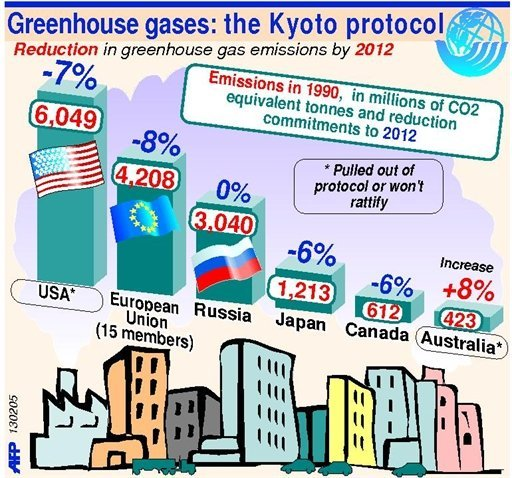
Image Source: https://phys.org/news/2009-10-climate-kyoto-protocol.html
The Kyoto Protocol was established under the United Nations Framework Convention on Climate Change (UNFCCC). It aimed to combat global warming by setting legally binding emission reduction targets for industrialized countries. The protocol required the collective participation of countries responsible for at least 55% of the world’s greenhouse gas emissions for it to take effect. With Russia’s ratification, this critical criterion was met, marking a triumph for environmental diplomacy and commitment to reducing global carbon emissions.
Russia’s decision to ratify the Kyoto Protocol in late 2004 was a turning point. It underscored the willingness of key global players to work together towards mitigating climate change impacts, regardless of the stance of the world’s largest economy at the time. Despite the US, one of the world’s leading polluters, opting out of the agreement, Russia’s move ensured that the Kyoto Protocol became operational, setting a precedent for collective action against environmental degradation and climate change.
Indian Ocean Tsunami
In one of the most devastating natural disasters of the early 21st century, an 8.9 magnitude earthquake struck deep beneath the Indian Ocean, setting off catastrophic tsunamis that claimed the lives of more than 230,000 people across 14 nations. This tragic event unfolded on December 26, 2004, and is remembered for its sheer scale of destruction and the profound human suffering it caused.
The earthquake was one of the strongest ever recorded. It generated enormous waves that traveled high speeds across the Indian Ocean, reaching the coasts of countries far from the earthquake’s epicenter. Nations such as Indonesia, Thailand, Sri Lanka, India, and others witnessed massive waves crashing onto their shores, causing widespread devastation. Coastal communities were obliterated, families were torn apart, and entire landscapes were altered in a matter of minutes.
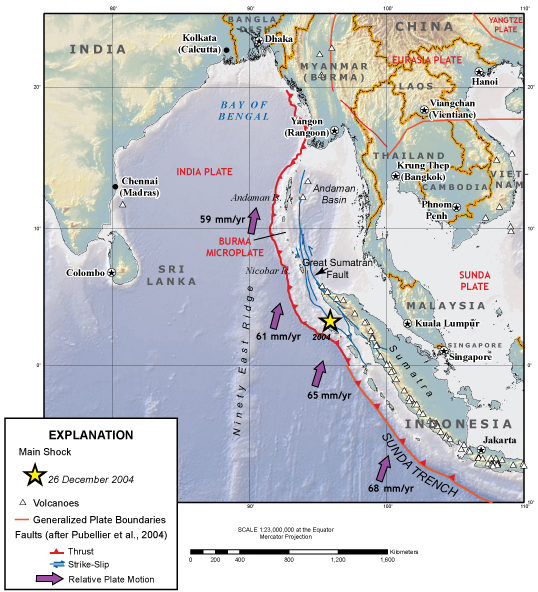
Image Source: https://www.worldvision.org/disaster-relief-news-stories/2004-indian-ocean-earthquake-tsunami-facts
The 2004 Indian Ocean tsunami underscored the critical importance of disaster preparedness and the need for an effective early warning system for tsunamis and other natural calamities. In its aftermath, efforts were intensified to develop and implement tsunami warning systems in the Indian Ocean region and worldwide to prevent such a tragedy from happening again.
2005
Hurricanes
2005 marked a record-breaking Atlantic hurricane season. It saw 31 tropical or subtropical cyclones, with 15 escalating into hurricanes, seven of which were classified as major hurricanes due to their intensity. Among these, four hurricanes – Emily, Katrina, Rita, and Wilma – achieved Category 5 status, the highest on the Saffir-Simpson Hurricane Wind Scale.
Particularly noteworthy were hurricanes Katrina and Wilma, which significantly affected South Florida. Katrina initially made landfall over Miami Beach as a Category 1 hurricane, delivering a less severe impact on South Florida than anticipated.
However, when it moved toward the Gulf Coast, the devastation it caused was monumental, marking it as one of the most catastrophic natural disasters in U.S. history. Katrina’s impacts are beyond the scope of this article; learn more here.
Meanwhile, Wilma presented a record-setting might with winds reaching 185 mph and achieving the lowest barometric pressure recorded for an Atlantic hurricane. By the time Wilma reached Florida’s Gulf Coast, it had slightly weakened but still unleashed considerable havoc. More than 100 miles away in South Florida, the storm’s fury was fully felt, causing widespread damage.
The 2005 hurricane season wasn’t just a record-breaker in numbers and intensities; it also underscored the devastating economic and social impacts hurricanes can have across multiple countries.
The destruction wrought by these storms led to billions in damages, loss of life, and long-term socioeconomic challenges for the affected areas.
Jilin Petrochemical Co. Explosion
An explosion at the Jilin Petrochemical Co. refinery resulted in the release of 100 tons of toxic chemicals, including benzene and nitrobenzene, into the Songhua River. The incident, which occurred due to a catastrophic failure within the refinery’s operations, led to the tragic loss of five workers’ lives while injuring 70 others. The toxic plume that swept through the Songhua River posed an immediate and significant danger to public health and the environment.
The spread of these hazardous chemicals forced the shutdown of drinking water supplies for millions of inhabitants in China and Russia, underscoring the transboundary nature of environmental disasters. The sudden lack of access to safe drinking water highlighted the immediate consequences of the disaster and the broader issue of water security and safety in the region.
In the aftermath of the explosion, officials initially attempted to conceal the chemical release from the public. This approach, however, backfired as awareness of the disaster grew, sparking widespread protest and anger among Chinese citizens. The incident became a flashpoint for broader concerns regarding water pollution and highlighted significant deficiencies in enforcing China’s anti-pollution and industrial safety laws.
2006
Three Gorges Dam
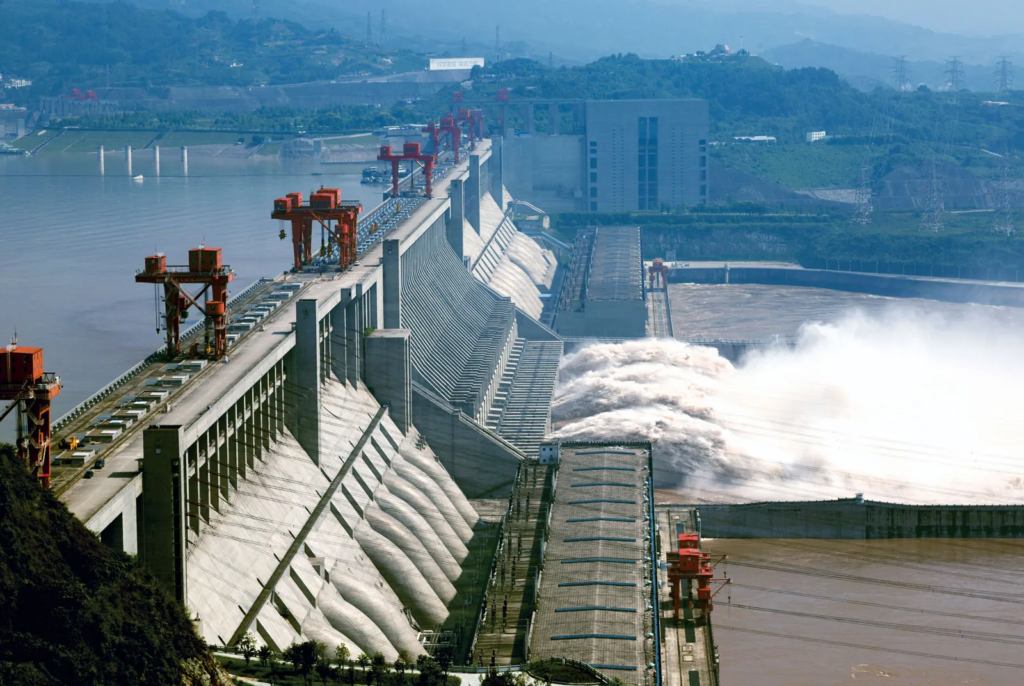
Image Source: https://www.britannica.com/topic/Three-Gorges-Dam
Originally proposed by Sun Yat-sen in 1919, China completed construction on the Three Gorges Dam in 2006. The dam is huge – the largest in the world by far – and provides abundant hydroelectric power. It has a total capacity of 22,500 megawatts, making it the largest power station in the world.
In 2018, Three Gorges generated over 100 billion kilowatt hours of electricity, enough for about one-tenth of China’s power needs. The coal usage avoided by its operation is monumental.
But such a massive engineering project inevitably comes with downsides. Millions of Chinese were forcibly relocated before the dam began operating. The ecological effects alone may make the project decisively net negative. Long story short, Three Gorges is a prime example of a high-risk, high-reward environmental effort.
Similarly to nuclear power, hydroelectric power like Three Gorges constitutes a common ecological dilemma. Dams control floods, produce ample clean power, improve navigation for shipping, and provide jobs. But they also force mass relocations, cause water pollution, and harm ecosystems. Ethical considerations cannot be ignored as humanity makes profound planetary decisions over the coming decades.
An Inconvenient Truth
Al Gore became identified with environmentalism as Vice President under the Clinton administration. He lost the 2000 presidential election by a hair, a major ‘what if’ moment that we will explore in a future article.
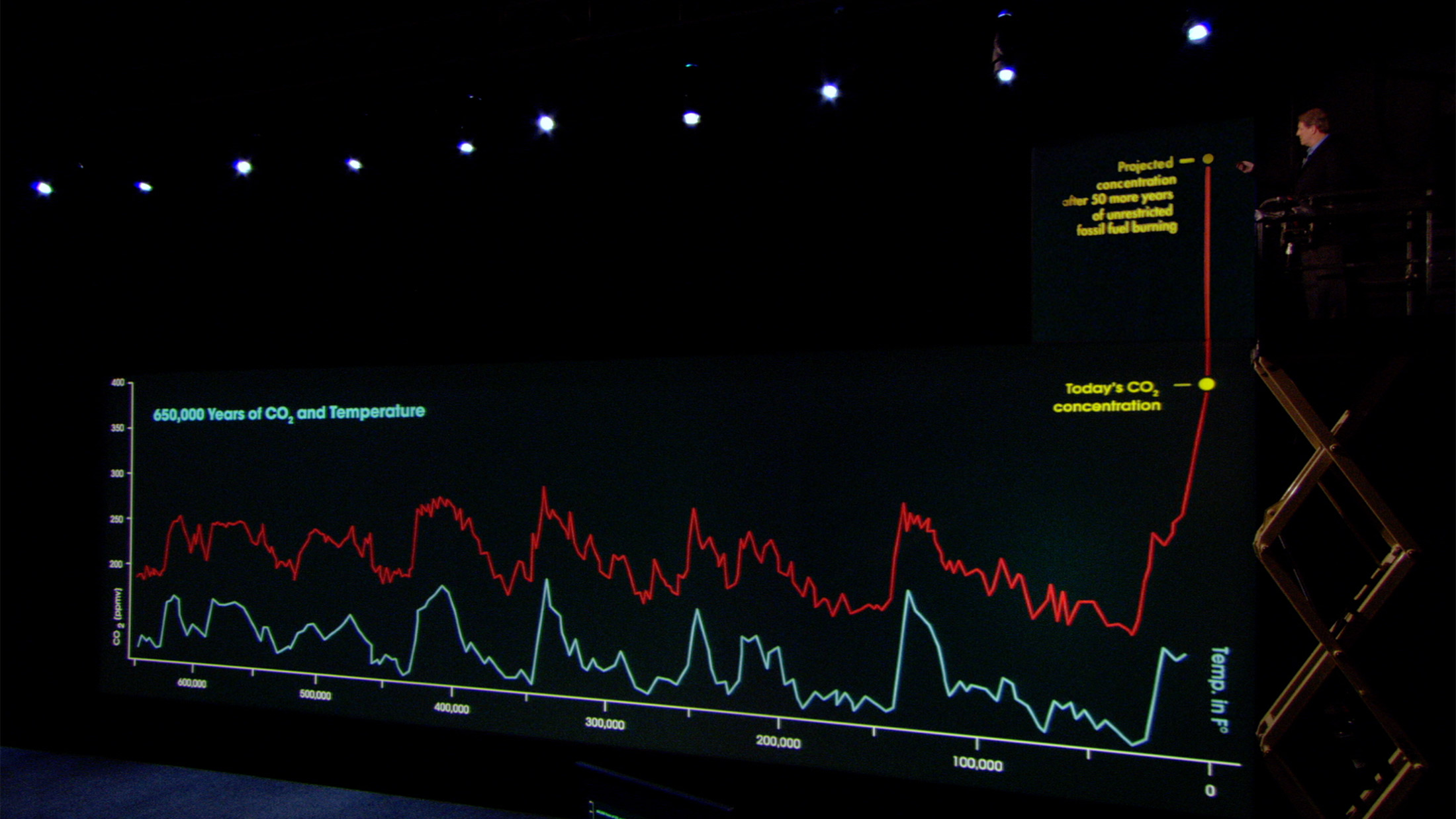
After a few years primarily out of public life, Gore made his mark in 2006 by releasing An Inconvenient Truth, a documentary that raised broad awareness of the grave threat posed by climate change. The issue seeped into popular culture; Al Gore and fellow environmentalist Robert F. Kennedy Jr. posed with Julia Roberts and George Clooney on the cover of Vogue.
Gore won a Nobel Peace Prize for his efforts. According to Texan climatologist Steven Quiring, An Inconvenient Truth “has had a much greater impact on public opinion and public awareness of global climate change than any scientific paper or report.”
The documentary raised awareness to unprecedented degrees but didn’t necessarily translate into action. Even a critically acclaimed documentary by a former Vice President had difficulty spurring meaningful action on climate change.
If anything, An Inconvenient Truth underscored the challenge of communicating about climate change in a way that sparks awareness and action.
China Overtakes the US as the Biggest CO2 Emitter
Decades of rapid economic development led to steadily rising CO2 emissions from a growing superpower. In 2006, following four consecutive years of double digit GDP growth, China’s emissions surpassed America’s by 8%. It symbolized China’s rise and increased contributions to climate change.
Fourteen years later, China has contributed most to global warming since 1990, the benchmark year for UN-led climate action.
Spurred chiefly by paralyzing air pollution that kills an estimated 1.6 million Chinese annually and palpably reduces the quality of life for many others, Chinese officials have invested substantially in wind and solar power and pledged to have carbon dioxide emissions peak by 2030 at the latest as part of the Paris Agreement.
But recently, China’s priorities (and dollars) have shifted. The country still relies heavily on coal and has reduced renewable energy investments (which fell by 39% in the first half of 2019 compared to the first half of 2018). Given China’s size, climate-related decisions have amplified effects around the world.
Despite these shifting priorities, developments in China have been largely encouraging, with the country on track to meet its climate goals nine years early. “As China moves towards a higher tech and service economy, it is likely to show how the passage to a low-carbon economy and robust and sustainable growth in an emerging market economy can be mutually supportive,” says Nicholas Stern, of the London School of Economics.
2007
Ivory Trade Restrictions Collapse
Research highlighted in the Proceedings of the National Academy of Sciences indicates that ivory trade restrictions once considered a significant victory for conservation, have effectively collapsed. Samuel Wasser, a noted conservation biologist at the University of Washington in the United States, has raised alarms about the dire situation of African elephants. According to Wasser’s findings, these majestic creatures are now in greater peril of extinction than they were even before the implementation of the 1989 ivory trade ban.
The data presented by Wasser and his team is stark; an estimated 23,000 African elephants were slaughtered for their ivory in 2006 alone. This staggering number underscores not only the failure of international efforts to curb the ivory trade but also highlights the intense pressure placed on elephant populations across Africa.
The collapse of ivory trade restrictions signifies a critical setback in global conservation efforts. The initial ban in 1989 was heralded as a landmark achievement in the fight against illegal wildlife trade, offering hope for the recovery of declining elephant populations. However, persistent demand for ivory, combined with insufficient enforcement and loopholes in the regulations, has allowed poaching to thrive.
This resurgence in ivory trading not only threatens the survival of African elephants but also represents a broader crisis in wildlife conservation. It exemplifies the challenges faced in combating illegal wildlife trade and the necessity for more vital international collaboration, rigorous enforcement of existing laws, and innovative strategies to eliminate the demand for ivory.
Massachusetts v EPA
Massachusetts was one of 12 states (as well as several cities and organizations) involved in a lawsuit aimed at forcing the EPA to regulate carbon dioxide and other greenhouse gases as pollutants.
Even the Supreme Court hearing the case was a massive victory for environmentalists, who had previously struggled to bring their cause to the highest court in the land. The verdict would delight them even more.
With a 5-4 favorable ruling, the plaintiffs won. Massachusetts v EPA “laid the groundwork for many of former President Obama’s climate policies, including the Clean Power Plan.”
2008
G-8 Industrialized Nations Commit to 50% Greenhouse Gas Emission Reduction by 2050
The Group of Eight (G-8) industrialized nations committed to a bold environmental goal: cutting greenhouse gas emissions in half by the year 2050. This unanimous agreement marked the first occasion where all members of this influential group pledged collectively to such a significant climate objective, setting a precedent for global efforts to combat climate change.
The G-8’s commitment is a critical step forward in international climate diplomacy.
These nations are among the largest economies and biggest polluters globally, so their collective action carries substantial weight in setting a path toward a more sustainable and low-carbon future. Through their resolution, the G-8 countries demonstrated leadership and acknowledged their pivotal role in mitigating climate change and the pressing need to address it decisively.
This pledge is not just symbolic; it represents a call to action for other countries and sets a benchmark for global climate efforts. It underscores the necessity of transitioning away from fossil fuels, investing in renewable energy technologies, and adopting cleaner, more efficient industrial practices.
Moreover, this commitment sends a solid signal to industries and investors about the direction of future economic development, emphasizing sustainability and innovation.
One in Four Mammals at Risk of Extinction
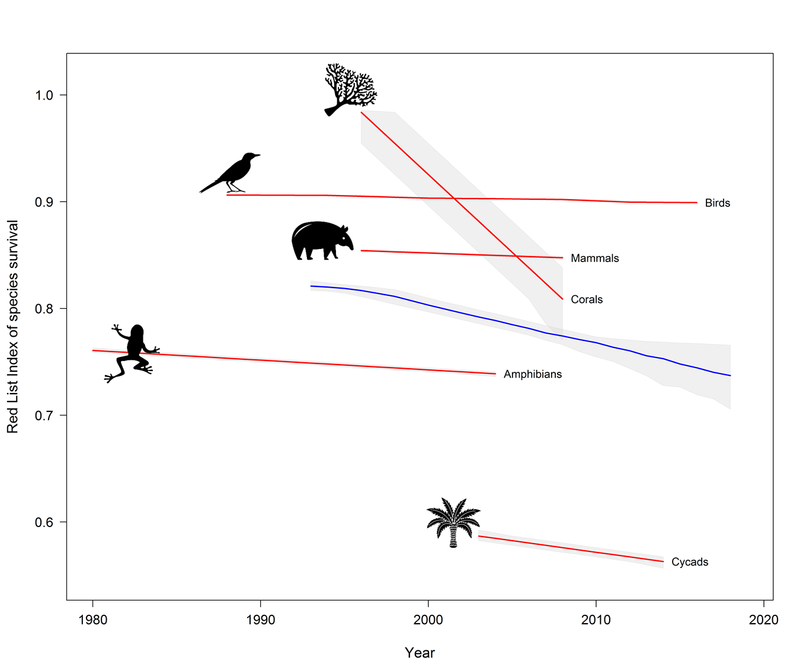
Image Source: https://www.iucnredlist.org/assessment/red-list-index
The International Union for Conservation of Nature (IUCN) issued a grave warning, highlighting an alarming trend in global biodiversity: one in four of the world’s mammals is at risk of extinction.
Habitat loss stood out as one of the leading causes of species decline, primarily driven by deforestation, agricultural expansion, urbanization, and infrastructure development. These activities reduce the available living space for mammals and fragment their habitats, making it difficult for species to access food, water, and mates.
Climate change further exacerbates the challenges faced by mammalian species. Altered weather patterns, rising temperatures, and changing landscapes impact the availability of essential resources and can disturb migration patterns and reproductive cycles.
Overhunting and poaching for meat, fur, medicinal ingredients, or trophies have also placed immense pressure on numerous species. Likewise, unsustainable hunting practices have led to population declines that are difficult to reverse.
The IUCN’s warning was a stark reminder of the state of the world’s mammals and an invitation to governments, organizations, and individuals to step up their conservation efforts. It underscored the importance of protecting critical habitats, enforcing laws against poaching and illegal trading, and adopting sustainable land-use practices that balance human needs with wildlife conservation.
Coal Ash Disaster
Burning coal produces a toxic byproduct known as coal ash, which causes numerous health risks given the carcinogens in the various metals found in coal ash.
On December 22, 2008, a dike ruptured at a coal ash containment pond in Tennessee, releasing 1.1 billion gallons of coal ash slurry (enough to fill 1,660 Olympic-sized swimming pools) across 3,000 acres of nearby land.
The Tennessee coal ash spill released about 40 times as much fossil fuel by volume as the Exxon Valdez oil spill. The accident occurred in a fairly rural area, leading to a relatively reduced loss of life.
A Duke study investigated the potential environmental and human health impacts in the immediate aftermath of the spill. According to the study’s outcomes, coming into contact with or ingesting these contaminants can lead to serious health issues. This risk escalates for individuals with preexisting health conditions.
EPA published a Coal Combustions Residuals (CCR) rule in 2015 to regulate coal ash disposal. However, the organization later initiated efforts to undermine the 2015 rule. The saga of coal ash underlines how quickly and forcefully we must do away with burning coal for the sake of our lungs and the planet.
2009
The U.S. Climate Action Partnership’s Plan
The U.S. Climate Action Partnership (USCAP) unveiled a groundbreaking plan aimed at drastically reducing U.S. greenhouse gas emissions to just 20% of the levels recorded in 2005 by the year 2050. This ambitious proposal centered around implementing a cap and trade system represents a significant shift towards addressing climate change through regulatory and market-driven mechanisms.
Under the cap and trade system, a limit (or “cap”) would be set on the total amount of greenhouse gases emitted nationally. Companies would receive or buy emission allowances within this cap and could trade these allowances among themselves. This system incentivizes companies to reduce their emissions cost-effectively, allowing them to sell excess allowances to other firms exceeding their emission limits.
The backing of this plan by the business community is particularly noteworthy. It illustrates a growing recognition within the private sector of the urgency to combat climate change and the necessity to adapt to impending regulations designed to tackle this challenge. By proposing a method like cap and trade, businesses aim to cushion the potential economic impact of climate legislation, advocating for a solution that provides flexibility and fosters innovation in reducing emissions.
Copenhagen Accords Fail
As nations across the globe grapple with the repercussions of a devastating economic downturn triggered by the financial crisis, 2009 was marked by a mix of fear and hope. Such period of economic instability raised concerns about the willingness and ability of countries to prioritize environmental issues and invest in the fight against climate change. Despite these uncertainties, there was also a palpable sense of optimism, particularly regarding the highly anticipated global climate summit scheduled for December in Copenhagen.
This summit, officially known as the 15th Conference of the Parties (COP15) to the United Nations Framework Convention on Climate Change (UNFCCC), was seen by many as a historic opportunity to advance global efforts in tackling climate change.
However, the accords were fairly disappointing, handicapped by an email hack known as Climategate that unleashed a wave of climate denial and stunted political progress. In a prelude to future developments, then-prominent House Republican Mike Pence said the U.S. should not commit to a climate agreement in “the midst of an academic scandal and questionable science revealed in ‘Climategate.’”
One undeniably positive impact of the accords was the creation of a Green Climate Fund, which since 2015 has allocated many billions of dollars to 102 projects and programs, mostly in developing countries.
What the 2000s Teach Us About the Climate Situation
Looking back at the environmental developments of the 2000s provides valuable insights into the current climate situation. Despite concerted efforts to curb emissions and promote sustainable development, the pace of climate action has often lagged behind the rate of environmental degradation. The failure to implement robust policies and enforce regulations has allowed pollution to persist and exacerbate the climate crisis.
However, the 2000s also demonstrate the power of collective action and international cooperation in addressing global challenges. Milestones such as Russia’s ratification of the Kyoto Protocol and the Earth Summit in Rio de Janeiro underscored the importance of multilateral agreements in tackling climate change. These agreements laid the groundwork for future initiatives to reduce emissions and promote sustainable growth.
Moreover, the 2000s taught us valuable lessons about the importance of integrating environmental considerations into economic and development planning. The adverse effects of climate change do not recognize national borders, impacting global food security, water availability, and public health. As such, addressing these challenges requires reducing emissions and adapting existing infrastructures and economies to be more resilient and sustainable in the face of a changing climate.
Conclusion
The 2000s have been a testament to the resilience of the environmental movement and the power of collective action. However, the urgency of the climate crisis demands that we redouble our efforts and embrace innovative solutions to build a sustainable future.
By harnessing the lessons learned from the past and embracing a spirit of collaboration and determination, we can overcome the challenges of climate change and create a healthier, more resilient planet for all. As we look towards the future, let us reaffirm our commitment to environmental stewardship and work together to ensure a brighter tomorrow for future generations.
Frequently Asked Questions
What were some key environmental developments of the 2000s?
The 2000s marked a pivotal era in the global understanding and response to environmental issues. This decade was characterized by an increased awareness of climate change, a growing concern over the depletion of natural resources, and the emergence of significant international agreements aimed at addressing these challenges.
How did the 2000s shape our understanding of climate change?
The 2000s underscored the urgency of climate change through scientific evidence, highlighting the detrimental effects of greenhouse gas emissions and the need for sustainable practices.
What challenges did the 2000s present in terms of environmental sustainability?
Challenges included the surge in carbon emissions, pollution, deforestation, and the failure to implement robust policies to mitigate environmental degradation.
How can individuals contribute to a sustainable future based on the insights from the article?
Individuals can contribute by adopting sustainable practices, advocating for policy change, supporting renewable energy solutions, and fostering environmental awareness in their communities.















No Comments